


Page 1533 - Williams Hematology ( PDFDrive )
P. 1533
1508           Part XI:  Malignant Lymphoid Diseases                                                                                                                        Chapter 91:  Acute Lymphoblastic Leukemia            1509


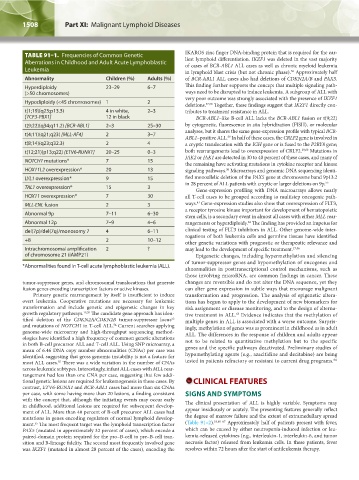
                TABLE 91–1.  Frequencies of Common Genetic            IKAROS zinc finger DNA-binding protein that is required for the ear-
                                                                      liest lymphoid differentiation. IKZF1 was deleted in the vast majority
                Aberrations in Childhood and Adult Acute Lymphoblastic   of cases of BCR-ABL1 ALL cases as well as chronic myeloid leukemia
                Leukemia                                              in lymphoid blast crisis (but not chronic phase).  Approximately half
                                                                                                         56
                Abnormality                Children (%)  Adults (%)   of BCR-ABL1 ALL cases also had deletions of CDKN2A/B and PAX5.
                Hyperdiploidy              23–29         6–7          This finding further supports the concept that multiple signaling path-
                (>50 chromosomes)                                     ways need to be disrupted to induce leukemia. A subgroup of ALL with
                                                                      very poor outcome was strongly associated with the presence of IKZF1
                Hypodiploidy (<45 chromosomes) 1         2
                                                                      deletions. 57,58  Together, these findings suggest that IKZF1 directly con-
                t(1;19)(q23;p13.3)         4 in white,    2–3         tributes to treatment resistance in ALL.
                [TCF3-PBX1]                12 in black                    BCR-ABL1–like B-cell ALL lacks the BCR-ABL1 fusion or t(9;22)
                t(9;22)(q34;q11.2) [BCR-ABL1]  2–3       25–30        by cytogenetic, fluorescence in situ hybridization (FISH), or molecular
                                                                      analyses, but it shares the same gene-expression profile with typical BCR-
                t(4;11)(q21;q23) [MLL-AF4]  2            3–7
                                                                      ABL1–positive ALL.  In half of these cases, the CRLF2 gene is involved in
                                                                                    59
                t(8;14)(q23;q32.3)         2             4            a cryptic translocation with the IGH gene or is fused to the P2RY8 gene;
                t(12;21)(p13;q22) [ETV6-RUNX1]  20–25    0–3          both rearrangements lead to overexpression of CRLF2. 29,60  Mutations in
                                                                      JAK2 or JAK1 are detected in 30 to 40 percent of these cases, and many of
                NOTCH1 mutations*          7             15
                                                                      the remaining have activating mutations in cytokine receptor and kinase
                HOX11L2 overexpression*    20            13           signaling pathways.  Microarrays and genomic DNA sequencing identi-
                                                                                    30
                LYL1 overexpression*       9             15           fied monoallelic deletion of the PAX5 gene at chromosome band 9p13.2
                                                                      in 28 percent of ALL patients with cryptic or larger deletions on 9p. 55
                TAL1 overexpression*       15            3
                                                                          Gene-expression profiling with DNA microarrays allows nearly
                HOX11 overexpression*      7             30           all T-cell cases to be grouped according to multistep oncogenic path-
                                                                          61
                MLL-ENL fusion             2             3            ways.  Gene-expression studies also show that overexpression of FLT3,
                                                                      a receptor tyrosine kinase important for development of hematopoietic
                Abnormal 9p                7–11          6–30
                                                                      stem cells, is a secondary event in almost all cases with either MLL rear-
                Abnormal 12p               7–9           4–6          rangements or hyperdiploidy.  The finding has provided an impetus for
                                                                                           62
                del(7p)/del(7q)/monosomy 7  4            6–11         clinical testing of FLT3 inhibitors in ALL. Other genome-wide inter-
                                                                      rogations of both leukemia cells and germline tissues have identified
                +8                         2             10–12
                                                                      other genetic variations with prognostic or therapeutic relevance and
                Intrachromosomal amplification   2       ?            may lead to the development of specific treatment. 17,36
                of chromosome 21 (iAMP21)                                 Epigenetic changes, including hypermethylation and silencing
                                                                      of tumor-suppressor genes and hypomethylation of oncogenes and
               *Abnormalities found in T-cell acute lymphoblastic leukemia (ALL).
                                                                      abnormalities in posttranscriptional control mechanisms, such as
                                                                      those involving microRNA, are common findings in cancer. These
               tumor-suppressor genes, and chromosomal translocations that generate   changes are reversible and do not alter the DNA sequence, yet they
               fusion genes encoding transcription factors or active kinases.  can alter gene expression in subtle ways that encourage malignant
                   Primary genetic rearrangement by itself is insufficient to induce   transformation and progression. The analysis of epigenetic altera-
               overt leukemia. Cooperative mutations are necessary for leukemic   tions has begun to apply to the development of new biomarkers for
               transformation and include genetic and epigenetic changes in key   risk assignment or disease monitoring, and to the design of alterna-
               growth regulatory pathways. 19,20  The candidate gene approach has iden-  tive treatment in ALL.  Evidence indicates that the methylation of
                                                                                       63
               tified deletion of the  CDKN2A/CDKN2B tumor-suppressor locus    multiple genes in ALL is associated with a worse outcome. Surpris-
                                                                 53
               and mutations of NOTCH1 in T-cell ALL.  Current searches applying   ingly, methylation of genes was as prominent in childhood as in adult
                                              54
               genome-wide microarray and high-throughput sequencing method-  ALL. The differences in the response of children and adults appear
               ologies have identified a high frequency of common genetic alterations   not to be related to quantitative methylation but to the specific
               in both B-cell precursor ALL and T-cell ALL. Using SNP microarray, a
               mean of 6.46 DNA copy number abnormalities (CNAs) per case was   genes and the specific pathways deactivated. Preliminary studies of
               identified, suggesting that gross genomic instability is not a feature for   hypomethylating agents (e.g., azacitidine and decitabine) are being
               most ALL cases.  There was a wide variation in the number of CNAs   tested in patients refractory or resistant to current drug programs. 64
                           55
               across leukemic subtypes. Interestingly, infant ALL cases with MLL rear-
               rangement had less than one CNA per case, suggesting that few addi-
               tional genetic lesions are required for leukemogenesis in these cases. By   CLINICAL FEATURES
               contrast, ETV6-RUNX1 and BCR-ABL1 cases had more than six CNAs
               per case, with some having more than 20 lesions, a finding consistent   SIGNS AND SYMPTOMS
               with the concept that, although the initiating events may occur early   The clinical presentation of ALL is highly variable. Symptoms may
               in childhood, additional lesions are required for subsequent develop-  appear insidiously or acutely. The presenting features generally reflect
               ment of ALL. More than 40 percent of B-cell precursor ALL cases had
               mutations in genes encoding regulators of normal lymphoid develop-  the degree of marrow failure and the extent of extramedullary spread
                    55
               ment.  The most frequent target was the lymphoid transcription factor   (Table 91–2). 18,65–67  Approximately half of patients present with fever,
               PAX5 (mutated in approximately 32 percent of cases), which encode a   which can be caused by either neutropenia-induced infection or leu-
               paired-domain protein required for the pro–B-cell to pre–B-cell tran-  kemia-released cytokines (e.g., interleukin-1, interleukin-6, and tumor
               sition and B-lineage fidelity. The second most frequently involved gene   necrosis factor) released from leukemia cells. In these patients, fever
               was IKZF1 (mutated in almost 28 percent of the cases), encoding the   resolves within 72 hours after the start of antileukemia therapy.


          Kaushansky_chapter 91_p1505-1526.indd   1508                                                                  9/21/15   12:19 PM

