


Page 1779 - Williams Hematology ( PDFDrive )
P. 1779
1754           Part XI:  Malignant Lymphoid Diseases                                                                                                                                             Chapter 107:  Myeloma           1755


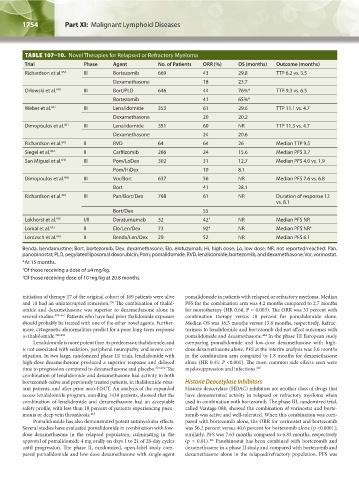
                TABLE 107–10.  Novel Therapies for Relapsed or Refractory Myeloma
                Trial               Phase     Agent          No. of Patients  ORR (%)   OS (months)  Outcome (months)
                Richardson et al. 454  III    Bortezomib     669            43          29.8         TTP 6.2 vs. 3.5
                                              Dexamethasone                 18          23.7
                Orlowski et al. 479  III      Bort/PLD       646            44          76%*         TTP 9.3 vs. 6.5
                                              Bortezomib                    41          65%*
                Weber et al. 462    III       Lenalidomide   353            61          29.6         TTP 11.1 vs. 4.7
                                              Dexamethasone                 20          20.2
                Dimopoulos et al. 401  III    Lenalidomide   351            60          NR           TTP 11.3 vs. 4.7
                                              Dexamethasone                 24          20.6
                Richardson et al. 642  II     RVD            64             64          26           Median TTP 9.5
                Siegel et al. 404   II        Carfilzomib    266            24          15.6         Median PFS 3.7
                San Miguel et al. 643  III    Pom/LoDex      302            31          12.7         Median PFS 4.0 vs. 1.9
                                              Pom/HiDex                     10          8.1
                Dimopoulos et al. 466  III    Vor/Bort       637            56          NR           Median PFS 7.6 vs. 6.8
                                              Bort                          41          28.1
                Richardson et al. 467  III    Pan/Bort/Dex   768            61          NR           Duration of response 12
                                                                                                     vs. 8.1
                                              Bort/Dex                      55
                Lokhorst et al. 470  I/II     Daratumumab    32             42 †        NR           Median PFS NR
                Lonial et al. 473   II        Elo/Len/Dex    73             92 ‡        NR           Median PFS NR ‡
                Lentzsch et al. 476  II       Benda/Len/Dex  29             52          NR           Median PFS 6.1

               Benda, bendamustine; Bort, bortezomib; Dex, dexamethasone; Elo, elotuzumab; Hi, high dose; Lo, low dose; NR, not reported/reached; Pan,
               panobinostat; PLD, pegylated liposomal doxorubicin; Pom, pomalidomide; RVD, lenalidomide, bortezomib, and dexamethasone; Vor, vorinostat.
               *At 15 months.
               † Of those receiving a dose of ≥4 mg/kg.
               ‡ Of those receiving dose of 10 mg/kg at 20.8 months.


               initiation of therapy 17 of the original cohort of 169 patients were alive   pomalidomide in patients with relapsed or refractory myeloma. Median
               and 10 had an uninterrupted remission.  The combination of thalid-  PFS for the combination arm was 4.2 months compared to 2.7 months
                                             458
               omide and dexamethasone was superior to dexamethasone alone in   for monotherapy (HR 0.68, P = 0.003). The ORR was 33 percent with
               several studies. 459–461  Patients who have had prior thalidomide exposure   combination therapy  versus  18 percent  for  pomalidomide  alone.
               should probably be treated with one of the other novel agents. Further-  Median OS was 16.5 months versus 13.6 months, respectively. Refrac-
               more, cytogenetic abnormalities predict for a poor long-term response   toriness to lenalidomide and bortezomib did not affect outcomes with
               to thalidomide. 268,458                                pomalidomide and dexamethasone.  In the phase III European study
                                                                                                464
                   Lenalidomide is more potent than its predecessor, thalidomide, and   comparing pomalidomide and low-dose dexamethasone with high-
               is not associated with sedation, peripheral neuropathy, and severe con-  dose dexamethasone alone, PFS at the interim analysis was 3.6 months
               stipation. In two large, randomized phase III trials, lenalidomide with   in the combination arm compared to 1.8 months for dexamethasone
               high-dose dexamethasone produced a superior response and delayed   alone (HR 0.45; P <0.001). The most common side effects seen were
               time to progression compared to dexamethasone and placebo. 401,462  The   myelosuppression and infections. 465
               combination of lenalidomide and dexamethasone had activity in both
               bortezomib-naïve and previously treated patients, in thalidomide-resis-  Histone Deacetylase Inhibitors
               tant patients, and after prior auto-HSCT. An analysis of the expanded   Histone deacetylase (HDAC) inhibitors are another class of drugs that
               access lenalidomide program, enrolling 1438 patients, showed that the   have demonstrated activity in relapsed or refractory myeloma when
               combination of lenalidomide and dexamethasone had an acceptable   used in combination with bortezomib. The phase III, randomized trial,
               safety profile, with less than 10 percent of patients experiencing pneu-  called Vantage 088, showed the combination of vorinostat and borte-
               monia or deep vein thrombosis. 463                     zomib was active and well-tolerated. When this combination was com-
                   Pomalidomide has also demonstrated potent antimyeloma effects.   pared with bortezomib alone, the ORR for vorinostat and bortezomib
               Several studies have evaluated pomalidomide in combination with low-  was 56.2 percent versus 40.6 percent for bortezomib alone (p <0.0001);
               dose dexamethasone in the relapsed population, culminating in the   similarly, PFS was 7.63 months compared to 6.83 months, respectively
               approval of pomalidomide 4 mg orally on days 1 to 21 of 28-day cycles   (p = 0.01).  Panobinostat has been combined with bortezomib and
                                                                              466
               until progression. The phase II, randomized, open-label study com-  dexamethasone in a phase II study and compared with bortezomib and
               pared pomalidomide and low-dose dexamethasone with single-agent   dexamethasone alone in the relapsed/refractory population. PFS was


          Kaushansky_chapter 107_p1733-1772.indd   1754                                                                 9/21/15   12:35 PM

