


Page 601 - Williams Hematology ( PDFDrive )
P. 601
576            Part VI:  The Erythrocyte                                                                                                                            Chapter 40:  Paroxysmal Nocturnal Hemoglobinuria               577


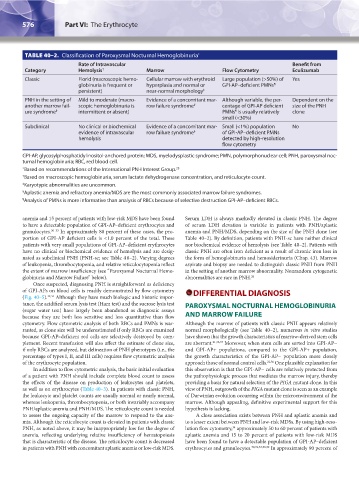
                TABLE 40–2.  Classification of Paroxysmal Nocturnal Hemoglobinuria *
                                  Rate of Intravascular                                                   Benefit from
                Category          Hemolysis †            Marrow                   Flow Cytometry          Eculizumab
                Classic           Florid (macroscopic hemo-  Cellular marrow with erythroid   Large population (>50%) of   Yes
                                  globinuria is frequent or   hyperplasia and normal or   GPI-AP–deficient PMNs ¶
                                  persistent)            near-normal morphology ‡
                PNH in the setting of   Mild to moderate (macro-  Evidence of a concomitant mar- Although variable, the per-  Dependent on the
                another marrow fail-  scopic hemoglobinuria is   row failure syndrome §  centage of GPI-AP deficient   size of the PNH
                ure syndrome §    intermittent or absent)                         PMNs  is usually relatively   clone
                                                                                       ¶
                                                                                  small (<30%)
                Subclinical       No clinical or biochemical   Evidence of a concomitant mar- Small (<1%) population   No
                                  evidence of intravascular   row failure syndrome §  of GPI-AP–deficient PMNs
                                  hemolysis                                       detected by high-resolution
                                                                                  flow cytometry
               GPI-AP, glycosylphosphatidylinositol-anchored protein; MDS, myelodysplastic syndrome; PMN, polymorphonuclear cell; PNH, paroxysmal noc-
               turnal hemoglobinuria; RBC, red blood cell.
               * Based on recommendations of the International PNH Interest Group.
                                                                   28
               † Based on macroscopic hemoglobinuria, serum lactate dehydrogenase concentration, and reticulocyte count.
               ‡ Karyotypic abnormalities are uncommon.
               § Aplastic anemia and refractory anemia/MDS are the most commonly associated marrow failure syndromes.
               ¶ Analysis of PMNs is more informative than analysis of RBCs because of selective destruction GPI-AP–deficient RBCs.

               anemia and 15 percent of patients with low-risk MDS have been found   Serum LDH is always markedly elevated in classic PNH. The degree
               to have a detectable population of GPI-AP–deficient erythrocytes and   of serum LDH elevation is variable in patients with PNH/aplastic
               granulocytes. 30–33  In approximately 80 percent of these cases, the pro-  anemia and PNH/MDS, depending on the size of the PNH clone (see
               portion of GPI-AP deficient cells is <1.0 percent of the total. These   Table  40–2). By definition, patients with PNH-sc have neither clinical
               patients with very small populations of GPI-AP–deficient erythrocytes   nor biochemical evidence of hemolysis (see Table  40–2). Patients with
               have no clinical or biochemical evidence of hemolysis and are desig-  classic PNH are often iron deficient as a result of chronic iron loss in
               nated as subclinical PNH (PNH-sc; see Table 4 0–2). Varying degrees   the form of hemoglobinuria and hemosiderinuria (Chap. 43). Marrow
               of leukopenia, thrombocytopenia, and relative reticulocytopenia reflect   aspirate and biopsy are needed to distinguish classic PNH from PNH
               the extent of marrow insufficiency (see “Paroxysmal Nocturnal Hemo-  in the setting of another marrow abnormality. Nonrandom cytogenetic
               globinuria and Marrow Failure” below).                 abnormalities are rare in PNH. 26
                   Once suspected, diagnosing PNH is straightforward as deficiency
               of GPI-APs on blood cells is readily demonstrated by flow cytometry   DIFFERENTIAL DIAGNOSIS
               (Fig. 40–5). 34,35  Although they have much biologic and historic impor-
               tance, the acidified serum lysis test (Ham test) and the sucrose lysis test   PAROXYSMAL NOCTURNAL HEMOGLOBINURIA
               (sugar water test) have largely been abandoned as diagnostic assays
               because they  are both  less sensitive  and  less  quantitative  than flow   AND MARROW FAILURE
               cytometry. Flow cytometric analysis of both RBCs and PMNs is war-  Although the marrow of patients with classic PNH appears relatively
               ranted, as clone size will be underestimated if only RBCs are examined   normal morphologically (see Table  40–2), numerous in vitro studies
               because GPI-AP–deficient red cells are selectively destroyed by com-  have shown that the growth characteristics of marrow-derived stem cells
               plement. Recent transfusion will also affect the estimate of clone size,   are aberrant. 21,36,37  Moreover, when stem cells are sorted into GPI-AP−
               if only RBCs are analyzed, but delineation of PNH phenotypes (i.e., the   and GPI-AP+ populations, compared to the GPI-AP+ population,
               percentage of types I, II, and III cells) requires flow cytometric analysis   the growth characteristics of the GPI-AP− population more closely
               of the erythrocyte population.                         approach those of normal control cells. 21,36  One plausible explanation for
                   In addition to flow cytometric analysis, the basic initial evaluation   this observation is that the GPI-AP− cells are relatively protected from
               of a patient with PNH should include complete blood count to assess   the pathophysiologic process that mediates the marrow injury, thereby
               the  effects  of  the  disease  on  production  of  leukocytes  and  platelets,   providing a basis for natural selection of the PIGA mutant clone. In this
               as well as on erythrocytes (Table 40–3). In patients with classic PNH,   view of PNH, outgrowth of the PIGA mutant clone is seen as an example
               the leukocyte and platelet counts are usually normal or nearly normal,   of Darwinian evolution occurring within the microenvironment of the
               whereas leukopenia, thrombocytopenia, or both invariably accompany   marrow. Although appealing, definitive experimental support for this
               PNH/aplastic anemia and PNH/MDS. The reticulocyte count is needed   hypothesis is lacking.
               to assess the ongoing capacity of the marrow to respond to the ane-  A close association exists between PNH and aplastic anemia and
               mia. Although the reticulocyte count is elevated in patients with classic   to a lesser extent between PNH and low-risk MDSs. By using high-reso-
               PNH, as noted above, it may be inappropriately low for the degree of   lution flow cytometry,  approximately 50 to 60 percent of patients with
                                                                                      34
               anemia, reflecting underlying relative insufficiency of hematopoiesis   aplastic anemia and 15 to 20 percent of patients with low-risk MDS
               that is characteristic of the disease. The reticulocyte count is decreased   have been found to have a detectable population of GPI-AP–deficient
               in patients with PNH with concomitant aplastic anemia or low-risk MDS.   erythrocytes and granulocytes. 30,31,33,38,39  In approximately 90 percent of


          Kaushansky_chapter 40_p0571-0582.indd   576                                                                   9/17/15   6:22 PM

