


Page 621 - Williams Hematology ( PDFDrive )
P. 621
596            Part VI:  The Erythrocyte                                                                                                                     Chapter 41:  Folate, Cobalamin, and Megaloblastic Anemias             597


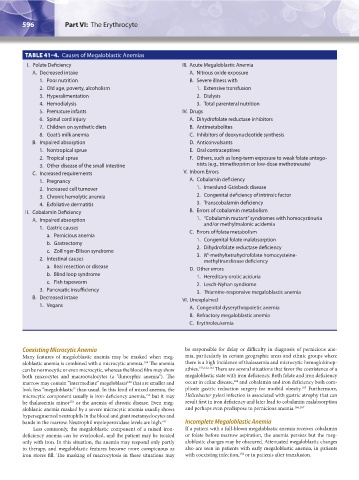
                TABLE 41–4.  Causes of Megaloblastic Anemias
                 I.  Folate Deficiency                               III.  Acute Megaloblastic Anemia
                   A.  Decreased intake                                A.  Nitrous oxide exposure
                     1.  Poor nutrition                                B.  Severe illness with
                     2.  Old age, poverty, alcoholism                     1.  Extensive transfusion
                     3.  Hyperalimentation                                2.  Dialysis
                     4.  Hemodialysis                                     3.  Total parenteral nutrition
                     5.  Premature infants                           IV.  Drugs
                     6.  Spinal cord injury                            A.   Dihydrofolate reductase inhibitors
                     7.  Children on synthetic diets                   B.  Antimetabolites
                     8.  Goat’s milk anemia                            C.  Inhibitors of deoxynucleotide synthesis
                   B.  Impaired absorption                             D.  Anticonvulsants
                     1.  Nontropical sprue                             E.  Oral contraceptives
                     2.  Tropical sprue                                F.   Others, such as long-term exposure to weak folate antago-
                     3.   Other disease of the small intestine            nists (e.g., trimethoprim or low-dose methotrexate)
                   C.  Increased requirements                        V.  Inborn Errors
                     1.  Pregnancy                                     A.  Cobalamin deficiency
                     2.  Increased cell turnover                          1.  Imerslund-Gräsbeck disease
                     3.   Chronic hemolytic anemia                        2.  Congenital deficiency of intrinsic factor
                     4.  Exfoliative dermatitis                           3.  Transcobalamin deficiency
                II.  Cobalamin Deficiency                              B.  Errors of cobalamin metabolism
                   A.  Impaired absorption                                1.   “Cobalamin mutant” syndromes with homocystinuria
                     1.  Gastric causes                                     and/or methylmalonic acidemia
                        a.  Pernicious anemia                          C.  Errors of folate metabolism
                        b.  Gastrectomy                                   1.   Congenital folate malabsorption
                        c.  Zollinger-Ellison syndrome                    2.  Dihydrofolate reductase deficiency
                                                                             5
                     2.  Intestinal causes                                3.   N -methyltetrahydrofolate homocysteine-
                                                                            methyltransferase deficiency
                        a.  Ileal resection or disease                 D.  Other errors
                        b.  Blind loop syndrome                           1.  Hereditary orotic aciduria
                        c.  Fish tapeworm                                 2.  Lesch-Nyhan syndrome
                     3.  Pancreatic insufficiency                         3.  Thiamine-responsive megaloblastic anemia
                   B.  Decreased intake                              VI. Unexplained
                     1.  Vegans                                        A.  Congenital dyserythropoietic anemia
                                                                       B.   Refractory megaloblastic anemia
                                                                       C.  Erythroleukemia


               Coexisting Microcytic Anemia                           be responsible for delay or difficulty in diagnosis of pernicious ane-
               Many features of megaloblastic anemia may be masked when meg-  mia, particularly in certain geographic areas and ethnic groups where
               aloblastic anemia is combined with a microcytic anemia.  The anemia   there is a high incidence of thalassemia and microcytic hemoglobinop-
                                                        154
               can be normocytic or even microcytic, whereas the blood film may show   athies. 153,162,163  There are several situations that favor the coexistence of a
               both microcytes and macroovalocytes (a “dimorphic anemia”). The   megaloblastic state with iron deficiency. Both folate and iron deficiency
                                                                                      164
               marrow may contain “intermediate” megaloblasts  that are smaller and   occur in celiac disease,  and cobalamin and iron deficiency both com-
                                                   160
                                                                                                             165
               look less “megaloblastic” than usual. In this kind of mixed anemia, the   plicate gastric reduction surgery for morbid obesity.  Furthermore,
               microcytic component usually is iron-deficiency anemia,  but it may   Helicobacter pylori infection is associated with gastric atrophy that can
                                                         154
               be thalassemia minor  or the anemia of chronic disease. Even meg-  result first in iron deficiency and later lead to cobalamin malabsorption
                               153
               aloblastic anemia masked by a severe microcytic anemia usually shows   and perhaps even predispose to pernicious anemia. 166,167
               hypersegmented neutrophils in the blood and giant metamyelocytes and
               bands in the marrow. Neutrophil myeloperoxidase levels are high. 161  Incomplete Megaloblastic Anemia
                   Less commonly, the megaloblastic component of a mixed iron-   If a patient with a full-blown megaloblastic anemia receives cobalamin
               deficiency anemia can be overlooked, and the patient may be treated   or folate before marrow aspiration, the anemia persists but the meg-
               only with iron. In this situation, the anemia may respond only partly   aloblastic changes may be obscured. Attenuated megaloblastic changes
               to therapy, and megaloblastic features become  more conspicuous as   also are seen in patients with early megaloblastic anemia, in patients
                                                                                        154
               iron stores fill. The masking of macrocytosis in these situations may   with coexisting infection,  or in patients after transfusion.


          Kaushansky_chapter 41_p0583-0616.indd   596                                                                   9/17/15   6:24 PM

