


Page 617 - Williams Hematology ( PDFDrive )
P. 617
592            Part VI:  The Erythrocyte                                                                                                                     Chapter 41:  Folate, Cobalamin, and Megaloblastic Anemias             593


                                              OH OH                                  OH OH
                                               O                                      O
                                                  N   N                                  N   N
                             CN
                                           5            N                        5             N
                             OH             CH 2  N                                CH 2  N
                                                      NH                                     NH        OH
                                               O        2    Coenzyme                          2
                                                             synthetase
                            Co           +     P                                  Co                +  P   P   P
                                               P

                                               P
                       Cyanocobalamin                                          Adenosylcobalamin
                             or          +       ATP                                                + Tripolyphosphate
                       hydroxycobalamin                                            (AdoCbl)
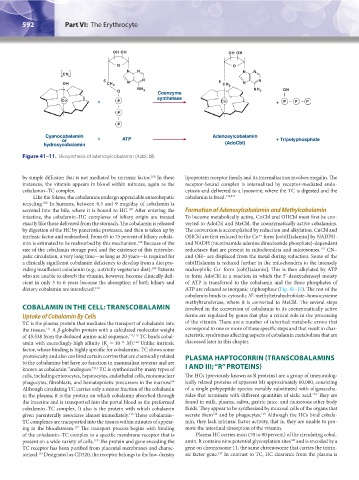
               Figure 41–11.  Biosynthesis of adenosylcobalamin (AdoCbl).


               by simple diffusion that is not mediated by intrinsic factor.  In these   lipoprotein receptor family and its internalization involves megalin. The
                                                           100
               instances, the vitamin appears in blood within minutes, again as the   receptor-bound complex is internalized by receptor-mediated endo-
               cobalamin–TC complex.                                  cytosis and delivered to a lysosome, where the TC is digested and the
                   Like the folates, the cobalamins undergo appreciable enterohepatic   cobalamin is freed. 120,121
               recycling.  In humans, between 0.5 and 9 mcg/day of cobalamin is
                      106
               secreted into the bile, where it is bound to HC.  After entering the   Formation of Adenosylcobalamin and Methylcobalamin
                                                   107
               intestine, the cobalamin–HC complexes of biliary origin are treated   To become metabolically active, CnCbl and OHCbl must first be con-
               exactly like those delivered from the stomach. The cobalamin is released   verted to AdoCbl and MeCbl, the coenzymatically active cobalamins.
               by digestion of the HC by pancreatic proteases, and then is taken up by   The conversion is accomplished by reduction and alkylation. CnCbl and
               intrinsic factor and reabsorbed. From 65 to 75 percent of biliary cobala-  OHCbl are first reduced to the Co  form [cob(II)alamin] by NADPH-
                                                                                               ++
               min is estimated to be reabsorbed by this mechanism.  Because of the   and NADH (nicotinamide adenine dinucleotide phosphate)-dependent
                                                      108
               size of the cobalamin storage pool and the existence of this enterohe-  reductases that are present in mitochondria and microsomes.  CN–
                                                                                                                   122
               patic circulation, a very long time—as long as 20 years—is required for   and OH– are displaced from the metal during reduction. Some of the
               a clinically significant cobalamin deficiency to develop from a diet pro-  cob(II)alamin is reduced further in the mitochondria to the intensely
               viding insufficient cobalamin (e.g., a strictly vegetarian diet).  Patients   nucleophilic Co  form [cob(I)alamin]. This is then alkylated by ATP
                                                                                  +
                                                           109
               who are unable to absorb the vitamin, however, become clinically defi-  to form AdoCbl in a reaction in which the 5′-deoxyadenosyl moiety
               cient in only 3 to 6 years because the absorption of both biliary and   of ATP is transferred to the cobalamin and the three phosphates of
               dietary cobalamin are interdicted. 110                 ATP are released as inorganic triphosphate (Fig. 41–11). The rest of the
                                                                      cobalamin binds to cytosolic N -methyltetrahydrofolate–homocysteine
                                                                                            5
                                                                      methyltransferase, where it is converted to MeCbl. The several steps
               COBALAMIN IN THE CELL: TRANSCOBALAMIN                  involved in the conversion of cobalamin to its coenzymatically active
               Uptake of Cobalamin By Cells                           forms are regulated by genes that play a critical role in the processing
               TC is the plasma protein that mediates the transport of cobalamin into   of the vitamin. There are a number of inherited metabolic errors that
               the tissues.  A β-globulin protein with a calculated molecular weight   correspond to one or more of these specific steps and that result in char-
                       111
               of 45,538 from the deduced amino acid sequence, 112,113  TC binds cobal-  acteristic syndromes affecting aspects of cobalamin metabolism that are
               amin with exceedingly high affinity (K  = 10  M).  Unlike intrinsic   discussed later in this chapter.
                                                –11
                                                     114
                                            a
               factor, whose binding is highly specific for cobalamins, TC shows some
               promiscuity and also can bind certain corrins that are chemically related   PLASMA HAPTOCORRIN (TRANSCOBALAMINS
               to the cobalamins but have no function in mammalian systems and are
               known as cobalamin “analogues.”  TC is synthesized by many types of   I AND III; “R” PROTEINS)
                                       115
               cells, including enterocytes, hepatocytes, endothelial cells, mononuclear   The HCs (previously known as R proteins) are a group of immunolog-
               phagocytes, fibroblasts, and hematopoietic precursors in the marrow.    ically related proteins of apparent Mr approximately 60,000, consisting
                                                                 64
               Although circulating TC carries only a minor fraction of the cobalamin   of a single polypeptide species variably substituted with oligosaccha-
               in the plasma, it is the protein on which cobalamin absorbed through   rides that terminate with different quantities of sialic acid.  They are
                                                                                                                 123
               the intestine and is transported into the portal blood as the preformed   found in milk, plasma, saliva, gastric juice, and numerous other body
               cobalamin–TC complex. It also is the protein with which cobalamin   fluids. They appear to be synthesized by mucosal cells of the organs that
                                                                               124
               given parenterally associates almost immediately.  These cobalamin–  secrete them  and by phagocytes.  Although the HCs bind cobala-
                                                                                               125
                                                   116
               TC complexes are transported into the tissues within minutes of appear-  min, they lack intrinsic factor activity, that is, they are unable to pro-
               ing in the bloodstream.  The transport process begins with binding   mote the intestinal absorption of the vitamin.
                                 117
               of the cobalamin–TC complex to a specific membrane receptor that is   Plasma HC carries most (70 to 90 percent) of the circulating cobal-
               present on a wide variety of cells.  The protein and gene encoding the   amin. It contains nine potential glycosylation sites  and is encoded by a
                                                                                                         126
                                       118
               TC receptor has been purified from placental membranes and charac-  gene on chromosome 11, the same chromosome that carries the intrin-
               terized.  Designated as CD320, the receptor belongs to the low-density   sic factor gene.  In contrast to TC, HC clearance from the plasma is
                                                                                 127
                     119
          Kaushansky_chapter 41_p0583-0616.indd   592                                                                   9/17/15   6:24 PM

