


Page 902 - Williams Hematology ( PDFDrive )
P. 902
876  Part VI:  The Erythrocyte                          Chapter 57:  Primary and Secondary Erythrocytoses             877


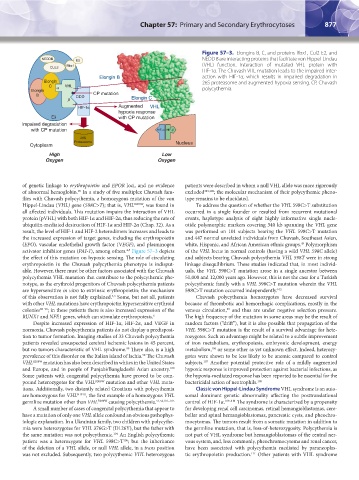
                                                                              Figure 57–3.  Elongins B, C, and proteins Rbx1, Cul2 E2, and
                                                                              NEDD 8 are interacting proteins that facilitate von Hippel-Lindau
                                                                              (VHL) function. Interaction of mutated  VHL protein with
                                                                              HIF-1α. The Chuvash VHL mutation leads to the impaired inter-
                                                                              action with HIF-1α, which results in impaired degradation in
                                                                              26S proteasome and augmented hypoxia sensing. CP, Chuvash
                                                                              polycythemia.


                  of genetic linkage to  erythropoietin and  EPOR loci, and no evidence   patients were described in whom a null VHL allele was more rigorously
                                    95
                  of abnormal hemoglobin.  In a study of five multiplex Chuvash fam-  excluded 101,102 ; the molecular mechanism of their polycythemic pheno-
                  ilies with Chuvash polycythemia, a homozygous mutation of the von     type remains to be elucidated.
                  Hippel-Lindau (VHL) gene (598C>T); that is, VHL R200W , was found in   To address the question of whether the VHL 598C>T substitution
                  all affected individuals. This mutation impairs the interaction of VHL   occurred in a single founder or resulted from recurrent mutational
                  protein (pVHL) with both HIF-1α and HIF-2α, thus reducing the rate of   events, haplotype analysis of eight highly informative single nucle-
                  ubiquitin-mediated destruction of HIF-1α and HIF-2α (Chap. 32). As a   otide polymorphic markers covering 340 kb spanning the VHL gene
                  result, the level of HIF-1 and HIF-2 heterodimers increases and leads to   was performed on 101 subjects bearing the  VHL 598C>T mutation
                  the increased expression of target genes, including the erythropoietin   and 447 normal unrelated individuals from Chuvash, Southeast Asian,
                                                                                                               49
                  (EPO), vascular endothelial growth factor (VEGF), and plasminogen   white, Hispanic, and African American ethnic groups.  Polymorphism
                                                     4,5
                  activator inhibitor genes (PAI-1), among others.  Figure 57–3 depicts   of the VHL locus in normal controls (having a wild VHL 598C allele)
                  the effect of this mutation on hypoxic sensing. The role of circulating   and subjects bearing Chuvash polycythemia VHL 598T were in strong
                  erythropoietin in the Chuvash polycythemia phenotype is indisput-  linkage disequilibrium. These studies indicated that, in most individ-
                  able. However, there must be other factors associated with the Chuvash   uals, the  VHL 598C>T mutation arose in a single ancestor between
                  polycythemia VHL mutation that contribute to the polycythemic phe-  51,000 and 12,000 years ago. However, this is not the case for a Turkish
                  notype, as the erythroid progenitors of Chuvash polycythemia patients   polycythemic family with a VHL 598C>T mutation wherein the VHL
                  are hypersensitive in vitro to extrinsic erythropoietin; the mechanism   598C>T mutation occurred independently. 102
                  of this observation is not fully explained.  Some, but not all, patients   Chuvash polycythemia homozygotes have decreased survival
                                                4,5
                  with other VHL mutations have erythropoietin hypersensitive erythroid   because of thrombotic and hemorrhagic complications, mostly in the
                  colonies 96–98 ; in these patients there is also increased expression of the   venous  circulation,   and  thus  are  under  negative  selection  pressure.
                                                                                      99
                  RUNX1 and NFE1 genes, which can stimulate erythropoiesis. 6  The high frequency of the mutation in some areas may be the result of
                     Despite increased expression of HIF-1α, HIF-2α, and VEGF in   random factors (“drift”), but it is also possible that propagation of the
                  normoxia, Chuvash polycythemia patients do not display a predisposi-  VHL 598C>T mutation is the result of a survival advantage for hete-
                  tion to tumor formation. Imaging studies of 33 Chuvash polycythemia   rozygotes. Such an advantage might be related to a subtle improvement
                  patients revealed unsuspected cerebral ischemic lesions in 45 percent,   of iron metabolism, erythropoiesis, embryonic development, energy
                                                                                 106
                  but no tumors characteristic of VHL syndrome.  There also, is a high   metabolism,  or some other as yet unknown effect. Indeed, heterozy-
                                                     99
                                                          52
                  prevalence of this disorder on the Italian island of Ischia.  The Chuvash   gotes were shown to be less likely to be anemic compared to control
                  VHL R200W  mutation has also been described in whites in the United States   subjects.  Another potential protective role of a mildly augmented
                                                                               107
                  and Europe, and in people of Punjabi/Bangladeshi Asian ancestry.    hypoxic response is improved protection against bacterial infections, as
                                                                   100
                  Some patients with congenital polycythemia have proved to be com-  the hypoxia-mediated response has been reported to be essential for the
                  pound heterozygotes for the VHL R200W  mutation and other VHL muta-  bactericidal action of neutrophils. 108
                  tions. Additionally, two distantly related Croatians with polycythemia   Classic von Hippel-Lindau Syndrome VHL syndrome is an auto-
                  are homozygous for VHL H191D , the first example of a homozygous VHL   somal dominant genetic abnormality affecting the posttranslational
                  germline mutation other than VHL R200W  causing polycythemia. 51,54,101–105  control of HIF-1α. 109–111  The syndrome is characterized by a propensity
                     A small number of cases of congenital polycythemia that appear to   for developing renal cell carcinomas, retinal hemangioblastomas, cere-
                  have a mutation of only one VHL allele confound an obvious pathophys-  bellar and spinal hemangioblastomas, pancreatic cysts, and pheochro-
                  iologic explanation. In a Ukrainian family, two children with polycythe-  mocytomas. The tumors result from a somatic mutation in addition to
                  mia were heterozygotes for VHL 376G>T (D126Y), but the father with   the germline mutation, that is, loss-of-heterozygosity. Polycythemia is
                                                104
                  the same mutation was not polycythemic.  An English polycythemic   not part of VHL syndrome but hemangioblastomas of the central ner-
                                                    106
                  patient was a heterozygote for  VHL 598C>T ; but the inheritance   vous system, and, less commonly, pheochromocytoma and renal cancer,
                  of the deletion of a VHL allele, or null VHL allele, in a trans position   have  been  associated with  polycythemia  mediated by  paraneoplas-
                                                                                               111
                  was not excluded. Subsequently, two polycythemic VHL heterozygous   tic erythropoietin production.  Other patients with VHL syndrome


          Kaushansky_chapter 57_p0871-0888.indd   877                                                                   9/18/15   9:36 AM

