


Page 1012 - Clinical Immunology_ Principles and Practice ( PDFDrive )
P. 1012
976          Part Seven  Organ-Specific Inflammatory Disease


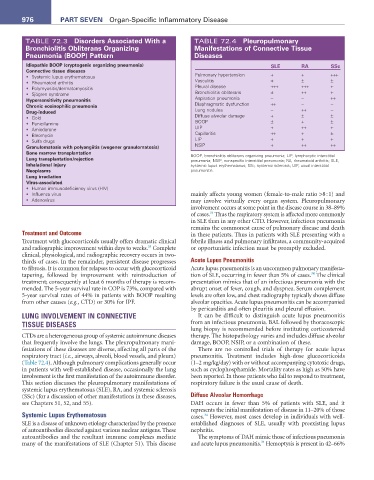
         TABLE 72.3  Disorders associated With a                 TABLE 72.4  Pleuropulmonary
         Bronchiolitis Obliterans Organizing                     Manifestations of Connective tissue
         Pneumonia (BOOP) Pattern                                Diseases

          Idiopathic BOOP (cryptogenic organizing pneumonia)                              SLe       ra       SSc
          Connective tissue diseases
          •  Systemic lupus erythematosus                        Pulmonary hypertension   +         +        +++
          •  Rheumatoid arthritis                                Vasculitis               +         ±        ±
          •  Polymyositis/dermatomyositis                        Pleural disease          +++       +++      +
          •  Sjögren syndrome                                    Bronchiolitis obliterans  ±        ++       +
          Hypersensitivity pneumonitis                           Aspiration pneumonia     −         −        ++
          Chronic eosinophilic pneumonia                         Diaphragmatic dysfunction  ++      −        −
          Drug-induced                                           Lung nodules             −         ++       −
          •  Gold                                                Diffuse alveolar damage  +         ±        ±
          •  Penicillamine                                       BOOP                     ±         +        ±
          •  Amiodarone                                          UIP                      +         ++       +
          •  Bleomycin                                           Capillaritis             ++        +        ±
          •  Sulfa drugs                                         LIP                      +         +        +
          Granulomatosis with polyangiitis (wegener granulomatosis)  NSIP                 +         ++       ++
          Bone marrow transplantation                          BOOP, bronchiolitis obliterans organizing pneumonia; LIP, lymphocytic interstitial
          Lung transplantation/rejection                       pneumonia; NSIP, nonspecific interstitial pneumonia; RA, rheumatoid arthritis; SLE,
          Inhalational injury                                  systemic lupus erythematosus; SSc, systemic sclerosis; UIP, usual interstitial
          neoplasms                                            pneumonitis.
          Lung irradiation
          virus-associated
          •  Human immunodeficiency virus (HIV)
          •  Influenza virus                                   mainly affects young women (female-to-male ratio >8 : 1) and
          •  Adenovirus                                        may involve virtually every organ system. Pleuropulmonary
                                                               involvement occurs at some point in the disease course in 38–89%
                                                                      34
                                                               of cases.  Thus the respiratory system is affected more commonly
                                                               in SLE than in any other CTD. However, infectious pneumonia
                                                               remains the commonest cause of pulmonary disease and death
        Treatment and Outcome                                  in these patients. Thus in patients with SLE presenting with a
        Treatment with glucocorticoids usually offers dramatic clinical   febrile illness and pulmonary infiltrates, a community-acquired
                                                 33
        and radiographic improvement within days to weeks.  Complete   or opportunistic infection must be promptly excluded.
        clinical, physiological, and radiographic recovery occurs in two-
        thirds of cases. In the remainder, persistent disease progresses   Acute Lupus Pneumonitis
        to fibrosis. It is common for relapses to occur with glucocorticoid   Acute lupus pneumonitis is an uncommon pulmonary manifesta-
                                                                                                       34
        tapering, followed by improvement with reintroduction of   tion of SLE, occurring in fewer than 5% of cases.  The clinical
        treatment; consequently at least 6 months of therapy is recom-  presentation mimics that of an infectious pneumonia with the
        mended. The 5-year survival rate in COP is 73%, compared with   abrupt onset of fever, cough, and dyspnea. Serum complement
        5-year survival rates of 44% in patients with BOOP resulting   levels are often low, and chest radiography typically shows diffuse
        from other causes (e.g., CTD) or 30% for IPF.          alveolar opacities. Acute lupus pneumonitis can be accompanied
                                                               by pericarditis and often pleuritis and pleural effusion.
        LUNG INVOLVEMENT IN CONNECTIVE                            It can be difficult to distinguish acute lupus pneumonitis
        TISSUE DISEASES                                        from an infectious pneumonia. BAL followed by thoracoscopic
                                                               lung biopsy is recommended before instituting corticosteroid
        CTDs are a heterogeneous group of systemic autoimmune diseases   therapy. The histopathology varies and includes diffuse alveolar
        that frequently involve the lungs. The pleuropulmonary mani-  damage, BOOP, NSIP, or a combination of these.
        festations of these diseases are diverse, affecting all parts of the   There are no controlled trials  of therapy for  acute lupus
        respiratory tract (i.e., airways, alveoli, blood vessels, and pleura)   pneumonitis. Treatment includes high-dose glucocorticoids
        (Table 72.4). Although pulmonary complications generally occur   (1–2 mg/kg/day) with or without accompanying cytotoxic drugs,
        in patients with well-established disease, occasionally the lung   such as cyclophosphamide. Mortality rates as high as 50% have
        involvement is the first manifestation of the autoimmune disorder.   been reported. In those patients who fail to respond to treatment,
        This section discusses the pleuropulmonary manifestations of   respiratory failure is the usual cause of death.
        systemic lupus erythematosus (SLE), RA, and systemic sclerosis
        (SSc) (for a discussion of other manifestations in these diseases,   Diffuse Alveolar Hemorrhage
        see Chapters 51, 52, and 55).                          DAH occurs in fewer than 5% of patients with SLE, and it
                                                               represents the initial manifestation of disease in 11–20% of those
        Systemic Lupus Erythematosus                           cases.  However, most cases develop in individuals with well-
                                                                    34
        SLE is a disease of unknown etiology characterized by the presence   established diagnoses of SLE, usually with preexisting lupus
        of autoantibodies directed against various nuclear antigens. These   nephritis.
        autoantibodies and the resultant immune complexes mediate   The symptoms of DAH mimic those of infectious pneumonia
                                                                                      34
        many of the manifestations of SLE (Chapter 51). This disease   and acute lupus pneumonitis.  Hemoptysis is present in 42–66%

