


Page 1031 - Clinical Immunology_ Principles and Practice ( PDFDrive )
P. 1031
994          Part seven  Organ-Specific Inflammatory Disease


                                                                                     +
                              Vitreous humor                   and from γδ T cells; CD8  Tregs upregulate FasL, IL-10, and
                                                    Sclera     TGF-β to promote FasL-mediated killing of T cells that recognize
                                                               the ocular antigen; TGF-β also induces ocular APCs to secrete
                    Iris                            Choroid    IL-10 during antigen processing. Apoptotic T cells from the eye
                                                               pass in the bloodstream to the spleen, where they are phagocytosed
          Lens                                      Retina     and induce activation of Th2-type CD4 T cells. The Th2-type
                                                               cells control Th1 function by secreting various immunomodula-
                                                               tory cytokines. T-cell receptor α-chain fragments from apoptotic
          Cornea                Vitreous            Macula     cells are presented in the class I pathway. This event generates
                                                               CD8 natural killer (NK) cells, which are capable of deleting the
          Anterior                                  Optic      CD4  T  cells  that  would  otherwise  mediate  a  delayed-type
          chamber                                   nerve      hypersensitivity response. One study demonstrated that IFN-γ
                                                               appears to be important in CD8 Treg suppressive function.
                                                                  Invariant natural killer T (iNKT) cells, which interact with
          Conjunctiva
                                                               lipid antigens presented in the context of an MHC-like molecule,
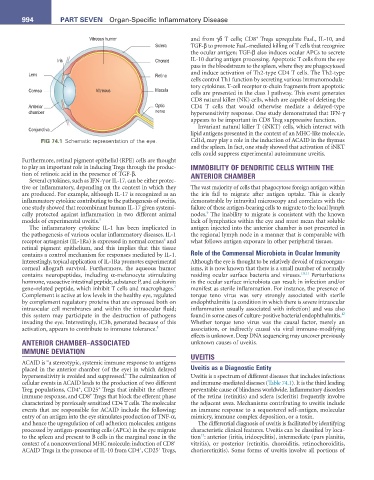
              FIG 74.1  Schematic representation of the eye.   Cd1d, may play a role in the induction of ACAID in the thymus
                                                               and the spleen. In fact, one study showed that activation of iNKT
                                                               cells could suppress experimental autoimmune uveitis.
        Furthermore, retinal pigment epithelial (RPE) cells are thought
        to play an important role in inducing Tregs through the produc-  IMMOBILITY OF DENDRITIC CELLS WITHIN THE
        tion of retinoic acid in the presence of TGF-β.        ANTERIOR CHAMBER
           Several cytokines, such as IFN-γ or IL-17, can be either protec-
        tive or inflammatory, depending on the context in which they   The vast majority of cells that phagocytose foreign antigen within
        are produced. For example, although IL-17 is recognized as an   the iris fail to migrate after antigen uptake. This is clearly
        inflammatory cytokine contributing to the pathogenesis of uveitis,   demonstrable by intravital microscopy and correlates with the
        one study showed that recombinant human IL-17 given systemi-  failure of these antigen-bearing cells to migrate to the local lymph
                                                                     9
        cally  protected  against  inflammation  in  two  different  animal   nodes.  The inability to migrate is consistent with the known
        models of experimental uveitis. 5                      lack of lymphatics within the eye and must mean that soluble
           The inflammatory cytokine IL-1 has been implicated in     antigen injected into the anterior chamber is not presented in
        the pathogenesis of various ocular inflammatory diseases. IL-1   the regional lymph node in a manner that is comparable with
                                                       6
        receptor antagonist (IL-1Ra) is expressed in normal cornea  and   what follows antigen exposure in other peripheral tissues.
        retinal  pigment  epithelium, and  this  implies  that  this  tissue
        contains a control mechanism for responses mediated by IL-1.   Role of the Commensal Microbiota in Ocular Immunity
        Interestingly, topical application of IL-1Ra promotes experimental   Although the eye is thought to be relatively devoid of microorgan-
        corneal allograft survival. Furthermore, the aqueous humor   isms, it is now known that there is a small number of normally
        contains neuropeptides, including  α-melanocyte stimulating   residing ocular surface bacteria and viruses. 10,11  Perturbations
        hormone, vasoactive intestinal peptide, substance P, and calcitonin   in the ocular surface microbiota can result in infection and/or
                                                          7
        gene–related peptide, which inhibit T cells and macrophages.    manifest as sterile inflammation. For instance, the presence of
        Complement is active at low levels in the healthy eye, regulated   torque teno virus was very strongly associated with sterile
        by complement regulatory proteins that are expressed both on   endophthalmitis (a condition in which there is severe intraocular
        intraocular cell membranes and within the intraocular fluid;   inflammation usually associated with infection) and was also
                                                                                                                 12
        this  system  may  participate  in  the  destruction of  pathogens   found in some cases of culture-positive bacterial endophthalmitis.
        invading the eye. Interestingly, iC3b, generated because of this   Whether torque teno virus was the causal factor, merely an
        activation, appears to contribute to immune tolerance. 8  association, or indirectly causal via viral immune-modifying
                                                               effects is unknown. Deep DNA sequencing may uncover previously
        ANTERIOR CHAMBER–ASSOCIATED                            unknown causes of uveitis.
        IMMUNE DEVIATION
                                                               UVEITIS
        ACAID is “a stereotypic, systemic immune response to antigens
        placed in the anterior chamber (of the eye) in which delayed   Uveitis as a Diagnostic Entity
        hypersensitivity is avoided and suppressed.” The culmination of   Uveitis is a spectrum of different diseases that includes infections
        cellular events in ACAID leads to the production of two different   and immune-mediated diseases (Table 74.1). It is the third leading
                           +
                                 +
        Treg populations, CD4 , CD25  Tregs that inhibit the afferent   preventable cause of blindness worldwide. Inflammatory disorders
                              +
        immune response, and CD8  Tregs that block the efferent phase   of the retina (retinitis) and sclera (scleritis) frequently involve
        characterized by previously sensitized CD4 T cells. The molecular   the adjacent uvea. Mechanisms contributing to uveitis include
        events that are responsible for ACAID include the following:   an immune response to a sequestered self-antigen, molecular
        entry of an antigen into the eye stimulates production of TNF-α,   mimicry, immune complex deposition, or a toxin.
        and hence the upregulation of cell adhesion molecules; antigens   The differential diagnosis of uveitis is facilitated by identifying
        processed by antigen-presenting cells (APCs) in the eye migrate   characteristic clinical features. Uveitis can be classified by loca-
                                                                   13
        to the spleen and present to B cells in the marginal zone in the   tion : anterior (iritis, iridocyclitis), intermediate (pars planitis,
                                                          +
        context of a nonconventional MHC molecule; induction of CD8    vitritis),  or  posterior  (retinitis,  choroiditis,  retinochoroiditis,
                                                     +
                                               +
        ACAID Tregs in the presence of IL-10 from CD4 , CD25  Tregs,   chorioretinitis). Some forms of uveitis involve all portions of

