


Page 1036 - Clinical Immunology_ Principles and Practice ( PDFDrive )
P. 1036
CHaPter 74  Immunological Ocular Disease                999


               KeY COnCePt                                         TABLE 74.4  systemic Immune-Mediated
                                                                   Diseases associated With scleritis
            Unilateral, recurrent, acute anterior uveitis is one of the most common
            forms of uveitis; it is frequently associated with spondyloarthritis.  Rheumatoid arthritis
                                                                   Granulomatosis with polyangiitis
                                                                   Inflammatory bowel disease
                                                                   Polyarteritis nodosa
                                                                   Temporal arteritis/giant cell arteritis
               CLInICaL PearL                                      Systemic lupus erythematosus
                                                                   Ankylosing spondylitis
            It is important to rule out infectious causes of uveitis before initiating   Relapsing polychondritis
            immunosuppression for uveitis.


           Advancements and New Treatments for Uveitis
           As molecular diagnostics, such as next-generation deep sequencing
           techniques and bioinformatics, are becoming refined and more
           broadly available, additional etiological agents for uveitis may
           be discovered. Additionally, with an increased understanding of
           the cellular pathways involved in various uveitic entities, new
           targets for therapy of uveitis may emerge. For instance, targeting
           IL-6 with a biologic agent versus targeting lymphocyte trafficking
           to the eye  via an antibody against  adhesion molecules may
           represent emerging therapies.  Additional local drug delivery
           methods may improve ocular efficacy while lowering systemic
           side effects.

               On tHe HOrIZOn
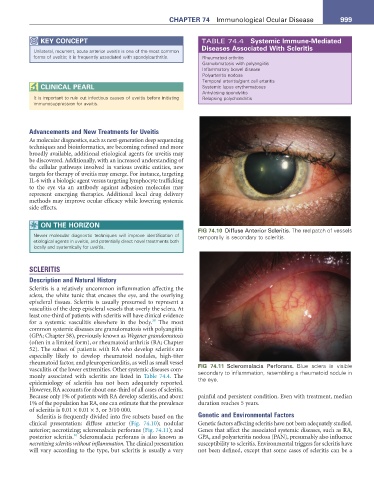
                                                                  FIG 74.10  Diffuse Anterior Scleritis. The red patch of vessels
            Newer molecular diagnostic techniques will improve identification of   temporally is secondary to scleritis.
            etiological agents in uveitis, and potentially direct novel treatments both
            locally and systemically for uveitis.


           SCLERITIS
           Description and Natural History
           Scleritis is a relatively uncommon inflammation affecting the
           sclera, the white tunic that encases the eye, and the overlying
           episcleral tissues. Scleritis is usually presumed to represent a
           vasculitis of the deep episcleral vessels that overly the sclera. At
           least one-third of patients with scleritis will have clinical evidence
                                                   39
           for a systemic vasculitis elsewhere in the body.  The most
           common systemic diseases are granulomatosis with polyangiitis
           (GPA; Chapter 58), previously known as Wegener granulomatosis
           (often in a limited form), or rheumatoid arthritis (RA; Chapter
           52). The subset of patients with RA who develop scleritis are
           especially likely to develop rheumatoid nodules, high-titer
           rheumatoid factor, and pleuropericarditis, as well as small vessel   FIG  74.11  Scleromalacia  Perforans.  Blue  sclera is  visible
           vasculitis of the lower extremities. Other systemic diseases com-  secondary to inflammation, resembling a rheumatoid nodule in
           monly associated with scleritis are listed in  Table 74.4. The   the eye.
           epidemiology of scleritis has not been adequately reported.
           However, RA accounts for about one-third of all cases of scleritis.
           Because only 1% of patients with RA develop scleritis, and about   painful and persistent condition. Even with treatment, median
           1% of the population has RA, one can estimate that the prevalence   duration reaches 5 years.
           of scleritis is 0.01 × 0.01 × 3, or 3/10 000.
             Scleritis is frequently divided into five subsets based on the   Genetic and Environmental Factors
           clinical presentation: diffuse anterior (Fig. 74.10); nodular   Genetic factors affecting scleritis have not been adequately studied.
           anterior; necrotizing; scleromalacia perforans (Fig. 74.11); and   Genes that affect the associated systemic diseases, such as RA,
                         40
           posterior scleritis.  Scleromalacia perforans is also known as   GPA, and polyarteritis nodosa (PAN), presumably also influence
           necrotizing scleritis without inflammation. The clinical presentation   susceptibility to scleritis. Environmental triggers for scleritis have
           will vary according to the type, but scleritis is usually a very   not been defined, except that some cases of scleritis can be a

