


Page 257 - Clinical Immunology_ Principles and Practice ( PDFDrive )
P. 257
238          PArT TwO  Host Defense Mechanisms and Inflammation


            KEY CONCEPTS                                          Th1 inflammation                  Th2 inflammation
         CD4 Effector Phenotypes                                    Antigen
                                                                  presentation                    B
          Th1                                                       IFNγ                IL-4  T  IL-4  Plasma cell
          •  Produce interferon (IFN)-γ, interleukin (IL)-2, tumor necrosis factor           h2               IgE
           (TNF)-α and TNF-β (LT-α)                                     T h1
          •  Stimulate Immunoglobulin (Ig)G2 and IgG3 class switching       TNFα                   IL-5
          •  Responses mediated by macrophage activity               APC
          •  Promotes phagocytic activity through:                                    Blood
           •  FcγRIII cross-linking                                                   vessel              Mast cell
           •  Complement deposition
           •  Opsonization                                        APC/macrophage
           •  IFN-γ-mediated macrophage activation                 activation and  Antigen
                                                                   phagocytosis  presentation             Eosinophil
                                                                                            IL-6
          Th2                                                                     IL-17?    IL-17
          •  Produce IL-4, IL-5, IL-6, and IL-10                                      T     TNFα
          •  Stimulate IgG4 and IgE class switching                                    h17
          •  Responses mediated by mast cells and eosinophils        APC           APC           Neutrophil
          •  Increases degranulation through:
           •  FcεRI cross-linking
           •  IL-5–mediated eosinophil activation                             Th17 inflammation
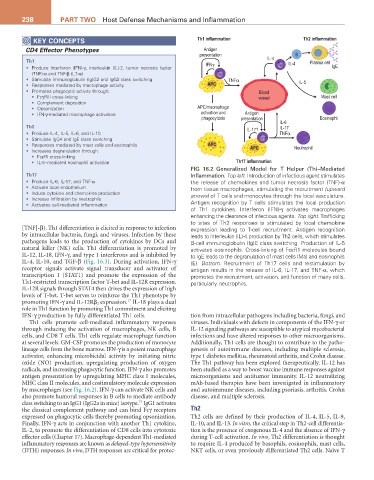
                                                               FIG 16.2  Generalized Model for T Helper (Th)–Mediated
          Th17                                                 Inflammation. Top left. Introduction of infectious agent stimulates
          •  Produce IL-6, IL-17, and TNF-α                    the release of chemokines and tumor necrosis factor (TNF)-α
          •  Activate local endothelium                        from tissue macrophages, stimulating the recruitment (upward
          •  Induce cytokine and chemokine production          arrows) of T cells and monocytes through the local vasculature.
          •  Increase infiltration by neutrophils              Antigen recognition by T cells stimulates the local production
          •  Activates cell-mediated inflammation
                                                               of Th1 cytokines. Interferon (IFN)-γ activates macrophages
                                                               enhancing the clearance of infectious agents. Top right. Trafficking
                                                               to sites of Th2 responses is stimulated by local chemokine
        [TNF]-β). Th1 differentiation is elicited in response to infection   expression  leading  to  T-cell  recruitment.  Antigen  recognition
        by intracellular bacteria, fungi, and viruses. Infection by these   leads to interleukin (IL)-4 production by Th2 cells, which stimulates
        pathogens leads to the production of cytokines by DCs and   B-cell immunoglobulin (Ig)E class switching. Production of IL-5
        natural killer (NK) cells. Th1 differentiation is promoted by   activates eosinophils. Cross-linking of FcεR1 molecules bound
        IL-12, IL-18, IFN-γ, and type 1 interferons and is inhibited by   to IgE leads to the degranulation of mast cells (Ma) and eosinophils
        IL-4, IL-10, and TGF-β (Fig. 16.3). During activation, IFN-γ   (E).  Bottom. Recruitment of Th17 cells and restimulation by
        receptor signals activate signal transducer and activator of   antigen results in the release of IL-6, IL-17, and TNF-α, which
        transcription 1 (STAT1) and promote the expression of the   promotes the recruitment, activation, and function of many cells,
        Th1-restricted transcription factor T-bet and IL-12R expression.   particularly neutrophils.
        IL-12R signals through STAT4 then drives the expression of high
        levels of T-bet. T-bet serves to reinforce the Th1 phenotype by
                                           17
        promoting IFN-γ and IL-12Rβ 2  expression.  IL-18 plays a dual
        role in Th1 function by promoting Th1 commitment and eliciting
        IFN-γ production by fully differentiated Th1 cells.    tion from intracellular pathogens including bacteria, fungi, and
           Th1 cells promote cell-mediated inflammatory responses   viruses. Individuals with defects in components of the IFN-γ or
        through inducing the activation of macrophages, NK cells, B   IL-12 signaling pathways are susceptible to atypical mycobacterial
        cells, and CD8 T cells. Th1 cells regulate macrophage function   infections and have altered responses to other microorganisms.
        at several levels. GM-CSF promotes the production of monocyte   Additionally, Th1 cells are thought to contribute to the patho-
        lineage cells from the bone marrow. IFN-γ is a potent macrophage   genesis of autoimmune diseases, including multiple sclerosis,
        activator, enhancing microbicidal activity by initiating nitric   type 1 diabetes mellitus, rheumatoid arthritis, and Crohn disease.
        oxide (NO) production, upregulating production of oxygen   The Th1 pathway has been explored therapeutically. IL-12 has
        radicals, and increasing phagocytic function. IFN-γ also promotes   been studied as a way to boost vaccine immune responses against
        antigen presentation by upregulating MHC class I molecules,   microorganisms and antitumor immunity. IL-12 neutralizing
        MHC class II molecules, and costimulatory molecule expression   mAb-based therapies have been investigated in inflammatory
        by macrophages (see Fig. 16.2). IFN-γ can activate NK cells and   and autoimmune diseases, including psoriasis, arthritis, Crohn
        also promote humoral responses in B cells to mediate antibody   disease, and multiple sclerosis.
                                              18
        class switching to an IgG1 (IgG2a in mice) isotype.  IgG1 activates
        the classical complement pathway and can bind Fcγ receptors   Th2
        expressed on phagocytic cells thereby promoting opsonization.   Th2 cells are defined by their production of IL-4, IL-5, IL-9,
        Finally, IFN-γ acts in conjunction with another Th1 cytokine,   IL-10, and IL-13. In vitro, the critical step in Th2-cell differentia-
        IL-2, to promote the differentiation of CD8 cells into cytotoxic   tion is the presence of exogenous IL-4 and the absence of IFN-γ
        effector cells (Chapter 17). Macrophage-dependent Th1-mediated   during T-cell activation. In vivo, Th2 differentiation is thought
        inflammatory responses are known as delayed-type hypersensitivity   to require IL-4 produced by basophils, eosinophils, mast cells,
        (DTH) responses. In vivo, DTH responses are critical for protec-  NKT cells, or even previously differentiated Th2 cells. Naïve T

