


Page 255 - Clinical Immunology_ Principles and Practice ( PDFDrive )
P. 255
236          PArT TwO  Host Defense Mechanisms and Inflammation


                                                               mature DCs readily elicit T-cell activation. DC maturation is
                                                               regulated by external stimuli, such as Toll-like receptor (TLR)
                                                               stimulation. T cells also stimulate DC maturation by expressing
            T cell       DC-bearing               Tissue DC    CD40 ligand (CD40L or CD154). Mature DCs instruct T cells
                          antigen                              through expression of MHC, costimulatory ligands, and cytokines.
                                                               The expression of these molecules provides context to the T-cell
                                                               activation process and helps tailor the immune response. For
                Lymph node
                                                               instance, TLR stimulation may elicit the expression of specific
                                                               types or levels of costimulation and cytokine allowing mature
                                            Th1  Th2
                                       Th22                    DCs to promote antibacterial T-effector responses. Tissue-specific
                                                               factors, such as vitamin D, transforming growth factor-β (TGF-β)
                                              Th1  Treg        and interleukin-10 (IL-10), alter costimulatory ligand and cytokine
                                         Th9                   expression by the DC and reduce T-cell activation. Thus DCs
                                               Th17  Tcm       transmit  information  from  tissues  to  either  promote  specific
                                                               immunity or suppress potentially damaging T-cell responses. 8
                                                Proliferation
                                               Differentiation    T-cell activation defects contribute to several immunodefi-
                                                               ciency  diseases.  T  cells  from  patients  with  Wiskott-Aldrich
                                                               syndrome, for instance, have defects in the formation of stable
              DC                Activated                      TCR signaling complexes. T cells in leukocyte adhesion deficiency
                                 T cell         Apoptosis
                                                               1 have a reduced capacity to become activated in response to
                                                               stimulation due to defects in integrin β 2 . Similarly, patients with
                      T cell                                   mutations in the TCR signaling components lck and Zap70 show
                 Activation          Expansion differentiation  defective T-cell activation. In contrast, mutations in inhibitory
                                                               receptors, including CTLA-4 and PD-1, are thought to contribute
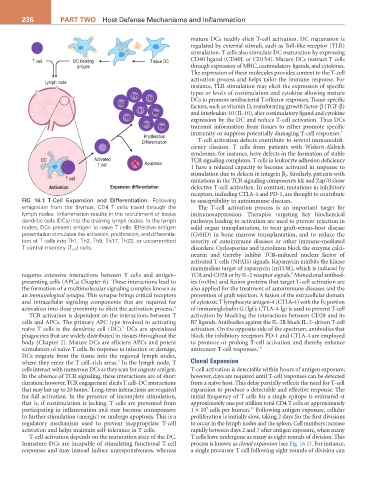
        FIG 16.1  T-Cell Expansion and Differentiation. Following   to susceptibility in autoimmune diseases.
        emigration from the thymus, CD4 T cells travel through the   The T-cell activation process is an important target for
        lymph nodes. Inflammation results in the recruitment of tissue   immunosuppression. Therapies targeting key biochemical
        dendritic cells (DCs) into the draining lymph nodes. In the lymph   pathways leading to activation are used to prevent rejection in
        nodes, DCs present antigen to naïve T cells. Effective antigen   solid organ transplantation, to  treat graft-versus-host  disease
        presentation stimulates the activation, proliferation, and differentia-  (GvHD) in bone marrow transplantation, and to reduce the
        tion of T cells into Th1, Th2, Th9, Th17, Th22, or uncommitted   severity of autoimmune diseases or other immune-mediated
        T central memory (T cm ) cells.                        disorders. Cyclosporine and tacrolimus block the enzyme calci-
                                                               neurin and thereby inhibit TCR-induced nuclear factor of
                                                               activated T cells (NFATs) signals. Rapamycin inhibits the kinase
                                                               mammalian target of rapamycin (mTOR), which is induced by
                                                                                                9
        requires extensive interactions between T cells and antigen-  TCR and CD28 or by IL-2 receptor signals.  Monoclonal antibod-
        presenting cells (APCs; Chapter 6). These interactions lead to   ies (mAbs) and fusion proteins that target T-cell activation are
        the formation of a multimolecular signaling complex known as   also applied for the treatment of autoimmune diseases and the
        an immunological synapse. This synapse brings critical receptors   prevention of graft rejection. A fusion of the extracellular domain
        and intracellular signaling components that are required for   of cytotoxic T lymphocyte antigen-4 (CTLA-4) with the Fc portion
        activation into close proximity to elicit the activation process. 4  of immunoglobulin G (IgG; CTLA-4-Ig) is used to prevent T-cell
           TCR activation is dependent on the interactions between T   activation by blocking the interactions between CD28 and its
        cells and APCs. The primary APC type involved in activating   B7 ligands. Antibodies against the IL-2R block IL-2–driven T-cell
                                         5
        naïve T cells is the dendritic cell (DC).  DCs are specialized   activation. On the opposite side of the spectrum, antibodies that
        phagocytes that are widely distributed in tissues throughout the   block the inhibitory receptors PD-1 and CTLA-4 are employed
        body (Chapter 2). Mature DCs are efficient APCs and potent   to promote or prolong T-cell activation and thereby enhance
        stimulators of naïve T cells. In response to infection or damage,   antitumor T-cell responses. 10
        DCs migrate from the tissue into the regional lymph nodes,
                                        6
        where they enter the T cell–rich areas.  In the lymph node, T   Clonal Expansion
        cells interact with numerous DCs as they scan for cognate antigen.   T-cell activation is detectable within hours of antigen exposure;
        In the absence of TCR signaling, these interactions are of short   however, days are required until T-cell responses can be detected
        duration; however, TCR engagement elicits T cell–DC interactions   from a naïve host. This delay partially reflects the need for T-cell
                              7
        that may last up to 20 hours.  Long-term interactions are required   expansion to produce a detectable and effective response. The
        for full activation. In the presence of incomplete stimulation,   initial frequency of T cells for a single epitope is estimated at
        that is, if costimulation is lacking, T cells are prevented from   approximately one per million total CD4 T cells or approximately
                                                                     5
                                                                                   11
        participating in inflammation and may become unresponsive   1 × 10  cells per human.  Following antigen exposure, cellular
        to further stimulation (anergic) or undergo apoptosis. This is a   proliferation is initially slow, taking 2 days for the first divisions
        regulatory mechanism used to prevent inappropriate T-cell   to occur in the lymph nodes and the spleen. Cell numbers increase
        activation and helps maintain self-tolerance in T cells.  rapidly between days 2 and 7 after antigen exposure, when many
           T-cell activation depends on the maturation state of the DC.   T cells have undergone as many as eight rounds of division. This
        Immature DCs are incapable of stimulating functional T-cell   process is known as clonal expansion (see Fig. 16.1). For instance,
        responses and may instead induce unresponsiveness, whereas   a single precursor T cell following eight rounds of division can

