


Page 322 - Clinical Immunology_ Principles and Practice ( PDFDrive )
P. 322
302          Part two  Host Defense Mechanisms and Inflammation


          C3                         C3b(H 0)                       C6       C8           C9
                                         2
                 SS                            SS                 C5b
                        C3 convertase                                 C7
                 S                             S
                 S                        HS COOH  S
              S-C=O
                                C3a                                                                      Poly C9
                                  SS
                                 S
                                 S
                            S-C=O
                                 C3b
              SS  S  S                          SS  S  S
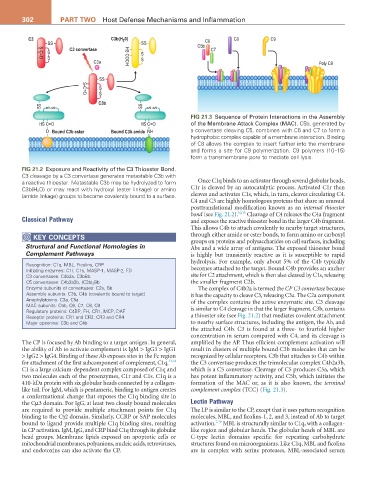
                                                               FIG 21.3  Sequence of Protein Interactions in the Assembly
              HS C=O                           HS C=O          of the Membrane Attack Complex (MAC). C5b, generated by
                O  Bound C3b ester   Bound C3b amide NH        a convertase cleaving C5, combines with C6 and C7 to form a
                                                               hydrophobic complex capable of a membrane interaction. Binding
                                                               of C8 allows the complex to insert further into the membrane
                                                               and  forms  a  site  for  C9  polymerization.  C9  polymers  (10–15)
                                                               form a transmembrane pore to mediate cell lysis.

        FIG 21.2  Exposure and Reactivity of the C3 Thioester Bond.
        C3 cleavage by a C3 convertase generates metastable C3b with
        a reactive thioester. Metastable C3b may be hydrolyzed to form   Once C1q binds to an activator through several globular heads,
        C3b(H 2 O) or may react with hydroxyl (ester linkage) or amino   C1r is cleaved by an autocatalytic process. Activated C1r then
        (amide linkage) groups to become covalently bound to a surface.   cleaves and activates C1s, which, in turn, cleaves circulating C4.
                                                               C4 and C3 are highly homologous proteins that share an unusual
                                                               posttranslational modification known as an  internal thioester
                                                               bond (see Fig. 21.2). 10,15  Cleavage of C4 releases the C4a fragment
        Classical Pathway                                      and exposes the reactive thioester bond in the larger C4b fragment.
                                                               This allows C4b to attach covalently to nearby target structures,
            KEY CoNCEPtS                                       through either amide or ester bonds, to form amino or carboxyl
         Structural and Functional Homologies in               groups on proteins and polysaccharides on cell surfaces, including
                                                               Abs and a wide array of antigens. The exposed thioester bond
         Complement Pathways                                   is highly but transiently reactive as it is susceptible to rapid
                                                               hydrolysis. For  example, only  about 5%  of  the C4b  typically
          Recognition: C1q, MBL, Ficolins, CRP
          Initiating enzymes: C1r, C1s, MASP-1, MASP-2, FD     becomes attached to the target. Bound C4b provides an anchor
          C3 convertases: C4b2a, C3bBb                         site for C2 attachment, which is then also cleaved by C1s, releasing
          C5 convertases: C4b2a3b, (C3b) 2 Bb                  the smaller fragment C2b.
          Enzyme subunits of convertases: C2a, Bb                 The complex of C4b2a is termed the CP C3 convertase because
          Assembly subunits: C3b, C4b (covalently bound to target)  it has the capacity to cleave C3, releasing C3a. The C2a component
          Anaphylatoxins: C3a, C5a                             of the complex contains the active enzymatic site. C3 cleavage
          MAC subunits: C5b, C6, C7, C8, C9
          Regulatory proteins: C4BP, FH, CR1, MCP, DAF         is similar to C4 cleavage in that the larger fragment, C3b, contains
          Receptor proteins: CR1 and CR2; CR3 and CR4          a thioester site (see Fig. 21.2) that mediates covalent attachment
          Major opsonins: C3b and C4b                          to nearby surface structures, including the antigen, the Ab, and
                                                               the attached C4b. C3 is found at a three- to fourfold higher
                                                               concentration in serum compared with C4, and its cleavage is
        The CP is focused by Ab binding to a target antigen. In general,   amplified by the AP. Thus efficient complement activation will
        the ability of Ab to activate complement is IgM > IgG3 > IgG1   result in clusters of multiple bound C3b molecules that can be
        > IgG2 > IgG4. Binding of these Ab exposes sites in the Fc region   recognized by cellular receptors. C3b that attaches to C4b within
        for attachment of the first subcomponent of complement, C1q. 13,14    the C3 convertase produces the trimolecular complex C4b2a3b,
        C1 is a large calcium-dependent complex composed of C1q and   which is a C5 convertase. Cleavage of C5 produces C5a, which
        two molecules each of the proenzymes, C1r and C1s. C1q is a   has potent inflammatory activity, and C5b, which initiates the
        410-kDa protein with six globular heads connected by a collagen-  formation of the MAC or, as it is also known, the  terminal
        like tail. For IgM, which is pentameric, binding to antigen creates   complement complex (TCC) (Fig. 21.3).
        a conformational change that exposes the C1q binding site in
        the Cµ3 domain. For IgG, at least two closely bound molecules   Lectin Pathway
        are required to provide multiple attachment points for C1q   The LP is similar to the CP, except that it uses pattern recognition
        binding to the Cγ2 domain. Similarly, CCRP or SAP molecules   molecules, MBL, and ficolins-1, 2, and 3, instead of Ab to target
                                                                        7,16
        bound to ligand provide multiple C1q binding sites, resulting   activation.  MBL is structurally similar to C1q, with a collagen-
        in CP activation. IgM, IgG, and CRP bind C1q through its globular   like region and globular heads. The globular heads of MBL are
        head groups. Membrane lipids exposed on apoptotic cells or   C-type lectin domains specific for repeating carbohydrate
        mitochondrial membranes, polyanions, nucleic acids, retroviruses,   structures found on microorganisms. Like C1q, MBL and ficolins
        and endotoxins can also activate the CP.               are in complex with  serine proteases, MBL-associated serum

