


Page 329 - Clinical Immunology_ Principles and Practice ( PDFDrive )
P. 329
CHaPtEr 21  The Human Complement System: Basic Concepts and Clinical Relevance                     309


                                                                  COMPLEMENT DEFICIENCIES

                               CR3                                Genetics and Incidence
                 IgM               CR1
                      iC3b                                        Complete genetic deficiencies of complement proteins are rare,
                               CRP                                with an estimated combined prevalence of 0.03% for any inherited
                         C3b    FcγR                              complete deficiency (excluding MBL deficiency) in the general
                       C1q                                        population. 2-4,56-58  For most components, inheritance is autosomal
                                                                  and expression is codominant, so complete deficiency is homo-
                      MBL                                         zygous recessive and heterozygotes express half levels. There are
                               C1qR                               two C4 genes (C4A and C4B), so a range of partial deficiencies
                      SAP                                         can be observed.  All cases of C1-INH deficiency have been
                            FcγR                                  heterozygous, and P deficiency is X-linked. MBL is found in
                                                                  multiple allelic forms with different levels of expression ranging
                                                                  from 5 nanograms per milliliter (ng/mL) to more than 5 micro-
                                                                  grams per milliliter (µg/mL) in plasma. Deficiencies specific to
                                                   TGF-β, IL-10   the LP are not detected by the screening assays described below
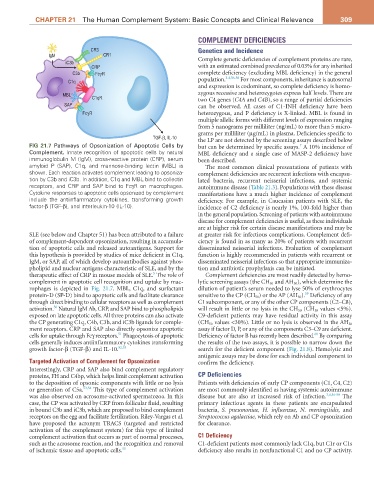
           FIG 21.7  Pathways of Opsonization of Apoptotic Cells by   but can be determined by specific assays.  A 10% incidence of
                                                                                                   7
           Complement. Innate recognition of apoptotic cells by natural   MBL deficiency and a single case of MASP-2 deficiency have
           immunoglobulin M (IgM), cross-reactive protein (CRP), serum   been described.
           amyloid P (SAP), C1q, and mannose-binding lectin (MBL) is   The most common clinical presentations of patients with
           shown. Each reaction activates complement leading to opsoniza-  complement deficiencies are recurrent infections with encapsu-
           tion by C3b and iC3b. In addition, C1q and MBL bind to collectin   lated bacteria, recurrent neisserial infections, and systemic
           receptors,  and CRP  and SAP bind  to  FcγR  on macrophages.   autoimmune disease (Table 21.3). Populations with these disease
           Cytokine responses to apoptotic cells opsonized by complement   manifestations have a much higher incidence of complement
           include the antiinflammatory cytokines, transforming growth   deficiency. For example, in Caucasian patients with SLE, the
           factor-β (TGF-β), and interleukin-10 (IL-10).          incidence of C2 deficiency is nearly 1%, 100-fold higher than
                                                                  in the general population. Screening of patients with autoimmune
                                                                  disease for complement deficiencies is useful, as these individuals
                                                                  are at higher risk for certain disease manifestations and may be
           SLE (see below and Chapter 51) has been attributed to a failure   at greater risk for infectious complications. Complement defi-
           of complement-dependent opsonization, resulting in accumula-  ciency is found in as many as 20% of patients with recurrent
           tion of apoptotic cells and released autoantigens. Support for   disseminated neisserial infections. Evaluation of complement
           this hypothesis is provided by studies of mice deficient in C1q,   function is highly recommended in patients with recurrent or
           IgM, or SAP, all of which develop autoantibodies against phos-  disseminated neisserial infections so that appropriate immuniza-
           pholipid and nuclear antigens characteristic of SLE, and by the   tion and antibiotic prophylaxis can be initiated.
                                                   5
           therapeutic effect of CRP in mouse models of SLE.  The role of   Complement deficiencies are most readily detected by hemo-
           complement in apoptotic cell recognition and uptake by mac-  lytic screening assays (the CH 50  and AH 50 ), which determine the
           rophages is depicted in  Fig. 21.7. MBL, C1q, and surfactant   dilution of patient’s serum needed to lyse 50% of erythrocytes
                                                                                                     59
           protein-D (SP-D) bind to apoptotic cells and facilitate clearance   sensitive to the CP (CH 50 ) or the AP (AH 50 ).  Deficiency of any
           through direct binding to cellular receptors as well as complement   C1 subcomponent, or any of the other CP components (C2–C8),
                   50
           activation.  Natural IgM Ab, CRP, and SAP bind to phospholipids   will result in little or no lysis in the CH 50  (CH 50  values <5%).
           exposed on late apoptotic cells. All three proteins can also activate   C9-deficient patients may have residual activity in this assay
           the CP generating C1q, C4b, C3b, and iC3b ligands for comple-  (CH 50  values <30%). Little or no lysis is observed in the AH 50
           ment receptors. CRP and SAP also directly opsonize apoptotic   assay if factor D, P, or any of the components C3–C9 are deficient.
                                                                                                        60
                                        51
           cells for uptake through Fcγ receptors.  Phagocytosis of apoptotic   Deficiency of factor B has recently been described.  By comparing
           cells generally induces antiinflammatory cytokines transforming   the results of the two assays, it is possible to narrow down the
           growth factor-β (TGF-β) and IL-10. 52,53               search for the deficient component (Fig. 21.8). Hemolytic and
                                                                  antigenic assays may be done for each individual component to
           Targeted Activation of Complement for Opsonization     confirm the deficiency.
           Interestingly, CRP and SAP also bind complement regulatory
           proteins, FH and C4bp, which helps limit complement activation   CP Deficiencies
           to the deposition of opsonic components with little or no lysis   Patients with deficiencies of early CP components (C1, C4, C2)
           or generation of C5a. 53,54  This type of complement activation   are most commonly identified as having systemic autoimmune
           was also observed on acrosome-activated spermatozoa. In this   disease but are also at increased risk of infection. 3,4,56-58  The
           case, the CP was activated by CRP from follicular fluid, resulting   primary infectious agents in these patients are encapsulated
           in bound C3b and iC3b, which are proposed to bind complement   bacteria,  S. pneumoniae, H. influenzae, N. meningitidis, and
           receptors on the egg and facilitate fertilization. Riley-Vargas et al.   Streptococcus agalactiae, which rely on Ab and CP opsonization
           have proposed the acronym TRACS (targeted and restricted   for clearance.
           activation of the complement system) for this type of limited
           complement activation that occurs as part of normal processes,   C1 Deficiency
           such as the acrosome reaction, and the recognition and removal   C1-deficient patients most commonly lack C1q, but C1r or C1s
           of ischemic tissue and apoptotic cells. 55             deficiency also results in nonfunctional C1 and no CP activity.

