


Page 34 - Clinical Immunology_ Principles and Practice ( PDFDrive )
P. 34
20           Part one  Principles of Immune Response


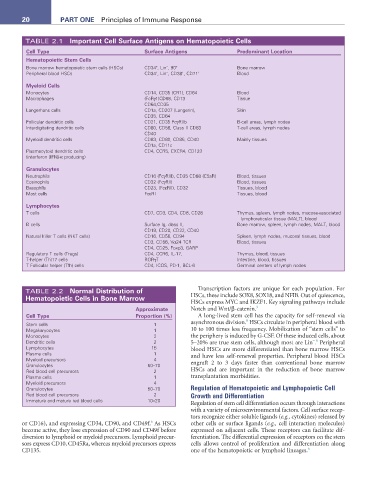
         TABLE 2.1  Important Cell Surface antigens on Hematopoietic Cells
          Cell type                             Surface antigens               Predominant Location
          Hematopoietic Stem Cells
                                                    +
                                                       −
          Bone marrow hematopoietic stem cells (HSCs)  CD34 , Lin , 90 +       Bone marrow
                                                             +
          Peripheral blood HSCs                 CD34 , Lin , CD38 , CD71 +     Blood
                                                       −
                                                    +
          Myeloid Cells
          Monocytes                             CD14, CD35 (CR1), CD64         Blood
          Macrophages                           (FcRγ1)CD68, CD13              Tissue
                                                CD64,CD35
          Langerhans cells                      CD1a, CD207 (Langerin),        Skin
                                                CD35, CD64
          Follicular dendritic cells            CD21, CD35 FcγRIIb             B-cell areas, lymph nodes
          Interdigitating dendritic cells       CD80, CD56, Class II CD83      T-cell areas, lymph nodes
                                                CD40
          Myeloid dendritic cells               CD83, CD80, CD86, CD40         Mainly tissues
                                                CD1a, CD11c
          Plasmacytoid dendritic cells          CD4, CCR5, CXCR4, CD123
          (interferon [IFN]-α producing)
          Granulocytes
          Neutrophils                           CD16 (FcγRIII), CD35 CD88 (C5aR)  Blood, tissues
          Eosinophils                           CD32 (FcγRII)                  Blood, tissues
          Basophils                             CD23, (FcεRII), CD32           Tissues, blood
          Mast cells                            FcεRI                          Tissues, blood
          Lymphocytes
          T cells                               CD7, CD3, CD4, CD8, CD28       Thymus, spleen, lymph nodes, mucosa-associated
                                                                                lymphoreticular tissue (MALT), blood
          B cells                               Surface Ig, class II,          Bone marrow, spleen, lymph nodes, MALT, blood
                                                CD19, CD20, CD22, CD40
          Natural killer T cells (NKT cells)    CD16, CD56, CD94               Spleen, lymph nodes, mucosal tissues, blood
                                                CD3, CD56, Vα24 TCR            Blood, tissues
                                                CD4, CD25, Foxp3, GARP
          Regulatory T cells (Tregs)            CD4, CCR6, IL-17,              Thymus, blood, tissues
          T-helper (Th)17 cells                 RORγT                          Intestine, blood, tissues
          T Follicular helper (Tfh) cells       CD4, ICOS, PD-1, BCL-6         Germinal centers of lymph nodes


         TABLE 2.2  normal Distribution of                        Transcription factors are unique for each population. For
         Hematopoietic Cells in Bone Marrow                    HSCs, these include SOX8, SOX18, and NFIB. Out of quiescence,
                                                               HSCs express MYC and IKZF1. Key signaling pathways include
                                             approximate       Notch and Wnt/β-catenin. 3
          Cell type                          Proportion (%)       A long-lived stem cell has the capacity for self-renewal via
                                                                                  9
          Stem cells                               1           asynchronous division.  HSCs circulate in peripheral blood with
          Megakaryocytes                           1           10 to 100 times less frequency. Mobilization of “stem cells” to
          Monocytes                                2           the periphery is induced by G-CSF. Of these induced cells, about
          Dendritic cells                          2           5–20% are true stem cells, although most are Lin .  Peripheral
                                                                                                       − 9
          Lymphocytes                              15          blood HSCs are more differentiated than bone marrow HSCs
          Plasma cells                             1           and have less self-renewal properties. Peripheral blood HSCs
          Myeloid precursors                       4           engraft 2 to 3 days faster than conventional bone marrow
          Granulocytes                           50–70
          Red blood cell precursors                2           HSCs and are important in the reduction of bone marrow
          Plasma cells                             1           transplantation morbidities.
          Myeloid precursors                       4
          Granulocytes                           50–70         Regulation of Hematopoietic and Lymphopoietic Cell
          Red blood cell precursors                2           Growth and Differentiation
          Immature and mature red blood cells    10–20
                                                               Regulation of stem cell differentiation occurs through interactions
                                                               with a variety of microenvironmental factors. Cell surface recep-
                                                               tors recognize either soluble ligands (e.g., cytokines) released by
                                                  6
        or CD16), and expressing CD34, CD90, and CD49f.  As HSCs   other cells or surface ligands (e.g., cell interaction molecules)
        become active, they lose expression of CD90 and CD49f before   expressed on adjacent cells. These receptors can facilitate dif-
        diversion to lymphoid or myeloid precursors. Lymphoid precur-  ferentiation. The differential expression of receptors on the stem
        sors express CD10, CD45Ra, whereas myeloid precursors express   cells allows control of proliferation and differentiation along
        CD135.                                                 one of the hematopoietic or lymphoid lineages. 6

