


Page 343 - Clinical Immunology_ Principles and Practice ( PDFDrive )
P. 343
CHaPtEr 22  Phagocyte Deficiencies              323


                                                                  Leukocyte Adhesion Defect-2
                                                                  A distinct defect of leukocyte adhesion with susceptibility to
                                                                  infection was described by Etzioni et al. in 1992 and named
                                                                  LAD-2. 15,19  It is characterized by growth retardation and mental
                                                                  retardation, hypotonia, seizures, dysmorphic features, strabismus,
                                                                  and persistent periodontitis. In contrast to LAD-1, wound healing
                                                                  is not impaired, nor is the susceptibility to bacterial infections
                                                                                                                   X
                                                                  as severe. Hypofucosylation of the protein CD15s (sialyl Lewis ,
                                                                     X
                                                                  SLe ) on neutrophils impairs the rolling step of neutrophil
                                                                  adhesion. The underlying defect is in guanosine diphosphate
                                                                  (GDP)–fucose  biosynthesis, resulting  from  mutations  in  the
                                                                  GDP–fucose transporter-1 (FUCT1 or  SLC35C1), hence the
                                                                  designation of this disease as a congenital disorder of glycosylation
                                                                  IIc (CDGIIc). In addition to severe impairment in neutrophil
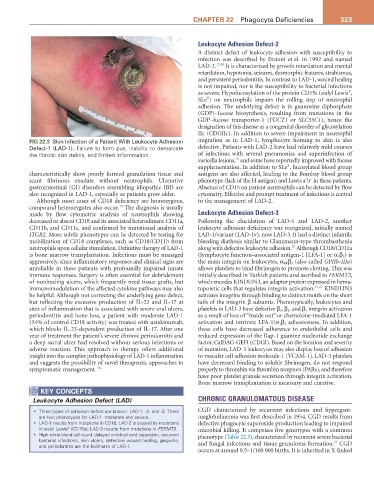
           FIG 22.3  Skin Infection of a Patient With Leukocyte Adhesion   migration as in LAD-1, lymphocyte homing to skin is also
           Defect-1 (LAD-1). Failure to form pus, inability to demarcate   defective. Patients with LAD-2 have had relatively mild courses
           the fibrotic skin debris, and limited inflammation.    of infections with several pneumonias and superinfection of
                                                                              19
                                                                  varicella lesions,  and some have reportedly improved with fucose
                                                                                               X
                                                                  supplementation. In addition to SLe , fucosylated blood group
           characteristically show poorly formed granulation tissue and   antigens are also affected, leading to the Bombay blood group
                                                                                                     − −
           scant fibrinous exudate without neutrophils. Ulcerative   phenotype (lack of the H antigen) and Lewis a b  in these patients.
           gastrointestinal (GI) disorders resembling idiopathic IBD are   Absence of CD15 on patient neutrophils can be detected by flow
           also recognized in LAD-1, especially as patients grow older.  cytometry. Effective and prompt treatment of infections is central
             Although most cases of CD18 deficiency are homozygous,   to the management of LAD-2.
                                        18
           compound heterozygotes also occur.  The diagnosis is usually
           made by flow cytometric analysis of neutrophils showing   Leukocyte Adhesion Defect-3
           decreased or absent CD18 and its associated heterodimers: CD11a,   Following the elucidation of LAD-1 and LAD-2, another
           CD11b, and CD11c, and confirmed by mutational analysis of   leukocyte adhesion deficiency was recognized, initially named
           ITGB2. More subtle phenotypes can be detected by testing for   LAD-1/variant (LAD-1v), now LAD-3. It had a distinct infantile
           mobilization of CD18 complexes, such as CD18/CD11b from   bleeding diathesis similar to Glanzmann-type thrombasthenia
                                                                                                20
           neutrophils upon cellular stimulation. Definitive therapy of LAD-1   along with defective leukocyte adhesion.  Although CD18/CD11a
           is bone marrow transplantation. Infections must be managed   (lymphocyte function–associated antigen-1 [LFA-1] or α 1 β 2 ) is
           aggressively, since inflammatory responses and clinical signs are   the main integrin on leukocytes, α IIb β 3  (also called GPIIb-IIIa)
           unreliable in these patients with profoundly impaired innate   allows platelets to bind fibrinogen to promote clotting. This was
           immune responses. Surgery is often essential for debridement   initially described in Turkish patients and ascribed to FERMT3,
           of nonhealing ulcers, which frequently need tissue grafts, but   which encodes KINDLIN3, an adaptor protein expressed in hema-
           immunomodulation of the affected cytokine pathways may also   topoietic cells that regulates integrin activation. 21,22  KINDLIN3
           be helpful. Although not correcting the underlying gene defect,   activates integrins through binding to distinct motifs on the short
           but reflecting the excessive production of IL-23 and IL-17 at   tails of the integrin β subunits. Phenotypically, leukocytes and
           sites of inflammation that is associated with severe oral ulcers,   platelets in LAD-3 have defective β 3 , β 2 , and β 1  integrin activation
           periodontitis and bone loss, a patient with moderate LAD-1   as a result of loss of “inside out” or chemokine-mediated LFA-1
           (34% of control CD18 activity) was treated with ustekinumab,   activation and intrinsic LFA-1/α 1 β 2 adhesiveness. In addition,
           which blocks IL-23-dependent production of IL-17. After one   these cells have decreased adherence to endothelial cells and
           year of treatment the patient’s severe chronic periodontitis and   reduced expression of the Rap-1 guanine nucleotide exchange
           a deep sacral ulcer had resolved without serious infections or   factor, CalDAG-GEFI (CDGI). Based on the location and severity
           adverse reaction. This approach to therapy offers additional   of mutation, LAD-3 leukocytes may also display loss of adhesion
           insight into the complex pathophysiology of LAD-1 inflammation   to vascular cell adhesion molecule-1 (VCAM-1). LAD-3 platelets
           and suggests the possibility of novel therapeutic approaches to   have decreased binding to soluble fibrinogen, do not respond
           symptomatic management. 18a                            properly to thrombin via thrombin receptors (PARs), and therefore
                                                                  have poor platelet granule secretion through integrin activation.
                                                                  Bone marrow transplantation is necessary and curative.
               KEY CoNCEPtS
            Leukocyte Adhesion Defect (LAD)                       CHRONIC GRANULOMATOUS DISEASE
            •  Three types of adhesion defect are known: LAD-1, -2, and -3. There   CGD characterized by recurrent infections and hypergam-
              are two phenotypes for LAD-1: moderate and severe.  maglobulinemia was first described in 1954. CGD results from
            •  LAD-1 results from mutations in CD18; LAD-2 is caused by mutations   defective phagocyte superoxide production leading to impaired
              in sialyl Lewis  (CD15s); LAD-3 results from mutations in FERMT3.  microbial killing. It comprises five genotypes with a common
                       X
            •  High white blood cell count, delayed umbilical cord separation, recurrent   phenotype (Table 22.3), characterized by recurrent severe bacterial
              bacterial infections, skin ulcers, defective wound healing, gingivitis,                         23
              and periodontitis are the hallmarks of LAD-1.       and fungal infections and tissue granuloma formation.  CGD
                                                                  occurs at around 0.5–1/100 000 births. It is inherited in X-linked

