


Page 347 - Clinical Immunology_ Principles and Practice ( PDFDrive )
P. 347
CHaPtEr 22  Phagocyte Deficiencies              327


                A                                                B


                                        C
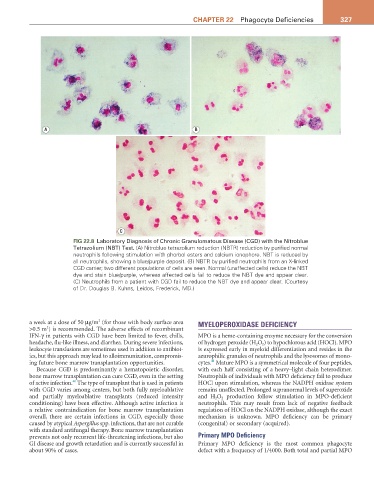
                         FIG 22.8  Laboratory Diagnosis of Chronic Granulomatous Disease (CGD) with the Nitroblue
                         Tetrazolium (NBT) Test. (A) Nitroblue tetrazolium reduction (NBTR) reduction by purified normal
                         neutrophils following stimulation with phorbol esters and calcium ionophore. NBT is reduced by
                         all neutrophils, showing a blue/purple deposit. (B) NBTR by purified neutrophils from an X-linked
                         CGD carrier; two different populations of cells are seen. Normal (unaffected cells) reduce the NBT
                         dye and stain blue/purple, whereas affected cells fail to reduce the NBT dye and appear clear.
                         (C) Neutrophils from a patient with CGD fail to reduce the NBT dye and appear clear. (Courtesy
                         of Dr. Douglas B. Kuhns, Leidos, Frederick, MD.)


                                 2
           a week at a dose of 50 µg/m  (for those with body surface area   MYELOPEROXIDASE DEFICIENCY
                2
           >0.5 m ) is recommended. The adverse effects of recombinant
           IFN-γ in patients with CGD have been limited to fever, chills,   MPO is a heme-containing enzyme necessary for the conversion
           headache, flu-like illness, and diarrhea. During severe infections,   of hydrogen peroxide (H 2 O 2 ) to hypochlorous acid (HOCl). MPO
           leukocyte transfusions are sometimes used in addition to antibiot-  is expressed early in myeloid differentiation and resides in the
           ics, but this approach may lead to alloimmunization, compromis-  azurophilic granules of neutrophils and the lysosomes of mono-
                                                                      41
           ing future bone marrow transplantation opportunities.  cytes.  Mature MPO is a symmetrical molecule of four peptides,
             Because  CGD  is  predominantly  a  hematopoietic  disorder,   with each half consisting of a heavy–light chain heterodimer.
           bone marrow transplantation can cure CGD, even in the setting   Neutrophils of individuals with MPO deficiency fail to produce
                         40
           of active infection.  The type of transplant that is used in patients   HOCl upon stimulation, whereas the NADPH oxidase system
           with CGD varies among centers, but both fully myeloablative   remains unaffected. Prolonged supranormal levels of superoxide
           and  partially  myeloablative  transplants  (reduced  intensity   and H 2 O 2  production follow stimulation in MPO-deficient
           conditioning) have been effective. Although active infection is   neutrophils. This may result from lack of negative feedback
           a relative contraindication for bone marrow transplantation   regulation of HOCl on the NADPH oxidase, although the exact
           overall, there are certain infections in CGD, especially those   mechanism  is  unknown.  MPO  deficiency  can  be  primary
           caused by atypical Aspergillus spp. infections, that are not curable   (congenital) or secondary (acquired).
           with standard antifungal therapy. Bone marrow transplantation
           prevents not only recurrent life-threatening infections, but also   Primary MPO Deficiency
           GI disease and growth retardation and is currently successful in   Primary MPO deficiency is the most common phagocyte
           about 90% of cases.                                    defect with a frequency of 1/4000. Both total and partial MPO

