


Page 346 - Clinical Immunology_ Principles and Practice ( PDFDrive )
P. 346
326          Part two  Host Defense Mechanisms and Inflammation


                                                               superoxide production were those with missense or splice muta-
                                                               tions in the first 309 amino acids of gp91 phox . Those with missense
                                                               mutations involving amino acids 310–587 had no residual
                                                               superoxide production, regardless of protein levels. Therefore
                                                               identification of the specific molecular subtype of CGD and
                                                               specific mutation has important implications for severity and
                                                               survival. Interestingly, mortality curves did not diverge until
                                                               after age 20 years, suggesting that residual superoxide production
                                                               determines later toxicities, such as liver dysfunction, not early
                                                               childhood mortality from infection. It is critical to keep in mind
                                                               that this comprehensive study included data from patients fol-
                                                               lowed for up to 30 years—that is, a significant number of patients
                                                               were born before the advent of modern antimicrobials. Therefore
                                                               survival of a child born in the current age and who receives ideal
                                                               management may well exceed that in the reported population.

                                                                   CLINICaL PEarLS
                                                                 Chronic Granulomatous Disease (CGD)

                                                                 •  CGD comprises a group of five inherited disorders with a common
                                                                   phenotype.
                                                                 •  Infections with catalase-positive bacteria and fungi and granuloma
                                                                   formation in the gastrointestinal and urinary tract are major problems
                                                                   in CGD.
                                                                 •  Oral prophylactic antibiotics and subcutaneous interferon (IFN)-γ
                                                                   injections three times a week are currently recommended for CGD.
                                                                 •  Diagnosis can be made via nitroblue tetrazolium (NBT) test or dihy-
                                                                   drorhodamine (DHR) assay, the latter being a more sensitive diagnostic
                                                                   tool.
                                                                 •  Bone marrow transplantation is highly effective and curative.


                                                               Diagnosis of CGD
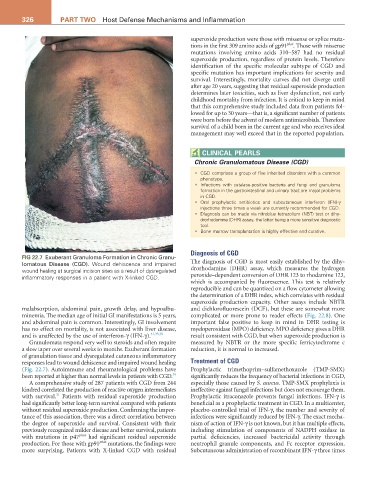
        FIG 22.7  Exuberant Granuloma Formation in Chronic Granu-
        lomatous Disease (CGD). Wound dehiscence and impaired   The diagnosis of CGD is most easily established by the dihy-
        wound healing at surgical incision sites as a result of dysregulated   drorhodamine (DHR) assay, which measures the hydrogen
        inflammatory responses in a patient with X-linked CGD.   peroxide–dependent conversion of DHR 123 to rhodamine 123,
                                                               which  is  accompanied  by  fluorescence.  This  test  is  relatively
                                                               reproducible and can be quantized on a flow cytometer allowing
                                                               the determination of a DHR index, which correlates with residual
                                                               superoxide  production  capacity. Other  assays include  NBTR
        malabsorption, abdominal pain, growth delay, and hypoalbu-  and dichlorofluorescein (DCF), but these are somewhat more
        minemia. The median age of initial GI manifestations is 5 years,   complicated or more prone to reader effects (Fig. 22.8). One
        and abdominal pain is common. Interestingly, GI involvement   important false positive to keep in mind in DHR testing is
        has no effect on mortality, is not associated with liver disease,   myeloperoxidase (MPO) deficiency. MPO deficiency gives a DHR
        and is unaffected by the use of interferon-γ (IFN-γ). 31,33,38  result consistent with CGD, but when superoxide production is
           Granulomata respond very well to steroids and often require   measured by NBTR or the more specific ferricytochrome c
        a slow taper over several weeks to months. Exuberant formation   reduction, it is normal to increased.
        of granulation tissue and dysregulated cutaneous inflammatory
        responses lead to wound dehiscence and impaired wound healing   Treatment of CGD
        (Fig. 22.7). Autoimmune and rheumatological problems have   Prophylactic trimethoprim–sulfamethoxazole (TMP-SMX)
        been reported at higher than normal levels in patients with CGD. 39  significantly reduces the frequency of bacterial infections in CGD,
           A comprehensive study of 287 patients with CGD from 244   especially those caused by S. aureus. TMP-SMX prophylaxis is
        kindred correlated the production of reactive oxygen intermediates   ineffective against fungal infections but does not encourage them.
                   31
        with survival.  Patients with residual superoxide production   Prophylactic itraconazole prevents fungal infections. IFN-γ is
        had significantly better long-term survival compared with patients   beneficial as a prophylactic treatment in CGD. In a multicenter,
        without residual superoxide production. Confirming the impor-  placebo-controlled trial of IFN-γ, the number and severity of
        tance of this association, there was a direct correlation between   infections were significantly reduced by IFN-γ. The exact mecha-
        the  degree  of  superoxide and  survival.  Consistent  with  their   nism of action of IFN-γ is not known, but it has multiple effects,
        previously recognized milder disease and better survival, patients   including stimulation of components of NADPH oxidase in
        with  mutations  in  p47 phox   had  significant  residual  superoxide   partial  deficiencies,  increased  bactericidal  activity  through
        production. For those with gp91 phox  mutations, the findings were   neutrophil  granule  components,  and  Fc  receptor  expression.
        more surprising. Patients with X-linked CGD with residual   Subcutaneous administration of recombinant IFN-γ three times

