


Page 402 - Clinical Immunology_ Principles and Practice ( PDFDrive )
P. 402
CHAPtER 26  Host Defenses to Intracellular Bacteria            383


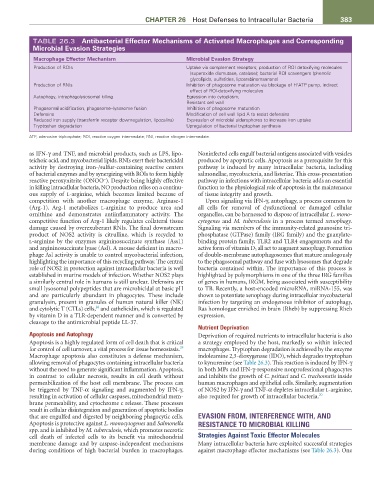
            TABLE 26.3  Antibacterial Effector Mechanisms of Activated Macrophages and Corresponding
            Microbial Evasion Strategies
            Macrophage Effector Mechanism                     Microbial Evasion Strategy
            Production of ROIs                                Uptake via complement receptors; production of ROI detoxifying molecules
                                                               (superoxide dismutase, catalase); bacterial ROI scavengers (phenolic
                                                               glycolipids, sulfatides, lipoarabinomannans)
                                                                                                  +
            Production of RNIs                                Inhibition of phagosome maturation via blockage of H ATP pump, indirect
                                                               effect of ROI-detoxifying molecules
            Autophagy, intraphagolysosomal killing            Egression into cytoplasm;
                                                              Resistant cell wall
            Phagosomal acidification, phagosome–lysosome fusion  Inhibition of phagosome maturation
            Defensins                                         Modification of cell wall lipid A to resist defensins
            Reduced iron supply (transferrin receptor downregulation, lipocalins)  Expression of microbial siderophores to increase iron uptake
            Tryptophan degradation                            Upregulation of bacterial tryptophan synthesis
           ATP, adenosine triphosphate; ROI, reactive oxygen intermediate; RNI, reactive nitrogen intermediate.


           as IFN-γ and TNF, and microbial products, such as LPS, lipo-  Noninfected cells engulf bacterial antigens associated with vesicles
           teichoic acid, and mycobacterial lipids. RNIs exert their bactericidal   produced by apoptotic cells. Apoptosis as a prerequisite for this
           activity by destroying iron-/sulfur-containing reactive centers   pathway is induced by many intracellular bacteria, including
           of bacterial enzymes and by synergizing with ROIs to form highly   salmonellae, mycobacteria, and listeriae. This cross-presentation
                                   −
           reactive peroxynitrite (ONOO ). Despite being highly effective   pathway in infections with intracellular bacteria adds an essential
           in killing intracellular bacteria, NO production relies on a continu-  function to the physiological role of apoptosis in the maintenance
           ous supply of  L-arginine, which becomes limited because of   of tissue integrity and growth.
           competition with another macrophage enzyme,  Arginase-1   Upon signaling via IFN-γ, autophagy, a process common to
           (Arg-1). Arg-1  metabolizes  L-arginine to produce urea and   all cells for removal of dysfunctional or damaged cellular
           ornithine  and  demonstrates  antiinflammatory  activity.  The   organelles, can be harnessed to dispose of intracellular L. mono-
           competitive function of Arg-1 likely regulates collateral tissue   cytogenes and  M. tuberculosis in a process termed  xenophagy.
           damage caused by overexuberant RNIs. The final downstream   Signaling via members of the immunity-related guanosine tri-
           product of NOS2 activity is citrulline, which is recycled to   phosphatase (GTPase) family (IRG family) and the guanylate-
           L-arginine by the enzymes argininosuccinate synthase (Ass1)   binding protein family, TLR2 and TLR4 engagements and the
           and argininosuccinate lyase (Asl). A mouse deficient in macro-  active form of vitamin D 3  all act to augment xenophagy. Formation
           phage Asl activity is unable to control mycobacterial infection,   of double-membrane autophagosomes that mature analogously
           highlighting the importance of this recycling pathway. The central   to the phagosomal pathway and fuse with lysosomes that degrade
           role of NOS2 in protection against intracellular bacteria is well   bacteria contained within. The importance of this process is
           established in murine models of infection. Whether NOS2 plays   highlighted by polymorphisms in one of the three IRG families
           a similarly central role in humans is still unclear. Defensins are   of genes in humans, IRGM, being associated with susceptibility
           small lysosomal polypeptides that are microbicidal at basic pH   to TB. Recently, a host-encoded microRNA, miRNA-155, was
           and are particularly abundant in phagocytes. These include   shown to potentiate xenophagy during intracellular mycobacterial
           granulysin, present in granules of human natural killer (NK)   infection by targeting an endogenous inhibitor of autophagy,
                                28
           and cytolytic T (CTLs) cells,  and cathelicidin, which is regulated   Ras homologue enriched in brain (Rheb) by suppressing Rheb
           by vitamin D in a TLR-dependent manner and is converted by   expression.
           cleavage to the antimicrobial peptide LL-37.
                                                                  Nutrient Deprivation
           Apoptosis and Autophagy                                Deprivation of required nutrients to intracellular bacteria is also
           Apoptosis is a highly regulated form of cell death that is critical   a strategy employed by the host, markedly so within infected
                                                            29
           for control of cell turnover, a vital process for tissue homeostasis.    macrophages. Tryptophan degradation is achieved by the enzyme
           Macrophage apoptosis also constitutes a defense mechanism,   indoleamine 2,3-dioxygenase (IDO), which degrades tryptophan
           allowing removal of phagocytes containing intracellular bacteria   to kynurenine (see Table 26.3). This reaction is induced by IFN-γ
           without the need to generate significant inflammation. Apoptosis,   in both MPs and IFN-γ-responsive nonprofessional phagocytes
           in contrast to cellular necrosis, results  in cell death without   and inhibits the growth of C. psittaci and C. trachomatis inside
           permeabilization of the host cell membrane. The process can   human macrophages and epithelial cells. Similarly, augmentation
           be triggered by TNF-α signaling and augmented by IFN-γ,   of NOS2 by IFN-γ and TNF-α depletes intracellular L-arginine,
           resulting in activation of cellular caspases, mitochondrial mem-  also required for growth of intracellular bacteria. 20
           brane permeability, and cytochrome c release. These processes
           result in cellular disintegration and generation of apoptotic bodies
           that are engulfed and digested by neighboring phagocytic cells.   EVASION FROM, INTERFERENCE WITH, AND
           Apoptosis is protective against L. monocytogenes and Salmonella   RESISTANCE TO MICROBIAL KILLING
           spp. and is inhibited by M. tuberculosis, which promotes necrotic
           cell death of infected cells to its benefit via mitochondrial   Strategies Against Toxic Effector Molecules
           membrane damage and by caspase-independent mechanisms   Many intracellular bacteria have exploited successful strategies
           during conditions of high bacterial burden in macrophages.   against macrophage effector mechanisms (see Table 26.3). One

