


Page 411 - Clinical Immunology_ Principles and Practice ( PDFDrive )
P. 411
392          PARt tHREE  Host Defenses to Infectious Agents


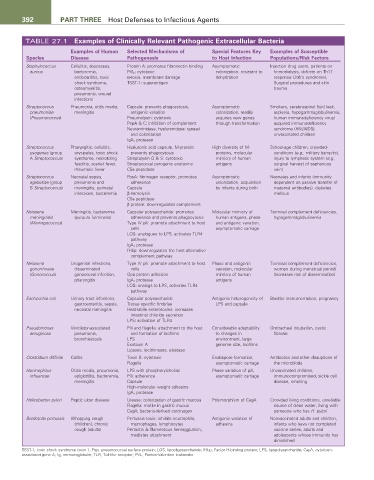
         TABLE 27.1  Examples of Clinically Relevant Pathogenic Extracellular Bacteria
                        Examples of Human   Selected Mechanisms of    Special Features Key   Examples of Susceptible
          Species       Disease            Pathogenesis               to Host Infection  Populations/Risk Factors
          Staphylococcus   Cellulitis, abscesses,   Protein A: promotes fibronectin binding  Asymptomatic   Injection drug users, patients on
           aureus        bacteremia,       PVL: cytotoxic               colonization, resistant to   hemodialysis, defects on Th17
                         endocarditis, toxic   α-toxin: membrane damage  dehydration       response (Job’s syndrome),
                         shock syndrome,   TSST-1: superantigen                            Surgical procedures and skin
                         osteomyelitis,                                                    trauma
                         pneumonia, wound
                         infections
          Streptococcus   Pneumonia, otitis media,   Capsule: prevents phagocytosis,   Asymptomatic   Smokers, cerebrospinal fluid leak,
           pneumoniae    meningitis         antigenic variation         colonization, readily   asplenia, hypogammaglobulinemia,
           (Pneumococcus)                  Pneumolysin: cytotoxic       acquires new genes   human immunodeficiency virus/
                                           PspA & C: inhibition of complement  through transformation  acquired immunodeficiency
                                           Neuraminidase, hyaluronidase: spread            syndrome (HIV/AIDS),
                                            and colonization                               unvaccinated children
                                           IgA 1  protease
          Streptococcus   Pharyngitis, cellulitis,   Hyaluronic acid capsule, M-protein:   High diversity of M-   School-age children, crowded-
           pyogenes (group   erysipelas, toxic shock   prevents phagocytosis  proteins, molecular   conditions (e.g., military barracks),
           A Streptococcus)  syndrome, necrotizing   Streptolysin O & S: cytotoxic  mimicry of human   injury to lymphatic system (e.g.,
                         fasciitis, scarlet fever,   Streptococcal pyrogenic exotoxins  antigens  surgical harvest of saphenous
                         rheumatic fever   C5a peptidase                                   vein)
          Streptococcus   Neonatal sepsis,   FbsA: fibrinogen receptor, promotes   Asymptomatic   Neonates and infants (immunity
           agalactiae (group   pneumonia and   adherence                colonization, acquisition   dependent on passive transfer of
           B Streptococcus)  meningitis, perinatal   Capsule            by infants during birth  maternal antibodies), diabetes
                         infections, bacteremia  β-hemolysin                               mellitus
                                           C5a peptidase
                                           β protein: downregulates complement
          Neisseria     Meningitis, bacteremia   Capsular polysaccharide: promotes   Molecular mimicry of   Terminal complement deficiencies,
           meningitidis   (purpura fulminans)  adherence and prevents phagocytosis  human antigens, phase   hypogammaglobulinemia
           (Meningococcus)                 Type IV pili: promote attachment to host   and antigenic variation,
                                            cells                       asymptomatic carriage
                                           LOS: analogues to LPS, activates TLR4
                                            pathway
                                           IgA 1  protease
                                           fHbp: downregulates the host alternative
                                            complement pathway
          Neisseria     Urogenital infections,   Type IV pili: promote attachment to host   Phase and antigenic   Terminal complement deficiencies,
           gonorrhoeae   disseminated       cells                       variation, molecular   women during menstrual period
           (Gonococcus)  gonococcal infection,   Opa protein adhesion   mimicry of human   (increases risk of dissemination)
                         pharyngitis       IgA 1  protease              antigens
                                           LOS: analogs to LPS, activates TLR4
                                            pathway
          Escherichia coli  Urinary tract infections,   Capsular polysaccharide  Antigenic heterogeneity of   Bladder instrumentation, pregnancy
                         gastroenteritis, sepsis,   Tissue specific fimbriae  LPS and capsule
                         neonatal meningitis  Heat-labile enterotoxins: increases
                                            intestinal chloride secretion
                                           LPS: activation of TLR4
          Pseudomonas   Ventilator-associated   Pili and flagella: attachment to the host   Considerable adaptability   Orotracheal intubation, cystic
           aeruginosa    pneumonia,         and formation of biofilms   to changes in      fibrosis
                         bronchiectasis    LPS                          environment, large
                                           Exotoxin A                   genome size, biofilms
                                           Lipases, lecithinases, elastase
          Clostridium difficile  Colitis   Toxin B: cytotoxic         Endospore formation,   Antibiotics and other disruptions of
                                           Flagella                     asymptomatic carriage  the microbiotia
          Haemophilus   Otitis media, pneumonia,   LPS with phosphorylcholine  Phase variation of pili,   Unvaccinated children,
           influenzae    epiglottitis, bacteremia,   Pili: adherence    asymptomatic carriage  immunocompromised, sickle cell
                         meningitis        Capsule                                         disease, smoking
                                           High-molecular weight adhesins
                                           IgA 1  protease
          Helicobacter pylori  Peptic ulcer disease  Urease: colonization of gastric mucosa  Polymorphism of CagA  Crowded living conditions, unreliable
                                           Flagella: motile in gastric mucus               source of clean water, living with
                                           CagA; bacteria-derived carcinogen               someone who has H. pylori
          Bordetella pertussis  Whopping cough   Pertussis toxin: inhibits neutrophils,   Antigenic variation of   Nonvaccinated adults and children,
                         (children), chronic   macrophages, lymphocytes  adhesins          infants who have not completed
                         cough (adults)    Pertactin & filamentous hemagglutinin;          vaccine series, adults and
                                            mediates attachment                            adolescents whose immunity has
                                                                                           diminished
        TSST-1, toxic shock syndrome toxin 1; Psp, pneumococcal surface protein; LOS, lipooligosaccharide; fHbp, Factor H-binding protein; LPS, lipopolysaccharide; CapA, cytotoxin-
        associated gene A; Ig, immunoglobulin; TLR, Toll-like receptor; PVL, Panton-Valentine leukocidin.

