


Page 415 - Clinical Immunology_ Principles and Practice ( PDFDrive )
P. 415
396          PARt tHREE  Host Defenses to Infectious Agents


                                                               deficiency, to name a few). Bacterial infections associated with
                                                               phagocytic dysfunction are described elsewhere (Chapter 22).
                                                               Innate Lymphoid Cells
                                                               Innate lymphoid cells (ILCs), a heterogeneous group of cells of
                                                               the innate immune system, have lymphoid morphology but lack
                                                               the capacity for rearrangement of the antigen receptors, a cardinal
                                                                                                      18
                                                               feature of the cells of the adaptive immune system.  Conventional
                                                               natural killer (NK) cells, better known for generating inflam-
                                                               matory cytokines and cytotoxic activity against malignant cells
                                                               and cells infected by viruses, seem to have a role in the defense
                                                               against bacterial pathogens. Murine study data suggest that
                                                               conventional NK-cell activation by lung macrophages is protective
                                                                                      19
                                                               against S. aureus pneumonia.  A subset of ILCs, known as NK-like
                                                               cells, produces IL-22 and has been found in mucosal sites, where
                                                               these ILCs appear to have a protective activity against bacterial
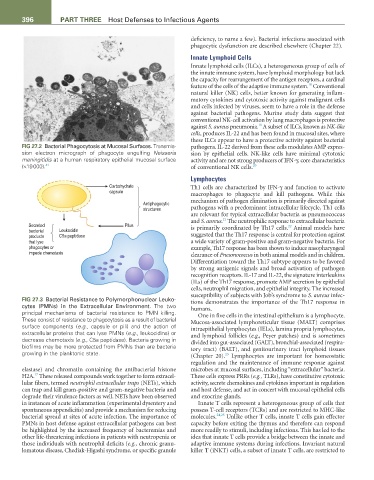
        FIG 27.2  Bacterial Phagocytosis at Mucosal Surfaces. Transmis-  pathogens. IL-22 derived from these cells modulates AMP expres-
        sion electron micrograph of phagocyte engulfing  Neisseria   sion by epithelial cells. NK-like cells have minimal cytotoxic
        meningitidis at a human respiratory epithelial mucosal surface   activity and are not strong producers of IFN-γ, core characteristics
                41
        (×19 000).                                             of conventional NK cells. 20
                                                               Lymphocytes
                                     Carbohydrate              Th1 cells are characterized by IFN-γ and function to activate
                                     capsule
                                                               macrophages to phagocyte and kill pathogens.  While this
                                                Antiphagocytic  mechanism of pathogen elimination is primarily directed against
                                                structures     pathogens with a predominant intracellular lifecycle, Th1 cells
                                                               are relevant for typical extracellular bacteria as pneumococcus
                                                                          21
                                                               and S. aureus.  The neutrophilic response to extracellular bacteria
          Secreted                        Pilus                is primarily coordinated by Th17 cells.  Animal models have
                                                                                               22
          bacterial  Leukocidin
          products  C5a peptidase                              suggested that the Th17 response is central for protection against
          that lyse                                            a wide variety of gram-positive and gram-negative bacteria. For
          phagocytes or                                        example, Th17 response has been shown to induce nasopharyngeal
          impede chemotaxis                                    clearance of Pneumococcus in both animal models and in children.
                                                               Differentiation toward the Th17 subtype appears to be favored
                                                               by strong antigenic signals and broad activation of pathogen
                                                               recognition receptors. IL-17 and IL-22, the signature interleukins
                                                               (ILs) of the Th17 response, promote AMP secretion by epithelial
                                                               cells, neutrophil migration, and epithelial integrity. The increased
                                                               susceptibility of subjects with Job’s syndrome to S. aureus infec-
        FIG 27.3  Bacterial Resistance to Polymorphonuclear Leuko-  tions demonstrates the importance of the Th17 response in
        cytes (PMNs) in the Extracellular Environment. The two   humans.
        principal mechanisms of bacterial resistance to PMN killing.   One in five cells in the intestinal epithelium is a lymphocyte.
        These consist of resistance to phagocytosis as a result of bacterial   Mucosa-associated lymphoreticular tissue (MALT)  comprises
        surface components (e.g., capsule or pili) and the action of   intraepithelial lymphocytes (IELs), lamina propria lymphocytes,
        extracellular proteins that can lyse PMNs (e.g., leukocidins) or   and lymphoid follicles (e.g., Peyer patches) and is sometimes
        decrease chemotaxis (e.g., C5a peptidase). Bacteria growing in   divided into gut-associated (GALT), bronchial-associated (respira-
        biofilms may be more protected from PMNs than are bacteria   tory tract) (BALT), and genitourinary tract lymphoid tissues
        growing in the planktonic state.                       (Chapter 20).  Lymphocytes are important for homeostatic
                                                                           23
                                                               regulation and the maintenance of immune response against
        elastase)  and  chromatin  containing  the antibacterial  histone   microbes at mucosal surfaces, including “extracellular” bacteria.
            17
        H2A.  These released compounds work together to form extracel-  These cells express PRRs (e.g., TLRs), have constitutive cytotoxic
        lular fibers, termed neutrophil extracellular traps (NETs), which   activity, secrete chemokines and cytokines important in regulation
        can trap and kill gram-positive and gram-negative bacteria and   and host defense, and act in concert with mucosal epithelial cells
        degrade their virulence factors as well. NETs have been observed   and exocrine glands.
        in instances of acute inflammation (experimental dysentery and   Innate T cells represent a heterogeneous group of cells that
        spontaneous appendicitis) and provide a mechanism for reducing   possess T-cell receptors (TCRs) and are restricted to MHC-like
        bacterial spread at sites of acute infection. The importance of   molecules. 24,25  Unlike other T cells, innate T cells gain effector
        PMNs in host defense against extracellular pathogens can best   capacity before exiting the thymus and therefore can respond
        be highlighted by the increased frequency of bacteremias and   more readily to stimuli, including infections. This has led to the
        other life-threatening infections in patients with neutropenia or   idea that innate T cells provide a bridge between the innate and
        those individuals with neutrophil deficits (e.g., chronic granu-  adaptive immune systems during infections. Invariant natural
        lomatous disease, Chediak-Higashi syndrome, or specific granule   killer T (iNKT) cells, a subset of innate T cells, are restricted to

