


Page 412 - Clinical Immunology_ Principles and Practice ( PDFDrive )
P. 412
CHAPtER 27  Host Defenses to Extracellular Bacteria             393


                                                                  present in secretions, such as ABO blood group antigens. Cell
                                                                  adhesion and extracellular matrix molecules, such as fibronectin
                                                                  and proteoglycans, can also inhibit or enhance bacterial binding
                                                                  to epithelial surfaces. The Tamm-Horsfall glycoprotein, found
                                                                  in urine, can bind avidly to a variety of bacteria and facilitate
                                                                  clearance. Proteins, such as lactoferrin (Lf), present at mucosal
                                                                  surfaces, bind iron, an important requirement for bacterial growth.
                                                                  This action may reduce microbial proliferation, but some mucosal
                                                                  pathogens bind Lf and remove iron from the molecule for growth.
                                                                  Normal Microbiota as Host Defense
                                                                  The human microbiome is now recognized as a major host defense
                                                                  against bacterial pathogens by providing “colonization resistance,”
                                                                  maintaining a balance of commensals to pathogens, and by
                                                                                                  5
                                                                  priming the immune system (Chapter 14).  Altering or disrupting
                                                                  the normal microbiota by antibiotics facilitates the expansion
                                                                  of enteric pathogens as  Clostridium difficile and  Salmonella
                                                                  typhimurium or selection of antibiotic-resistant members of the
                                                                  microbiome. Similarly, changes in human physiology, for example,
                                                                  exposure of skin to elevated temperatures and humidity, chronic
                                                                  stress, host immune suppression, or active behavioral changes,
                                                                  such as smoking, can cause a commensal-to-pathogen switch.
                                                                  Recent studies have demonstrated that certain resident microbiota
                                                                  can resist pathogen colonization and infection. For example,
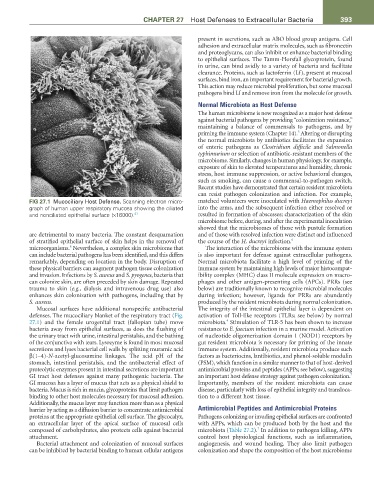
           FIG 27.1  Mucociliary Host Defense. Scanning electron micro-  matched volunteers were inoculated with Haemophilus ducreyi
           graph of human upper respiratory mucosa showing the ciliated   into the arms, and the subsequent infection either resolved or
           and nonciliated epithelial surface (×16000).           resulted in formation of abscesses; characterization of the skin
                                             41
                                                                  microbiome before, during, and after the experimental inoculation
                                                                  showed that the microbiomes of those with pustule formation
           are detrimental to many bacteria. The constant desquamation   and of those with resolved infection were distinct and influenced
           of stratified epithelial surface of skin helps in the removal of   the course of the H. ducreyi infection. 6
                        4
           microorganisms.  Nevertheless, a complex skin microbiome that   The interaction of the microbiome with the immune system
           can include bacterial pathogens has been identified, and this differs   is also important for defense against extracellular pathogens.
           remarkably, depending on location in the body. Disruption of   Normal microbiota facilitate a high level of priming of the
           these physical barriers can augment pathogen tissue colonization   immune system by maintaining high levels of major histocompat-
           and invasion. Infections by S. aureus and S. pyogenes, bacteria that   ibility complex (MHC) class II molecule expression on macro-
           can colonize skin, are often preceded by skin damage. Repeated   phages and other antigen-presenting cells (APCs). PRRs (see
           trauma to skin (e.g., dialysis and intravenous drug use) also   below) are traditionally known to recognize microbial molecules
           enhances skin colonization with pathogens, including that by   during infection; however, ligands for PRRs are abundantly
           S. aureus.                                             produced by the resident microbiota during normal colonization.
             Mucosal surfaces have additional nonspecific antibacterial   The integrity of the intestinal epithelial layer is dependent on
           defenses. The mucociliary blanket of the respiratory tract (Fig.   activation of Toll-like receptors (TLRs; see below) by normal
                                                                           4
           27.1) and the female urogenital tract (fallopian tube) move   microbiota.  Stimulation of TLR-5 has been shown to increase
           bacteria away from epithelial surfaces, as does the flushing of   resistance to E. faecium infection in a murine model. Activation
           the urinary tract with urine, intestinal peristalsis, and the bathing   of nucleotide oligomerization domain 1 (NOD1) receptors by
           of the conjunctiva with tears. Lysozyme is found in most mucosal   gut resident microbiota is necessary for priming of the innate
           secretions and lyses bacterial cell walls by splitting muramic acid   immune system. Additionally, resident microbiota produce such
           β(1–4)-N-acetyl-glucosamine linkages. The acid pH of the   factors as bacteriocins, lantibiotics, and phenol-soluble modulin
           stomach, intestinal peristalsis, and the antibacterial effect of   (PSM), which function in a similar manner to that of host-derived
           proteolytic enzymes present in intestinal secretions are important   antimicrobial proteins and peptides (APPs; see below), suggesting
                                                                                                                    7
           GI tract host defenses against many pathogenic bacteria. The   an important host defense strategy against pathogen colonization.
           GI mucosa has a layer of mucus that acts as a physical shield to   Importantly, members of the resident microbiota can cause
           bacteria. Mucus is rich in mucin, glycoproteins that limit pathogen   disease, particularly with loss of epithelial integrity and transloca-
           binding to other host molecules necessary for mucosal adhesion.   tion to a different host tissue.
           Additionally, the mucus layer may function more than as a physical
           barrier by acting as a diffusion barrier to concentrate antimicrobial   Antimicrobial Peptides and Antimicrobial Proteins
           proteins at the appropriate epithelial cell surface. The glycocalyx,   Pathogens colonizing or invading epithelial surfaces are confronted
           an  extracellular  layer  of  the  apical  surface  of  mucosal  cells   with APPs, which can be produced both by the host and the
                                                                                     7
           composed of carbohydrates, also protects cells against bacterial   microbiota (Table 27.2).  In addition to pathogen killing, APPs
           attachment.                                            control host physiological functions, such as inflammation,
             Bacterial attachment and colonization of mucosal surfaces   angiogenesis, and wound healing. They also limit pathogen
           can be inhibited by bacterial binding to human cellular antigens   colonization and shape the composition of the host microbiome

