


Page 49 - Clinical Immunology_ Principles and Practice ( PDFDrive )
P. 49
CHaPter 2  Organization of the Immune System                  35


               A
                                    Capsule


                                                       Blood vessels


                                  Germinal
                                  center

                                      Follicular
                                      dendritic cells

                     Lymphatic
                     follicle

              Mucosal
              epithelium                                           C


               B                                                   D
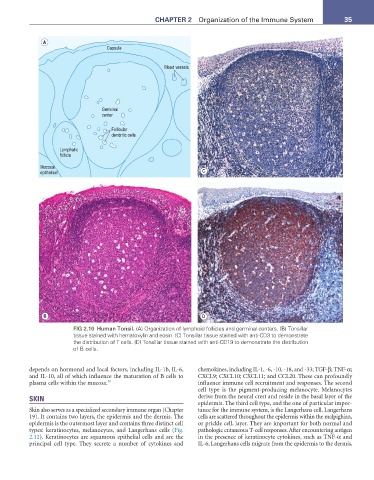
                         FIG 2.10  Human Tonsil. (A) Organization of lymphoid follicles and germinal centers. (B) Tonsillar
                         tissue stained with hematoxylin and eosin. (C) Tonsillar tissue stained with anti-CD3 to demonstrate
                         the distribution of T cells. (D) Tonsillar tissue stained with anti-CD19 to demonstrate the distribution
                         of B cells.


           depends on hormonal and local factors, including IL-1b, IL-6,   chemokines, including IL-1, -6, -10, -18, and -33; TGF-β; TNF-α;
           and IL-10, all of which influence the maturation of B cells to   CXCL9; CXCL10; CXCL11; and CCL20. These can profoundly
           plasma cells within the mucosa. 56                     influence immune cell recruitment and responses. The second
                                                                  cell type is the pigment-producing melanocyte. Melanocytes
           SKIN                                                   derive from the neural crest and reside in the basal layer of the
                                                                  epidermis. The third cell type, and the one of particular impor-
           Skin also serves as a specialized secondary immune organ (Chapter   tance for the immune system, is the Langerhans cell. Langerhans
           19). It contains two layers, the epidermis and the dermis. The   cells are scattered throughout the epidermis within the malpighian,
           epidermis is the outermost layer and contains three distinct cell   or prickle cell, layer. They are important for both normal and
           types: keratinocytes, melanocytes, and Langerhans cells (Fig.   pathologic cutaneous T-cell responses. After encountering antigen
           2.12). Keratinocytes are squamous epithelial cells and are the   in the presence of keratinocyte cytokines, such as TNF-α and
           principal cell type. They secrete a number of cytokines and   IL-6, Langerhans cells migrate from the epidermis to the dermis,

