


Page 590 - Clinical Immunology_ Principles and Practice ( PDFDrive )
P. 590
566          ParT FOur  Immunological Deficiencies


                                                               MANAGEMENT
                                                               Therapies directed at the syndromes of pathogenic autoantibodies
                                                               have focused either on treating the disease consequences or
                          B lymphocytes
                                                               targeting the  autoantibody itself. Therapeutic BAL  removes
                                                               proteinaceous alveolar material from the lungs of patients with
                                                                   1
                                                               PAP,  and antimycobacterials treat the disseminated NTM infec-
                                                               tion in patients with autoantibodies to IFN-γ. 9,29  Approaches
                                                               ranging from physical removal of the antibody, to immuno-
                                                               modulatory therapy, to induction of immune tolerance or
                                                               suppression of the population of cells that produce the pathogenic
                                                               autoantibodies have also been employed.
                                                  Epithelial      PAP and disseminated NTM associated with anti–IFN-γ
                               IL-22        IL-22                                                              20,21
            Th17 cell                               cell       autoantibodies have been treated with exogenous GM-CSF
                                           receptor            and IFN-γ,  respectively, resulting in clinical improvement,
                                                                         29
                                                               although PAP has been studied more rigorously in this regard.
                           IL-17A                              Autoantibody levels after therapy were not routinely evaluated
                                IL-17F                         across diseases, nor are they performed in a standardized fashion,
                                            IL-17
                                           receptor            although, at least in the PAP cohorts, it appears they do not
                                                               change in response to exogenous cytokine. 20,21
                       Anti-IL-22, anti-IL17A and anti-IL-17F     In cases that are refractory to treatment, attempts have been
                    autoantibodies associated with mucocutaneous  made to alleviate the blockade by reducing  anticytokine–
                    candidiasis in APECED and thymoma patients  autoantibody levels. One patient with anti–IFN-γ autoantibodies
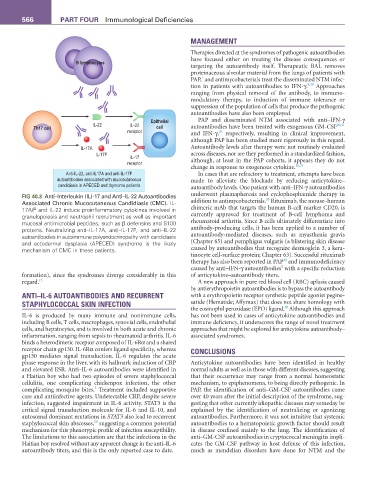
        FIG 40.3  Anti–Interleukin (IL)-17 and Anti–IL-22 Autoantibodies   underwent plasmapheresis and cyclophosphamide therapy in
                                                                                        26
        Associated Chronic Mucocutaneous Candidiasis (CMC). IL-  addition to antimycobacterials.  Rituximab, the mouse–human
        17A/F and IL-22 induce proinflammatory cytokines involved in   chimeric mAb that targets the human B-cell marker CD20, is
        granulopoiesis and neutrophil recruitment as well as important   currently  approved for treatment of B-cell lymphoma and
        mucosal antimicrobial peptides, such as β defensins and S100   rheumatoid arthritis. Since B cells ultimately differentiate into
        proteins. Neutralizing anti–IL-17A, anti–IL-17F, and anti–IL-22   antibody-producing cells, it has been applied to a number of
        autoantibodies in autoimmune polyendocrinopathy with candidiasis   autoantibody-mediated diseases, such as myasthenia gravis
        and ectodermal dysplasia (APECED) syndrome is the likely   (Chapter 65) and pemphigus vulgaris (a blistering skin disease
        mechanism of CMC in these patients.                    caused by autoantibodies that recognize desmoglein 3, a kera-
                                                               tinocyte cell-surface protein; Chapter 63). Successful rituximab
                                                                                              22
                                                               therapy has also been reported in PAP  and immunodeficiency
                                                                                             8
                                                               caused by anti–IFN-γ autoantibodies  with a specific reduction
        formation),  since  the  syndromes  diverge  considerably  in  this    of anticytokine–autoantibody titers.
        regard. 13                                                A new approach in pure red blood cell (RBC) aplasia caused
                                                               by antierythropoietin autoantibodies is to bypass the autoantibody
        ANTI–IL-6 AUTOANTIBODIES AND RECURRENT                 with a erythropoietin receptor synthetic peptide agonist pegine-
        STAPHYLOCOCCAL SKIN INFECTION                          satide (Hematide; Affymax) that does not share homology with
                                                                                              30
                                                               the eosinophil peroxidase (EPO) ligand.  Although this approach
        IL-6 is produced by many immune and nonimmune cells,   has not been used in cases of anticytokine autoantibodies and
        including B cells, T cells, macrophages, synovial cells, endothelial   immune deficiency, it underscores the range of novel treatment
        cells, and hepatocytes, and is involved in both acute and chronic   approaches that might be explored for anticytokine autoantibody–
        inflammation, ranging from sepsis to rheumatoid arthritis. IL-6   associated syndromes.
        binds a heterodimeric receptor composed of IL-6Rα and a shared
        receptor chain gp130. IL-6Rα confers ligand specificity, whereas   CONCLUSIONS
        gp130 mediates signal transduction. IL-6 regulates the acute
        phase response in the liver, with its hallmark induction of CRP   Anticytokine autoantibodies have been identified in healthy
        and elevated ESR. Anti–IL-6 autoantibodies were identified in   normal adults as well as in those with different diseases, suggesting
        a Haitian boy who had two episodes of severe staphylococcal   that their occurrence may range from a normal homeostatic
        cellulitis, one  complicating  chickenpox  infection, the  other   mechanism, to epiphenomena, to being directly pathogenic. In
                                5
        complicating mosquito bites.  Treatment included supportive   PAP, the identification of anti–GM-CSF autoantibodies came
        care and antiinfective agents. Undetectable CRP, despite severe   over 40 years after the initial description of the syndrome, sug-
        infection, suggested impairment in IL-6 activity. STAT3 is the   gesting that other currently idiopathic diseases may someday be
        critical signal transduction molecule for IL-6 and IL-10, and   explained by the identification of neutralizing or agonizing
        autosomal dominant mutations in STAT3 also lead to recurrent   autoantibodies. Furthermore, it was not intuitive that systemic
                                28
        staphylococcal skin abscesses,  suggesting a common potential   autoantibodies to a hematopoietic growth factor should result
        mechanism for this phenotypic profile of infection susceptibility.   in disease confined mainly to the lung. The identification of
        The limitations to this association are that the infections in the   anti–GM-CSF autoantibodies in cryptococcal meningitis impli-
        Haitian boy resolved without any apparent change in the anti–IL-6   cates the GM-CSF pathway in host defense of this infection,
        autoantibody titers, and this is the only reported case to date.  much as mendelian disorders have done for NTM and the

