


Page 680 - Clinical Immunology_ Principles and Practice ( PDFDrive )
P. 680
CHaPTEr 48  Drug Hypersensitivity             653


                                     Autologous HLA                    T cell
                                       risk allele
              1                                   2


                                                                                       3
                                        Primary HHV
                                         infection


                                                                               T EM  cells persist
                                                                                 in tissue
                                                                                                       Patient is exposed
                                                                                                          to drug
                Model of                     Effector
                heterologous Immunity        memory T cell
                                                                                                           4


                                  Cross-reactive  HHV or other  Endogenous
                                  TCR           pathogen   peptide
                                  HHV peptide   Drug                     5


                                                                                    HHV-specific T  cells
                                                                                             EM
                                                                                    recognize endogonous peptide
                                                                                    presented in context of HLA +
                                                                                    drug to elicit T cell response

                                                   T EM  cell
            A


                    Antiviral sensitization phase       Antiviral T cell proliferation        Antiviral effector phase
                        T cell membrane                      Effector T cell                  Virus specific memory T cell
                         T cell receptor                     T cell receptor                     T cell receptor


                         Viral peptide                                                            Viral peptide
                       MHC                                                                      MHC
                                                         Virus specific memory T cell
                        APC membrane                                                              Infected cell
                                                             T cell receptor


                                                             T cell membrane
                                                             T cell receptor
                        T cell membrane                                                          T cell membrane
                         T cell receptor                                                         T cell receptor


                         Self peptide                         Self peptide                        Self peptide
                       MHC                                  MHC                                 MHC
                        APC membrane                         APC membrane                        APC membrane
                 Hapten/prohapten and heterologous          p-i model and                 Altered peptide repertoire model and
            B           immunity model                 heterologous immunity model            heterologous immunity
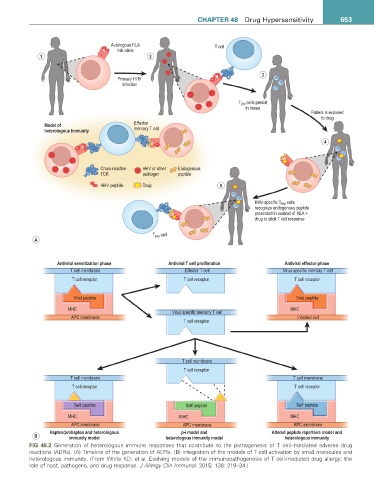
           FiG 48.2  Generation of heterologous immune responses that contribute to the pathogenesis of T cell–mediated adverse drug
           reactions (ADRs). (A) Timeline of the generation of ADRs. (B) Integration of the models of T-cell activation by small molecules and
           heterologous immunity. (From White KD, et al. Evolving models of the immunopathogenesis of T cell-mediated drug allergy: the
           role of host, pathogens, and drug response. J Allergy Clin Immunol. 2015; 136: 219–34.)

