


Page 924 - Clinical Immunology_ Principles and Practice ( PDFDrive )
P. 924
892          Part Seven  Organ-Specific Inflammatory Disease


                                                               that, analogous to SPMS, acute inflammatory lesions form during
                                                               early stages of PPMS, prior to overt clinical progression, but
                                                               happen to arise exclusively in clinically silent areas. Conversely,
                                                               some investigators have argued that PPMS is a distinct disease
                                                               entity driven primarily by neurodegenerative processes from its
                                                                       3
                                                               inception.  This viewpoint is supported by the general failure
                                                                                                                 8
                                                               of immunomodulatory agents to attenuate the course of PPMS.
                                                               Conversely, in a randomized double-blind placebo-controlled
                                                               trial, treatment with a B cell–depleting monoclonal antibody
                                                               (mAb) delayed disability progression in a subset of patients with
                                                                                                                 9
                                                               PPMS who were younger and/or had inflammatory lesions.
                                                               Collectively, these findings suggest that the pathogenesis of PPMS
                                                               is multifaceted and heterogeneous and that the relative contribu-
                                                               tion of inflammation and neurodegeneration to clinical outcomes
          A                       B                            varies among patients.
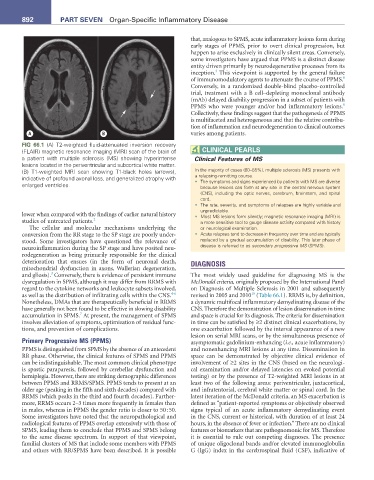
        FIG 66.1  (A) T2-weighted fluid-attenuated inversion recovery
        (FLAIR) magnetic resonance imaging (MRI) scan of the brain of    CLInICaL PearLS
        a patient with multiple  sclerosis (MS) showing hyperintense   Clinical Features of MS
        lesions located in the periventricular and subcortical white matter.
        (B) T1-weighted MRI scan showing T1-black holes (arrows),   In the majority of cases (80–85%), multiple sclerosis (MS) presents with
        indicative of profound axonal loss, and generalized atrophy with   a relapsing-remitting course.
        enlarged ventricles.                                     •  The symptoms and signs experienced by patients with MS are diverse
                                                                   because lesions can form at any site in the central nervous system
                                                                   (CNS), including the optic nerves, cerebrum, brainstem, and spinal
                                                                   cord.
                                                                 •  The rate, severity, and symptoms of relapses are highly variable and
                                                                   unpredictable.
        lower when compared with the findings of earlier natural history   •  Most MS lesions form silently; magnetic resonance imaging (MRI) is
        studies of untreated patients. 2                           a more sensitive tool to gauge disease activity compared with history
           The cellular and molecular mechanisms underlying the    or neurological examination.
        conversion from the RR stage to the SP stage are poorly under-  •  Acute relapses tend to decrease in frequency over time and are typically
        stood. Some investigators have questioned the relevance of   replaced by a gradual accumulation of disability. This later phase of
        neuroinflammation during the SP stage and have posited neu-  disease is referred to as secondary progressive MS (SPMS).
        rodegeneration as being primarily responsible for the clinical
        deterioration that ensues (in the form of neuronal death,   DIAGNOSIS
        mitochondrial dysfunction in axons,  Wallerian degeneration,
                  3
        and gliosis).  Conversely, there is evidence of persistent immune   The most  widely used  guideline for diagnosing MS  is the
        dysregulation in SPMS, although it may differ from RRMS with   McDonald criteria, originally proposed by the International Panel
        regard to the cytokine networks and leukocyte subsets involved,   on Diagnosis of Multiple Sclerosis in 2001 and subsequently
                                                         4-6
                                                                                   10
        as well as the distribution of infiltrating cells within the CNS.    revised in 2005 and 2010  (Table 66.1). RRMS is, by definition,
        Nonetheless, DMAs that are therapeutically beneficial in RRMS   a dynamic multifocal inflammatory demyelinating disease of the
        have generally not been found to be effective in slowing disability   CNS. Therefore the demonstration of lesion dissemination in time
                           7
        accumulation in SPMS.  At present, the management of SPMS   and space is crucial for its diagnosis. The criteria for dissemination
        involves alleviation of symptoms, optimization of residual func-  in time can be satisfied by ≥2 distinct clinical exacerbations, by
        tions, and prevention of complications.                one exacerbation followed by the interval appearance of a new
                                                               lesion on serial MRI scans, or by the simultaneous presence of
        Primary Progressive MS (PPMS)                          asymptomatic gadolinium-enhancing (i.e., acute inflammatory)
        PPMS is distinguished from SPMS by the absence of an antecedent   and nonenhancing MRI lesions at any time. Dissemination in
        RR phase. Otherwise, the clinical features of SPMS and PPMS   space can be demonstrated by objective clinical evidence of
        can be indistinguishable. The most common clinical phenotype   involvement of ≥2 sites in the CNS (based on the neurologi-
        is spastic paraparesis, followed by cerebellar dysfunction and   cal examination and/or delayed latencies on evoked potential
        hemiplegia. However, there are striking demographic differences   testing) or by the presence of T2-weighted MRI lesions in at
        between PPMS and RRMS/SPMS. PPMS tends to present at an   least two of the following areas: periventricular, juxtacortical,
        older age (peaking in the fifth and sixth decades) compared with   and infratentorial, cerebral white matter or spinal cord. In the
        RRMS (which peaks in the third and fourth decades). Further-  latest iteration of the McDonald criteria, an MS exacerbation is
        more, RRMS occurs 2–3 times more frequently in females than   defined as “patient-reported symptoms or objectively observed
        in males, whereas in PPMS the gender ratio is closer to 50 : 50.   signs typical of an acute inflammatory demyelinating event
        Some investigators have noted that the neuropathological and   in the CNS, current or historical, with duration of at least 24
        radiological features of PPMS overlap extensively with those of   hours, in the absence of fever or infection.” There are no clinical
        SPMS, leading them to conclude that PPMS and SPMS belong   features or biomarkers that are pathognomonic for MS. Therefore
        to the same disease spectrum. In support of that viewpoint,   it is  essential to rule out competing  diagnoses. The  presence
        familial clusters of MS that include some members with PPMS   of unique oligoclonal bands and/or elevated immunoglobulin
        and others with RR/SPMS have been described. It is possible   G (IgG) index in the cerebrospinal fluid (CSF), indicative of

