


Page 959 - Clinical Immunology_ Principles and Practice ( PDFDrive )
P. 959
926          Part Seven  Organ-Specific Inflammatory Disease


            $                                               %


            &                                               '
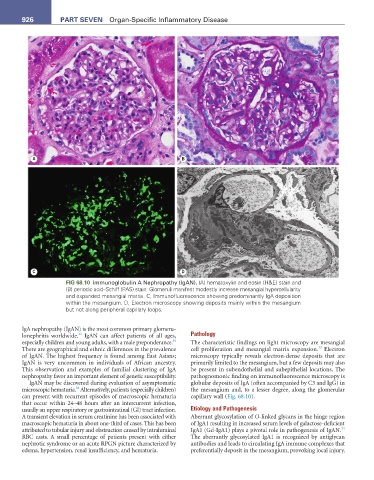
                       FIG 68.10  Immunoglobulin A Nephropathy (IgAN). (A) hematoxylin and eosin (H&E) stain and
                       (B) periodic acid–Schiff (PAS) stain: Glomeruli manifest modestly increase mesangial hypercellularity
                       and expanded mesangial matrix. C, Immunofluorescence showing predominantly IgA deposition
                       within the mesangium. D, Electron microscopy showing deposits mainly within the mesangium
                       but not along peripheral capillary loops.


        IgA nephropathy (IgAN) is the most common primary glomeru-
                           32
        lonephritis worldwide.   IgAN  can affect  patients  of  all  ages,   Pathology
                                                         34
        especially children and young adults, with a male preponderance.    The characteristic findings on light microscopy are mesangial
                                                                                                         32
        There are geographical and ethnic differences in the prevalence   cell  proliferation  and mesangial  matrix  expansion.   Electron
        of IgAN. The highest frequency is found among East Asians;   microscopy  typically reveals  electron-dense deposits  that  are
        IgAN  is very uncommon  in  individuals  of  African  ancestry.   primarily limited to the mesangium, but a few deposits may also
        This observation and examples of familial clustering of IgA   be present in subendothelial and subepithelial locations. The
        nephropathy favor an important element of genetic susceptibility.  pathognomonic finding on immunofluorescence microscopy is
           IgAN may be discovered during evaluation of asymptomatic   globular deposits of IgA (often accompanied by C3 and IgG) in
                          34
        microscopic hematuria.  Alternatively, patients (especially children)   the mesangium and, to a lesser degree, along the glomerular
        can present with recurrent episodes of macroscopic hematuria   capillary wall (Fig. 68.10).
        that occur within 24–48 hours after an intercurrent infection,
        usually an upper respiratory or gastrointestinal (GI) tract infection.   Etiology and Pathogenesis
        A transient elevation in serum creatinine has been associated with   Aberrant glycosylation of O-linked glycans in the hinge region
        macroscopic hematuria in about one-third of cases. This has been   of IgA1 resulting in increased serum levels of galactose-deficient
                                                                                                                 34
        attributed to tubular injury and obstruction caused by intraluminal   IgA1 (Gd-IgA1) plays a pivotal role in pathogenesis of IgAN.
        RBC casts.  A small percentage of patients present with either   The aberrantly glycosylated IgA1 is recognized by antiglycan
        nephrotic syndrome or an acute RPGN picture characterized by   antibodies and leads to circulating IgA immune complexes that
        edema, hypertension, renal insufficiency, and hematuria.  preferentially deposit in the mesangium, provoking local injury.

