


Page 963 - Clinical Immunology_ Principles and Practice ( PDFDrive )
P. 963
930          Part Seven  Organ-Specific Inflammatory Disease


             $                                                 %

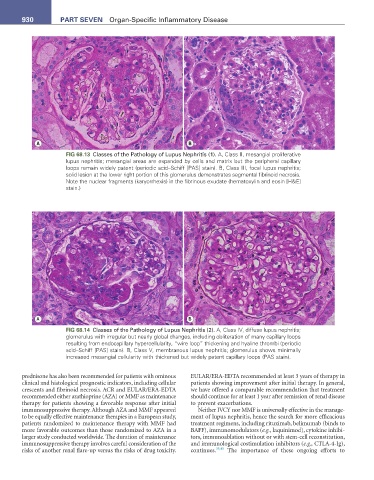
                       FIG 68.13  Classes of the Pathology of Lupus Nephritis (1). A, Class II, mesangial proliferative
                       lupus nephritis; mesangial areas are expanded by cells and matrix but the peripheral capillary
                       loops remain widely patent (periodic acid–Schiff [PAS] stain). B, Class III, focal lupus nephritis;
                       solid lesion at the lower right portion of this glomerulus demonstrates segmental fibrinoid necrosis.
                       Note the nuclear fragments (karyorrhexis) in the fibrinous exudate (hematoxylin and eosin [H&E]
                       stain.)


             $                                                 %

                       FIG 68.14  Classes of the Pathology of Lupus Nephritis (2). A, Class IV, diffuse lupus nephritis;
                       glomerulus with irregular but nearly global changes, including obliteration of many capillary loops
                       resulting from endocapillary hypercellularity, “wire loop” thickening and hyaline thrombi (periodic
                       acid–Schiff [PAS] stain). B, Class V, membranous lupus nephritis; glomerulus shows minimally
                       increased mesangial cellularity with thickened but widely patent capillary loops (PAS stain).


        prednisone has also been recommended for patients with ominous   EULAR/ERA-EDTA recommended at least 3 years of therapy in
        clinical and histological prognostic indicators, including cellular   patients showing improvement after initial therapy. In general,
        crescents and fibrinoid necrosis. ACR and EULAR/ERA-EDTA   we have offered a comparable recommendation that treatment
        recommended either azathioprine (AZA) or MMF as maintenance   should continue for at least 1 year after remission of renal disease
        therapy for patients showing a favorable response after initial   to prevent exacerbations.
        immunosuppressive therapy. Although AZA and MMF appeared   Neither IVCY nor MMF is universally effective in the manage-
        to be equally effective maintenance therapies in a European study,   ment of lupus nephritis, hence the search for more efficacious
        patients randomized to maintenance therapy with MMF had   treatment regimens, including rituximab, belimumab (binds to
        more favorable outcomes than those randomized to AZA in a   BAFF), immunomodulators (e.g., laquinimod), cytokine inhibi-
        larger study conducted worldwide. The duration of maintenance   tors, immunoablation without or with stem-cell reconstitution,
        immunosuppressive therapy involves careful consideration of the   and immunological costimulation inhibitors (e.g., CTLA-4-Ig),
        risks of another renal flare-up versus the risks of drug toxicity.   continues. 35,45  The importance of these ongoing efforts to

