


Page 962 - Clinical Immunology_ Principles and Practice ( PDFDrive )
P. 962
CHaPter 68  Immunological Renal Diseases                929


                                                                  Caucasians. Nephritis is a major cause of morbidity and mortality
                                                                  and accounts for a large portion of all hospital admissions in
                                                                  patients with SLE.
                                                                  Pathogenesis
                                                                  Several different mechanisms appear to be involved in the
                                                                  pathogenesis of lupus nephritis, resulting in a wide spectrum of
                                                                  renal lesions. Deposition of immune complexes from the circula-
                                                                  tion into the kidney appears to be the initiating event in prolifera-
                                                                  tive lupus nephritis; however, only a subset of immune complexes
                                                                  appears to be nephritogenic. DNA and anti-DNA antibodies are
                                                                  known to be concentrated in glomerular deposits in the suben-
                                                                  dothelial location and are likely to play a central role in the
                                                                  pathogenesis of proliferative lupus nephritis. Unfortunately, there
                                                                  are fewer insights into the pathogenesis of lupus MN with its
                                                                  characteristic epimembranous immune deposits.  Although T
                                                                  cells are almost certainly involved in autoantibody production,
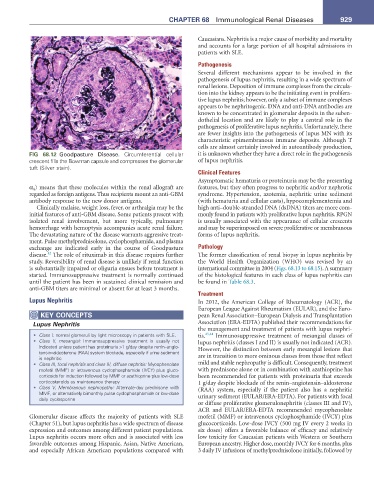
           FIG 68.12  Goodpasture Disease. Circumferential cellular   it is unknown whether they have a direct role in the pathogenesis
           crescent fills the Bowman capsule and compresses the glomerular   of lupus nephritis.
           tuft (Silver stain).
                                                                  Clinical Features
                                                                  Asymptomatic hematuria or proteinuria may be the presenting
           α 4 ) means that these molecules within the renal allograft are   features, but they often progress to nephritic and/or nephrotic
           regarded as foreign antigens. Thus recipients mount an anti-GBM   syndrome.  Hypertension,  azotemia,  nephritic  urine  sediment
           antibody response to the new donor antigens.           (with hematuria and cellular casts), hypocomplementemia and
             Clinically malaise, weight loss, fever, or arthralgia may be the   high anti–double-stranded DNA (dsDNA) titers are more com-
           initial features of anti-GBM disease. Some patients present with   monly found in patients with proliferative lupus nephritis. RPGN
           isolated renal involvement, but more typically, pulmonary   is usually associated with the appearance of cellular crescents
           hemorrhage with hemoptysis accompanies acute renal failure.   and may be superimposed on severe proliferative or membranous
           The devastating nature of the disease warrants aggressive treat-  forms of lupus nephritis.
           ment. Pulse methylprednisolone, cyclophosphamide, and plasma
           exchange are indicated early in the course of Goodpasture   Pathology
                 42
           disease.  The role of rituximab in this disease requires further   The former classification of renal biopsy in lupus nephritis by
           study. Reversibility of renal disease is unlikely if renal function   the  World Health Organization (WHO) was revised by an
           is substantially impaired or oliguria ensues before treatment is   international committee in 2004 (Figs. 68.13 to 68.15). A summary
           started. Immunosuppressive treatment is normally continued   of the histological features in each class of lupus nephritis can
           until the patient has been in sustained clinical remission and   be found in Table 68.3.
           anti-GBM titers are minimal or absent for at least 3 months.
                                                                  Treatment
           Lupus Nephritis                                        In 2012, the  American College of Rheumatology (ACR), the
                                                                  European League Against Rheumatism (EULAR), and the Euro-
               KeY COnCePtS                                       pean Renal Association–European Dialysis and Transplantation
            Lupus Nephritis                                       Association (ERA-EDTA) published their recommendations for
                                                                  the management and treatment of patients with lupus nephri-
            •  Class I: normal glomeruli by light microscopy in patients with SLE.  tis. 43,44  Immunosuppressive treatment of mesangial classes of
            •  Class  II,  mesangial:  Immunosuppressive  treatment  is  usually  not   lupus nephritis (classes I and II) is usually not indicated (ACR).
              indicated unless patient has proteinuria >1 g/day despite renin–angio-  However, the distinction between early mesangial lesions that
              tensin–aldosterone (RAA) system blockade, especially if urine sediment
              is nephritic                                        are in transition to more ominous classes from those that reflect
            •  Class III, focal nephritis and class IV, diffuse nephritis: Mycophenolate   mild and stable nephropathy is difficult. Consequently, treatment
              mofetil (MMF) or intravenous cyclophosphamide (IVCY) plus gluco-  with prednisone alone or in combination with azathioprine has
              corticoids for induction followed by MMF or azathioprine plus low-dose   been recommended for patients with proteinuria that exceeds
              corticosteroids as maintenance therapy              1 g/day despite blockade of the renin–angiotensin–aldosterone
            •  Class V, Membranous nephropathy: Alternate-day prednisone with   (RAA) system, especially if the patient also has a nephritic
              MMF, or alternatively bimonthly pulse cyclophosphamide or low-dose   urinary sediment (EULAR/ERA-EDTA). For patients with focal
              daily cyclosporine
                                                                  or diffuse proliferative glomerulonephritis (classes III and IV),
                                                                  ACR and EULAR/ERA-EDTA recommended mycophenolate
           Glomerular disease affects the majority of patients with SLE   mofetil (MMF) or intravenous cyclophosphamide (IVCY) plus
           (Chapter 51), but lupus nephritis has a wide spectrum of disease   glucocorticoids. Low-dose IVCY (500 mg IV every 2 weeks in
           expression and outcomes among different patient populations.   six doses) offers a favorable balance of efficacy and relatively
           Lupus nephritis occurs more often and is associated with less   low toxicity for Caucasian patients with Western or Southern
           favorable outcomes among Hispanic, Asian, Native American,   European ancestry. Higher dose, monthly IVCY for 6 months, plus
           and especially  African  American populations compared with   3 daily IV infusions of methylprednisolone initially, followed by

