


Page 961 - Clinical Immunology_ Principles and Practice ( PDFDrive )
P. 961
928          Part Seven  Organ-Specific Inflammatory Disease


            $                                                 %


            &                                                 '
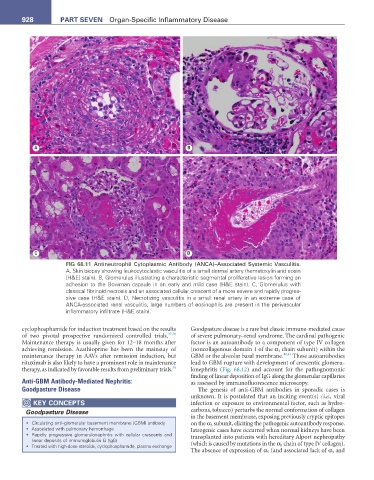
                       FIG 68.11  Antineutrophil Cytoplasmic Antibody (ANCA)–Associated Systemic Vasculitis.
                       A, Skin biopsy showing leukocytoclastic vasculitis of a small dermal artery (hematoxylin and eosin
                       [H&E] stain). B, Glomerulus illustrating a characteristic segmental proliferative lesion forming an
                       adhesion to the Bowman capsule in an early and mild case (H&E stain). C, Glomerulus with
                       classical fibrinoid necrosis and an associated cellular crescent of a more severe and rapidly progres-
                       sive case (H&E stain). D, Necrotizing vasculitis in a small renal artery in an extreme case of
                       ANCA-associated renal vasculitis; large numbers of eosinophils are present in the perivascular
                       inflammatory infiltrate (H&E stain).

        cyclophosphamide for induction treatment based on the results   Goodpasture disease is a rare but classic immune-mediated cause
        of two pivotal prospective randomized controlled trials. 37,38    of severe pulmonary–renal syndrome. The cardinal pathogenic
        Maintenance therapy is usually given for 12–18 months after   factor is an autoantibody to a component of type IV collagen
        achieving remission.  Azathioprine has been the mainstay of   (noncollagenous domain 1 of the α 3  chain subunit) within the
        maintenance therapy in  AAVs after remission induction, but   GBM or the alveolar basal membrane. 40,41  These autoantibodies
        rituximab is also likely to have a prominent role in maintenance   lead to GBM rupture with development of crescentic glomeru-
        therapy, as indicated by favorable results from preliminary trials. 39  lonephritis (Fig. 68.12) and account for the pathognomonic
                                                               finding of linear deposition of IgG along the glomerular capillaries
        Anti-GBM Antibody-Mediated Nephritis:                  as assessed by immunofluorescence microscopy.
        Goodpasture Disease                                       The genesis of anti-GBM antibodies in sporadic cases is
                                                               unknown. It is postulated that an inciting event(s) (i.e., viral
            KeY COnCePtS                                       infection or exposure to environmental factor, such as hydro-
         Goodpasture Disease                                   carbons, tobacco) perturbs the normal conformation of collagen
                                                               in the basement membrane, exposing previously cryptic epitopes
          •  Circulating anti–glomerular basement membrane (GBM) antibody  on the α 3  subunit, eliciting the pathogenic autoantibody response.
          •  Associated with pulmonary hemorrhage              Iatrogenic cases have occurred when normal kidneys have been
          •  Rapidly progressive glomerulonephritis with cellular crescents and   transplanted into patients with hereditary Alport nephropathy
           linear deposits of immunoglobulin G (IgG)
          •  Treated with high-dose steroids, cyclophosphamide, plasma exchange  (which is caused by mutations in the α 5  chain of type IV collagen).
                                                               The absence of expression of α 5  (and associated lack of α 3  and

