


Page 99 - Clinical Immunology_ Principles and Practice ( PDFDrive )
P. 99
84           PARt oNE  Principles of Immune Response


                                                               is a positive selection process, whereby only those cells with
                                                               TCRs interacting with the self peptide–HLA complex survive.
                                                               T cells with receptors that do not recognize any self peptide–HLA
                                                               complex are eliminated. The second step is a negative selection
                                                               process, whereby among the selected T cells with self recognition,
                                                               those with high affinity interactions with the self peptides–
                                                               HLA complex are eliminated allowing the rest with lower affinity
                                                               interactions to  survive  and  be  released  in the  periphery.
                                                               These self peptides constitute the T-cell recognition component
                                                               of an individual’s adaptive immune system. This patterning
                                                               of TCR recognition on self peptides presented by self MHC
                                                               molecules is critical to the development of autoimmunity and
                                                               allorecognition.
                                                               Evolutionary Considerations Driving the Separate
                                                               Functions of Class I and Class II
                                                               One basic task of the T cell is to protect the body from two
                                                               major types of pathogens: viruses, which would commandeer
                                                               the replicative machinery of a cell, and bacteria, which replicate
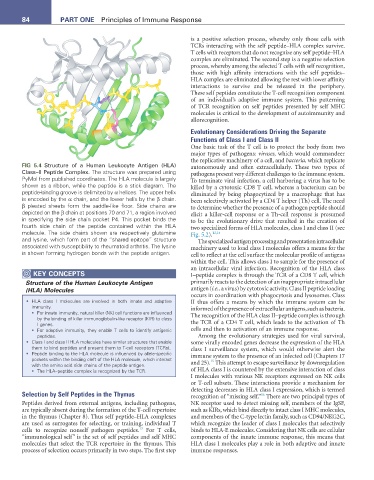
        FIG 5.4  Structure of a Human Leukocyte Antigen (HLA)   autonomously and often extracellularly. These two types of
        Class–II Peptide Complex. The structure was prepared using   pathogens present very different challenges to the immune system.
        PyMol from published coordinates. The HLA molecule is largely   To terminate viral infection, a cell harboring a virus has to be
        shown as a ribbon, while the peptide is a stick diagram. The   killed by a cytotoxic CD8 T cell, whereas a bacterium can be
        peptide-binding groove is delimited by α helices. The upper helix   eliminated by being phagocytized by a macrophage that has
        is encoded by the α chain, and the lower helix by the β chain.   been selectively activated by a CD4 T helper (Th) cell. The need
        β pleated sheets form the saddle-like floor. Side chains are   to determine whether the presence of a pathogen peptide should
        depicted on the β chain at positions 70 and 71, a region involved   elicit a killer-cell response or a Th-cell response is presumed
        in specifying the side chain pocket P4. This pocket binds the   to be the evolutionary drive that resulted in the creation of
        fourth side chain of the peptide contained within the HLA   two specialized forms of HLA molecules, class I and class II (see
        molecule. The side chains shown are respectively glutamine   Fig. 5.2). 12,14
        and lysine, which form part of the “shared epitope” structure   The specialized antigen processing and presentation intracellular
        associated with susceptibility to rheumatoid arthritis. The lysine   machinery used to load class I molecules offers a means for the
        is shown forming hydrogen bonds with the peptide antigen.   cell to reflect at the cell surface the molecular profile of antigens
                                                               within the cell. This allows class I to sample for the presence of
                                                               an intracellular viral infection. Recognition of the HLA class
            KEY CoNCEPtS                                       I–peptide complex is through the TCR of a CD8 T cell, which
         Structure of the Human Leukocyte Antigen              primarily reacts to the detection of an inappropriate intracellular
         (HLA) Molecules                                       antigen (i.e., a virus) by cytotoxic activity. Class II peptide loading
                                                               occurs in coordination with phagocytosis and lysosomes. Class
          •  HLA class I molecules are involved in both innate and adaptive   II thus offers a means by which the immune system can be
           immunity.                                           informed of the presence of extracellular antigens, such as bacteria.
           •  For innate immunity, natural killer (NK) cell functions are influenced   The recognition of the HLA class II–peptide complex is through
             by the binding of killer immunoglobulin-like receptor (KIR) to class
             I genes.                                          the TCR of a CD4 T cell, which leads to the activation of Th
           •  For adaptive immunity, they enable T cells to identify antigenic   cells and then to activation of an immune response.
             peptides.                                            Among the evolutionary strategies used for viral survival,
          •  Class I and class II HLA molecules have similar structures that enable   some virally encoded genes decrease the expression of the HLA
           them to bind peptides and present them to T-cell receptors (TCRs).  class I surveillance system, which would otherwise alert the
          •  Peptide binding to the HLA molecule is influenced by allele-specific   immune system to the presence of an infected cell (Chapters 17
           pockets within the binding cleft of the HLA molecule, which interact   15
           with the amino acid side chains of the peptide antigen.  and 25).  This attempt to escape surveillance by downregulation
           •  The HLA–peptide complex is recognized by the TCR.  of HLA class I is countered by the extensive interaction of class
                                                               I molecules with various NK receptors expressed on NK cells
                                                               or T-cell subsets. These interactions provide a mechanism for
                                                               detecting decreases in HLA class I expression, which is termed
        Selection by Self Peptides in the Thymus               recognition of “missing self.”  There are two principal types of
                                                                                      16
        Peptides derived from external antigens, including pathogens,   NK receptor used to detect missing self, members of the IgSF,
        are typically absent during the formation of the T-cell repertoire   such as KIRs, which bind directly to intact class I MHC molecules,
        in the thymus (Chapter 8). Thus self peptide–HLA complexes   and members of the C-type lectin family, such as CD94/NKG2C,
        are used as surrogates for selecting, or training, individual T   which recognize the leader of class I molecules that selectively
                                               13
        cells to recognize nonself pathogen peptides.  For T cells,   binds to HLA-E molecules. Considering that NK cells are cellular
        “immunological self” is the set of self peptides and self MHC   components of the innate immune response, this means that
        molecules that select the TCR repertoire in the thymus. This   HLA class I molecules play a role in both adaptive and innate
        process of selection occurs primarily in two steps. The first step   immune responses.

