


Page 1168 - Hall et al (2015) Principles of Critical Care-McGraw-Hill
P. 1168
CHAPTER 86: Intracranial Pressure: Monitoring and Management  807


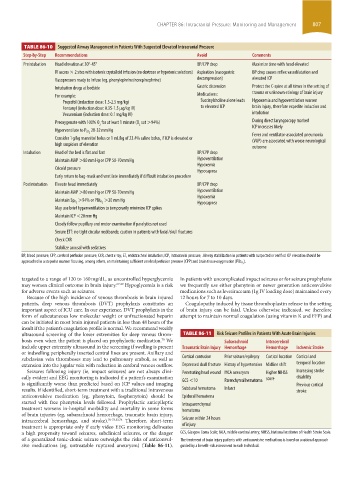
                      TABLE 86-10    Suggested Airway Management in Patients With Suspected Elevated Intracranial Pressure
                    Step-by-Step  Recommendations                              Avoid              Comments
                    Preintubation  Head elevation at 30°-45°                   BP/CPP drop        Maximize time with head elevated
                               IV access × 2 sites with isotonic crystalloid infusion (no dextrose or hypotonic solutions) Aspiration (nasogastric   BP drop causes reflex vasodilatation and
                               Vasopressors ready to infuse (eg, phenylephrine/norepinephrine)    decompression)  elevated ICP
                               Intubation drugs at bedside                     Gastric distension  Protect the C-spine at all times in the setting of
                               For example:                                    Medications:       trauma or unknown etiology of brain injury
                                  Propofol (induction dose: 1.5-2.5 mg/kg)       Succinylcholine alone leads   Hypoxemia and hypoventilation worsen
                                  Fentanyl (induction dose: 0.35-1.5 µg/kg IV)   to elevated ICP  brain injury, therefore expedite induction and
                                  Vecuronium (induction dose: 0.1 mg/kg IV)                       intubation
                               Preoxygenate with 100% O  for at least 1 minute (O  sat >94%)      During direct laryngoscopy marked
                                              2             2                                     ICP increases likely
                                            28-32 mm Hg
                               Hyperventilate to P CO 2
                                                                                                  Fever and ventilator-associated pneumonia
                               Consider 1 g/kg mannitol bolus or 1 mL/kg of 23.4% saline bolus, if ICP is elevated or   (VAP) are associated with worse neurological
                               high suspicion of elevation
                                                                                                  outcome
                    Intubation  Head of the bed is flat and fast               BP/CPP drop
                               Maintain MAP >80 mm Hg or CPP 50-70 mm Hg       Hypoventilation
                                                                               Hypoxemia
                               Cricoid pressure                                Hypocapnea
                               Early return to bag-mask and ventilate immediately if difficult intubation procedure
                    Postintubation  Elevate head immediately                   BP/CPP drop
                               Maintain MAP >80 mm Hg or CPP 50-70 mm Hg       Hypoventilation
                                                                               Hypoxemia
                                                >20 mm Hg
                                                                               Hypocapnea
                               Maintain Sp O 2  >94% or PBt O 2
                               May use brief hyperventilation to temporarily minimize ICP spikes
                               Maintain ICP <20 mm Hg
                               Closely follow pupillary and motor examination if paralytics not used
                               Secure ETT: no tight circular neckbands; caution in patients with facial/skull fractures
                               Check CXR
                               Stabilize arousal with sedatives
                    BP, blood pressure; CPP, cerebral perfusion pressure; CXR, chest x-ray; ET, endotracheal intubation; ICP, intracranial pressure; .Airway stabilization in patients with suspected or verified ICP elevation should be
                    approached in a stepwise manner focusing, among others, on maintaining sufficient cerebral perfusion pressure (CPP) and brain tissue oxygenation (PBtO ).
                                                                                               2
                    targeted to a range of 120 to 160 mg/dL, as uncontrolled hyperglycemia   In patients with uncomplicated impact seizures or for seizure  prophylaxis
                    may worsen clinical outcome in brain injury. 67-69  Hypoglycemia is a risk   we frequently use either phenytoin or newer generation anticonvulsive
                    for adverse events such as seizures.                  medications such as levetiracetam (1g IV loading dose) maintained every
                     Because of the high incidence of venous thrombosis in brain injured   12 hours for 7 to 10 days.
                    patients, deep venous thrombosis (DVT) prophylaxis constitutes an   Coagulopathy induced by tissue thromboplastin release in the setting
                    important aspect of ICU care. In our experience, DVT prophylaxis in the   of brain injury can be fatal. Unless otherwise indicated, we therefore
                    form of subcutaneous low molecular weight or unfractionated heparin   attempt to maintain normal coagulation (using vitamin K and FFP) and
                    can be initiated in most brain injured patients in less than 48 hours of the
                    insult if the patient’s coagulation profile is normal. We recommend weekly
                    ultrasound  screening  of the  lower extremities for  deep venous  throm-    TABLE 86-11    Risk Seizure Profiles in Patients With Acute Brain Injuries
                    bosis even when the patient is placed on prophylactic medication.  We   Subarachnoid   Intracerebral
                                                                   70
                    include upper extremity ultrasound in the screening if swelling is present   Traumatic Brain Injury Hemorrhage  Hemorrhage  Ischemic Stroke
                    or indwelling peripherally inserted central lines are present. Axillary and
                    subclavian vein thromboses may lead to pulmonary emboli, as well as   Cortical contusion  Prior seizure/epilepsy  Cortical location Cortical and
                    extension into the jugular vein with reduction in cerebral venous outflow.  Depressed skull fracture History of hypertension Midline shift    temporal location
                     Seizures following injury (ie, impact seizures) are not always clini-  Penetrating head wound MCA aneurysm  Higher NIHSS   Increasing stroke
                    cally evident and EEG monitoring is indicated if a patient’s examination           score       disability
                    is significantly worse than predicted based on ICP values and imaging   GCS <10  Parenchymal hematoma  Previous cortical
                    results. If identified, short-term treatment with a traditional intravenous   Subdural hematoma  Infarct  stroke
                    anticonvulsive medication (eg, phenytoin, fosphenytoin) should be   Epidural hematoma
                    started with free phenytoin levels followed. Prophylactic antiepileptic   Intraparenchymal
                    treatment worsens in-hospital morbidity and mortality in some forms     hematoma
                    of brain injuries (eg, subarachnoid hemorrhage, traumatic brain injury,
                    intracerebral hemorrhage, and stroke). 70-73,33,74  Therefore, short-term   Seizure within 24 hours
                    treatment is appropriate only if early video EEG monitoring delineates   of injury
                    a  high  propensity  toward  seizures,  subclinical  seizures,  or  the  danger   GCS, Glasgow Coma Scale; MCA, middle cerebral artery; NIHSS, National Institutes of Health Stroke Scale.
                    of a generalized tonic-clonic seizure outweighs the risks of anticonvul-  The treatment of brain injury patients with anticonvulsive medications is based on a rational approach
                    sive medications (eg, untreatable ruptured aneurysm) (Table 86-11).   guided by a benefit-risk assessment in each individual.


            section06.indd   807                                                                                       1/23/2015   12:56:06 PM

