


Page 1171 - Hall et al (2015) Principles of Critical Care-McGraw-Hill
P. 1171
810     PART 6: Neurologic Disorders


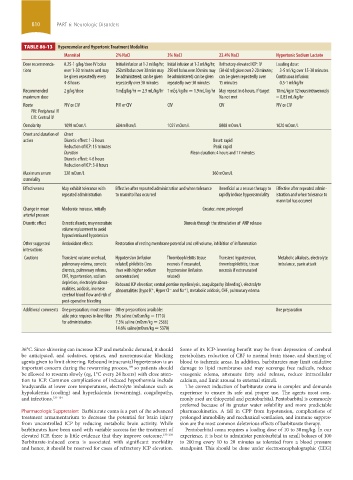
                   TABLE 86-13    Hyperosmolar and Hypertonic Treatment Modalities
                                Mannitol         2% NaCl           3% NaCl           23.4% NaCl         Hypertonic Sodium lactate
                  Dose recommenda-  0.25-1 g/kg/dose IV bolus   Initial infusion at 1-2 ml/kg/hr;  Initial infusion at 1-2 ml/kg/hr;  Refractory elevated ICP: IV    Loading dose:
                  tions         over 1-30 minutes and may   250 ml bolus over 30 mins may  250 ml bolus over 30 mins may  (30-60 ml) given over 2-20 minutes;    3-5 ml/kg over 15-30 minutes
                                be given repeatedly every   be administered; can be given  be administered; can be given  can be given repeatedly over    Continuous infusion:
                                4-8 hours        repeatedly over 30 minutes  repeatedly over 30 minutes  15 minutes  0.5-1 ml/kg/hr
                  Recommended   2 g/kg/dose      1 mEq/kg/hr = 2.9 mL/kg/hr 1 mEq/kg/hr = 1.9 mL/kg/hr May repeat in 6 hours, if target   10 mL/kg in 12 hours intravenously
                    maximum dose                                                     Na not met         = 0.83 mL/kg/hr
                  Route         PIV or CIV       PIV or CIV        CIV               CIV                PIV or CIV
                    PIV: Peripheral IV
                    CIV: Central IV
                  Osmolarity    1098 mOsm/L      684 mOsm/L        1027 mOsm/L       8008 mOsm/L        1020 mOsm/L
                  Onset and duration of  Onset
                  action        Diuretic effect: 1-3 hours                        Onset: rapid
                                Reduction of ICP: 15 minutes                       Peak: rapid
                                Duration                                   Mean duration: 4 hours and 17 minutes
                                Diuretic effect: 4-6 hours
                                Reduction of ICP: 3-8 hours
                  Maximum serum   320 mOsm/L                                      360 mOsm/L
                  osmolality
                  Effectiveness  May exhibit tolerance with   Effective after repeated administration and when tolerance   Beneficial as a rescue therapy to  Effective after repeated admin-
                               repeated administration  to  mannitol has occurred    rapidly induce hyperosmolality  istration and when tolerance to
                                                                                                        mannitol has occurred
                  Change in mean    Moderate increase, initially               Greater, more prolonged
                  arterial pressure
                  Diuretic effect  Osmotic diuretic, may  necessitate   Diuresis through the stimulation of  ANP release
                               volume replacement to avoid
                               hypovolemia and hypotension
                  Other suggested   Antioxidant effects  Restoration of resting membrane potential and cell volume, inhibition of inflammation
                    interactions
                   Cautions    Transient volume overload,    Hypotension (infusion   Thrombophlebitis tissue   Transient hypotension,   Metabolic alkalosis, electrolyte
                               pulmonary edema, osmotic   related) phlebitis (less   necrosis if excavated,      thrombophlebitis, tissue    imbalance, panic attack
                               diuresis, pulmonary edema,   than with higher sodium   hypotension (infusion   necrosis if extravasated
                               CHF, hypertension, sodium     concentration)  related)
                               depletion, electrolyte abnor-  Rebound ICP elevation; central pontine myelinolysis, coagulopathy (bleeding), electrolyte
                               malities, acidosis, increase     abnormalities (hypo K , Hyper Cl  and Na ), metabolic acidosis, CHF, pulmonary edema
                                                                    -
                                                                         +
                                                             +
                               cerebral blood flow and risk of
                               post-operative bleeding
                  Additional comments One preparation; most reason- Other preparations available:       One preparation
                               able price requires in-line filter  5% saline (mOsm/kg = 1710)
                               for administration  7.5% saline (mOsm/kg = 2566)
                                                 14.6% saline(mOsm/kg = 5370)


                 36°C. Since shivering can increase ICP and metabolic demand, it should   Some of its ICP-lowering benefit may be from depression of cerebral
                 be anticipated, and sedatives, opiates, and neuromuscular blocking   metabolism, reduction of CBF to normal brain tissue, and shunting of
                 agents given to limit shivering. Rebound intracranial hypertension is an   blood to ischemic areas. In addition, barbiturates may limit oxidative
                 important concern during the rewarming process,  so patients should   damage to lipid membranes and may scavenge free radicals, reduce
                                                      109
                 be allowed to rewarm slowly (eg, 1°C every 24 hours) with close atten-  vasogenic edema, attenuate fatty acid release, reduce intracellular
                 tion to ICP. Common complications of induced hypothermia include     calcium, and limit arousal to external stimuli.
                 bradycardia at lower core temperatures, electrolyte imbalance such as   The correct induction of barbiturate coma is complex and demands
                 hypokalemia (cooling) and hyperkalemia (rewarming), coagulopathy,   experience to ensure its safe and proper use. The agents most com-
                 and infections. 131-134                               monly used are thiopental and pentobarbital. Pentobarbital is commonly
                                                                         preferred because of its greater water solubility and more predictable
                 Pharmacologic Suppression:  Barbiturate coma is a part of the advanced   pharmacokinetics. A fall in CPP from hypotension, complications of
                 treatment armamentarium to decrease the potential for brain injury     prolonged immobility and mechanical ventilation, and immune suppres-
                 from uncontrolled ICP by reducing metabolic brain activity. While   sion are the most common deleterious effects of barbiturate therapy.
                 barbiturates have been used with variable success for the treatment of   Pentobarbital coma requires a loading dose of 10 to 30 mg/kg. In our
                 elevated ICP, there is little evidence that they improve outcome. 135-139    experience, it is best to administer pentobarbital in small boluses of 100
                 Barbiturate-induced coma is associated with significant morbidity    to 200 mg every 10 to 20 minutes as tolerated from a blood pressure
                 and hence, it should be reserved for cases of refractory ICP elevation.     standpoint. This should be done under electroencephalographic (EEG)


            section06.indd   810                                                                                       1/23/2015   12:56:07 PM

