


Page 1182 - Hall et al (2015) Principles of Critical Care-McGraw-Hill
P. 1182
CHAPTER 86: Intracranial Pressure: Monitoring and Management  819


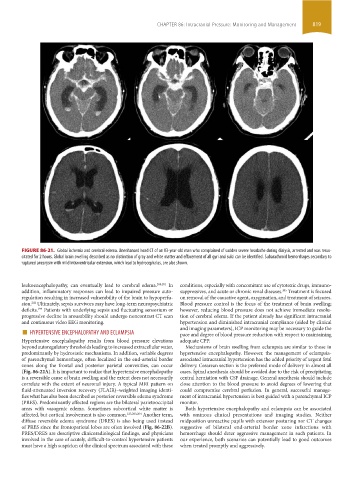
                    FIGURE 86-21.  Global ischemia and cerebral edema. Unenhanced head CT of an 83-year-old man who complained of sudden severe headache during dialysis, arrested and was resus-
                    citated for 2 hours. Global brain swelling described as no distinction of gray and white matter and effacement of all gyri and sulci can be identified. Subarachnoid hemorrhages secondary to
                    ruptured aneurysm with mild intraventricular extension, which lead to hydrocephalus, are also shown.


                      leukoencephalopathy, can eventually lead to cerebral edema. 200,201  In   conditions, especially with concomitant use of cytotoxic drugs, immuno-
                                                                                                            205
                    addition, inflammatory responses can lead to impaired pressure auto-  suppressives, and acute or chronic renal  diseases.  Treatment is focused
                    regulation resulting in increased vulnerability of the brain to hypoperfu-  on removal of the causative agent, oxygenation, and treatment of seizures.
                       202
                    sion.  Ultimately, sepsis survivors may have long-term neuropsychiatric   Blood pressure control is the focus of the treatment of brain swelling;
                    deficits.  Patients with underlying sepsis and fluctuating sensorium or   however, reducing blood pressure does not achieve immediate resolu-
                         199
                    progressive decline in arousability should undergo noncontrast CT scan   tion of cerebral edema. If the patient already has significant intracranial
                    and continuous video EEG monitoring.                  hypertension and diminished intracranial compliance (aided by clinical
                        ■  HYPERTENSIVE ENCEPHALOPATHY AND ECLAMPSIA      and imaging parameters), ICP monitoring may be necessary to guide the
                                                                          pace and degree of blood pressure reduction with respect to maintaining
                    Hypertensive encephalopathy results from blood pressure elevations   adequate CPP.
                    beyond autoregulatory thresholds leading to increased extracellular water,   Mechanisms of brain swelling from eclampsia are similar to those in
                    predominantly by hydrostatic mechanisms. In addition, variable degrees   hypertensive encephalopathy.  However,  the  management  of  eclampsia-
                    of parenchymal hemorrhage, often localized in the end-arterial border   associated intracranial hypertension has the added priority of urgent fetal
                    zones along the frontal and posterior parietal convexities, can occur    delivery. Cesarean section is the preferred mode of delivery in almost all
                    (Fig. 86-22A). It is important to realize that hypertensive encephalopathy   cases. Spinal anesthesia should be avoided due to the risk of precipitating
                    is a reversible cause of brain swelling and the extent does not necessarily   central herniation with CSF drainage. General anesthesia should include
                    correlate with the extent of neuronal injury. A typical MRI pattern on   close attention to the blood pressure to avoid degrees of lowering that
                    fluid-attenuated inversion recovery (FLAIR)–weighted imaging identi-  could compromise cerebral perfusion. In general, successful manage-
                    fies what has also been described as posterior reversible edema syndrome   ment of intracranial hypertension is best guided with a parenchymal ICP
                    (PRES). Predominantly affected regions are the bilateral parietooccipital   monitor.
                    areas with vasogenic edema. Sometimes subcortical white matter is   Both hypertensive encephalopathy and eclampsia can be  associated
                    affected, but cortical involvement is also common. 125,203,204  Another term,   with ominous clinical presentations and imaging studies. Neither
                    diffuse reversible edema syndrome (DRES) is also being used instead     midposition unreactive pupils with extensor posturing nor CT changes
                    of PRES since the frontoparietal lobes are often involved (Fig. 86-22B).   suggestive of bilateral end-arterial border zone infarctions with
                    PRES/DRES are descriptive clinicoradiological findings, and physicians     hemorrhage should deter aggressive management in such patients. In
                    involved in the care of acutely, difficult-to-control hypertensive patients   our experience, both scenarios can potentially lead to good outcomes
                    must have a high suspicion of the clinical  spectrum associated with these   when treated promptly and aggressively.


            section06.indd   819                                                                                       1/23/2015   12:56:15 PM

