


Page 1177 - Hall et al (2015) Principles of Critical Care-McGraw-Hill
P. 1177
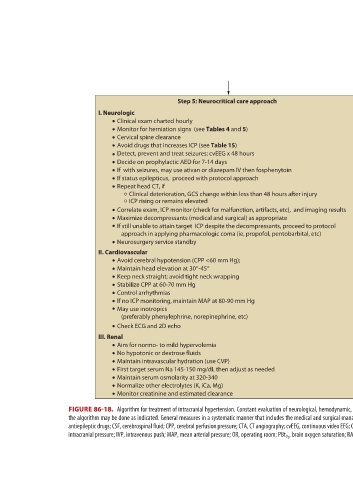
antiepileptic drugs; CSF, cerebrospinal fluid; CPP, cerebral perfusion pressure; CTA, CT angiography; cvEEG, continuous video EEG; CVP, central venous pressure; DVT, deep vein thrombosis; EVD, external ventricular drainage; GCS, Glasgow Coma Scale; ICP,
                                                                                                                                    ICP; <20 mm Hg; CPP; 60-70 mm Hg, CVP; 10-12 mm Hg; Pa O 2 ; >80 mm Hg;
                                                                                                  If heparin or LMWH is considered, caution if existing coagulopathy
                                                                                             Normalize bleeding parameters (eg, platelet count >100 k/mL)
                                                                                                               Minimize noxious stimuli upon examination and bedside care
                                                                                                         Maintain glucose 140-180 mg/dL; avoid hypoglycemia
                                                                                                                                       Brain temp; <37°C; PBt O 2 ; >20 mm Hg
                                                                                                                                Summary of brain target goals
                                                                                                                       Analgesia, eg, morphine IV or fentanyl infusion
                                                                                                                     Sedation, eg, propofol drip titrate to RASS-2
                                                                                 Aim for normothermia (Brain temp <37°C)
                                                                                                                  Examine patient off sedation, if ICP stable
                                                                                                                          Paralytics if indicted, eg, vecuronium
                                                                                      If febrile and with EVD, examine CSF
                                                                          Prokinetic medications,  if with ileus
                                                                                               DVT prophylaxis within 24-72 hours
                                                                                   Prevent shivering
                                                                              VI. Infectious Disease
                                                                                                      VIII. Endocrinology
                                                                                          VII. Hematology
                                IV. Pulmonary
                                                                                                            IX. Pain
                                                                               If still unable to attain target  ICP despite the decompressants, proceed to protocol
                                                                                    approach in applying pharmacologic coma (ie, propofol, pentobarbital, etc)
                                                                            Maximize decompressants (medical and surgical) as appropriate
                                    Step 5: Neurocritical care approach  Protect and secure airways Spine precautions in trauma patients Avoid hypoxia; goal Pa O 2   >80 mm Hg  Goal O 2  sat >90%  Keep Pa CO 2  35-38 mm Hg No prolonged hyperventilation Hyperventilation may be used for ICP crises or pending herniation Avoid hypercapnia (vasoconstriction may produce ischemia) Do ABGs and use end tidal CO 2  Do chest x-ray If  with seizures, may use ativan or diazepam IV then fosphenytoin  V. Gastroenterology  Early feeding (within 24 hours) Clinical deterioration, GCS change within less than 48 hours after injury Maximize caloric feeding for crit
                                                                                                                               First target serum Na 145-150 mg/dL then adjust as needed


                                           Clinical exam charted hourly Monitor for herniation signs  (see Tables 4 and 5)  Cervical spine clearance Avoid drugs that increases ICP (see Table 15) Detect, prevent and treat seizures; cvEEG x 48 hours Decide on prophylactic AED for 7-14 days If status epilepticus,  proceed with protocol approach  Repeat head CT, if  ICP rising or remains elevated  Neurosurgery service standby Avoid cerebral hypotension (CPP <60 mm Hg); Maintain head elevation at 30°-45° Keep neck straight; avoid tight neck wrapping Stabilize CPP at 60-70 mm Hg  Control arrhythmias If no ICP monitoring, maintain MAP at 80-90 mm Hg


                                        I. Neurologic                                   II. Cardiovascular          III. Renal


                                                                                                                                             FIGURE 86-18.


 section06.indd   815                                                                                                                             1/23/2015   12:56:11 PM

