


Page 1275 - Hall et al (2015) Principles of Critical Care-McGraw-Hill
P. 1275
882     PART 7: Hematologic and Oncologic Disorders


                                                                         TABLE 94-1    Reasons for Intensive Care Unit Admission of HSCT Recipients
                                            HSCT
                                                                        Respiratory insufficiency/failure
                                                                          Infectious pneumonia
                                                                          Noninfections lung injury syndromes—IPS, DAH, PERDS
                              Allogeneic                Autologous
                            myeloablative, RIC         myeloablative      Pulmonary edema
                                                                          Airway issues related to mucositis
                                                                          Bronchiolitis obliterans
                     Unmodified          TCD            Unmodified        Bronchiolitis obliterans organizing pneumonia
                    BM, PBSC, UCB      BM, PBSC          BM, PBSC       Severe sepsis/septic shock
                                                                        Hepatic failure
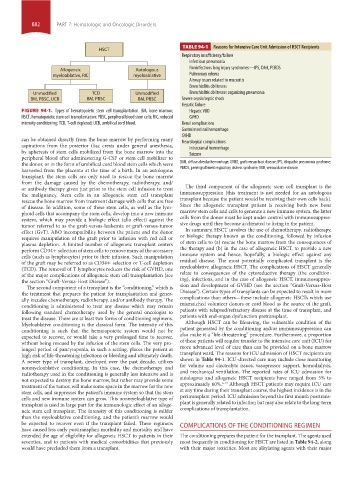
                 FIGURE  94-1.  Types of hematopoietic stem cell transplantation. BM, bone marrow;   Hepatic VOD
                 HSCT,  hematopoietic stem cell transplantation; PBSC, peripheral blood stem cells; RIC, reduced   GVHD
                 intensity conditioning; TCD, T-cell depleted; UCB, umbilical cord blood.  Renal complications
                                                                        Gastrointestinal hemorrhage
                                                                        GVHD
                 can be obtained directly from the bone marrow by performing many   Neurological complications
                 aspirations from the posterior iliac crests under general anesthesia,   Intracranial hemorrhage
                 by apheresis of stem cells mobilized from the bone marrow into the   Seizure
                 peripheral blood after administering G-CSF or stem cell mobilizer to
                 the donor, or in the form of umbilical cord blood stem cells which were   DAH, diffuse alveolar hemorrhage; GVHD, graft-versus-host disease; IPS, idiopathic pneumonia  syndrome;
                 harvested from the placenta at the time of a birth. In an autologous   PERDS, periengraftment respiratory distress syndrome; VOD, venoocclusive disease.
                 transplant, the stem cells are only used to rescue the bone marrow
                 from the damage caused by the chemotherapy, radiotherapy, and/
                 or antibody therapy given just prior to the stem cell infusion to treat     The third component of the allogeneic stem cell transplant is the
                 the malignancy. Stem cells in an allogeneic stem cell transplant     immunosuppression (this treatment is not needed for an autologous
                 rescue the bone marrow from treatment damage with cells that are free   transplant because the patient would be receiving their own cells back).
                 of disease. In addition, some of these stem cells, as well as the lym-  Since  the  allogeneic  transplant  patient  is  receiving  both  new  bone
                 phoid cells that accompany the stem cells, develop into a new immune   marrow stem cells and cells to generate a new immune system, the latter
                 system, which may provide a biologic effect (allo effect) against the   cells from the donor must be kept under control with immunosuppres-
                 tumor referred to as the graft-versus-leukemia or graft-versus-tumor   sive drugs until they become acclimated to living in the patient.
                 effect (GvT). ABO incompatibility between the patient and the donor   In summary, HSCT involves the use of chemotherapy, radiotherapy,
                 requires  manipulation  of  the  graft  prior  to  infusion  with  red  cell  or   or biologic therapy known as the conditioning, followed by infusion
                 plasma depletion. A limited number of allogeneic transplant centers   of stem cells to (a) rescue the bone marrow from the consequences of
                 perform CD34+ selection of stem cells to remove many of the accessory   the therapy and (b) in the case of allogeneic HSCT, to provide a new
                 cells (such as lymphocytes) prior to their infusion. Such manipulation   immune system and hence, hopefully, a biologic effect against any
                 of the graft may be referred to as CD34+ selection or T-cell depletion   residual disease. The most potentially complicated transplant is the
                 (TCD). The removal of T lymphocytes reduces the risk of GVHD, one   myeloablative allogeneic HSCT. The complications of HSCT generally
                 of the major complications of allogeneic stem cell transplantation (see   relate to consequences of the cytoreductive therapy (the condition-
                 the section “Graft-Versus-Host Disease”).             ing), infections, and in the case of allogeneic HSCT, immunosuppres-
                   The second component of a transplant is the “conditioning,” which is   sion and development of GVHD (see the section “Graft-Versus-Host
                 the treatment that prepares the patient for transplantation and gener-  Disease”). Certain types of transplants can be expected to result in more
                 ally incudes chemotherapy, radiotherapy, and/or antibody therapy. The   complications than  others—these include allogeneic HSCTs which use
                 conditioning is administered to treat any disease which may remain   mismatched volunteer donors or cord blood as the source of the graft,
                 following standard chemotherapy used by the general oncologist to   patients with relapsed/refractory disease at the time of transplant, and
                 treat the disease. There are at least two forms of conditioning  regimens.   patients with end-organ dysfunction pretransplant.
                 Myeloablative conditioning is the classical form. The intensity of this   Although HSCT can be lifesaving, the vulnerable condition of the
                 conditioning is such that the hematopoietic system would not be   patient generated by the conditioning and/or immunosuppression can
                 expected to recover, or would take a very prolonged time to recover,   also make it a “life-threatening” procedure. Furthermore, a proportion
                 without being rescued by the infusion of the stem cells. The very pro-  of these patients will require transfer to the intensive care unit (ICU) for
                 longed period of pancytopenia, in such a setting, places the patient at   more advanced level of care than can be provided on a bone marrow
                 high risk of life-threatening infections or bleeding and ultimately death.   transplant ward. The reasons for ICU admission of HSCT recipients are
                 A newer type of transplant, developed over the past decade, utilizes   shown in Table 94-1. ICU-directed care may include close monitoring
                 nonmyeloablative conditioning. In this  case,  the chemotherapy and   for volume and electrolyte issues, vasopressor support, hemodialysis,
                 radiotherapy used in the conditioning is generally less intensive and is   and mechanical ventilation. The reported rates of ICU admission for
                 not expected to destroy the bone marrow, but rather may provide some   autologous and allogeneic HSCT recipients have ranged from 5% to
                 treatment of the tumor, will make some space in the marrow for the new   approximately 60%. 6-14  Although HSCT patients may require ICU care
                 stem cells, and suppresses the patient’s immune system so that the stem   at any time during their transplant course, the highest incidence is in the
                 cells and new immune system can grow. This nonmyeloablative type of   peritransplant period. ICU admission beyond the first month posttrans-
                 transplant is used in large part for the immunologic effect of an alloge-  plant is generally related to infection but may also relate to the long-term
                 neic stem cell transplant. The intensity of this conditioning is milder   complications of transplantation.
                 than the myeloablative conditioning, and the patient’s marrow would
                 be expected to recover even if the transplant failed. These regimens   COMPLICATIONS OF THE CONDITIONING REGIMEN
                 have caused less early posttransplant morbidity and mortality and have
                 extended the age of eligibility for allogeneic HSCT to patients in their   The conditioning prepares the patient for the transplant. The agents used
                 seventies, and to patients with medical comorbidities that previously   most frequently in conditioning for HSCT are listed in Table 94-2, along
                 would have precluded them from a transplant.          with their major toxicities. Most are alkylating agents with their major


            section07.indd   882                                                                                       1/21/2015   7:43:03 AM

