


Page 1271 - Hall et al (2015) Principles of Critical Care-McGraw-Hill
P. 1271
878     PART 7: Hematologic and Oncologic Disorders


                                 Laboratory tumor lysis syndrome
                                 Uric acid  8 mg/dL ( 476  mol/L) or 25% increase from baseline
                                 Potassium  6 mEq/L ( 6 mmol/L) or 25% increase from baseline
                                 Phosphorus  4.5 mg/dL ( 2.1 mmol/L) or 25% increase from baseline

                                 Calcium  7 mg/dL ( 1.75 mmol/L) or 25% decrease from baseline
                                 Clinical tumor lysis syndrome
                                 Serum creatinine  1.5 times the upper limit of normal
                                 Cardiac arrhythmia or sudden death
                                 Seizure

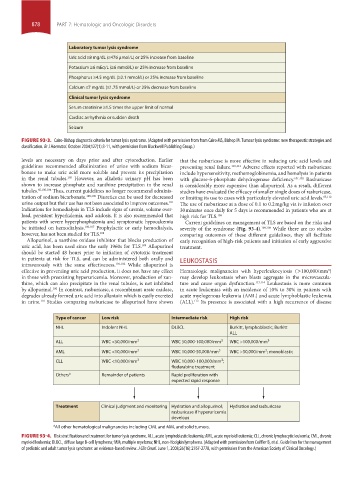
                 FIGURE 93-3.  Cairo-Bishop diagnostic criteria for tumor lysis syndrome. (Adapted with permission from from Cairo MS, Bishop M. Tumour lysis syndrome: new therapeutic strategies and
                 classification. Br J Haematol. October 2004;127(1):3-11, with permission from Blackwell Publishing Group.)

                 levels  are  necessary  on  days  prior  and  after  cytoreduction.  Earlier   that the rasburicase is more effective in reducing uric acid levels and
                 guidelines  recommended  alkalinization  of  urine  with  sodium  bicar-  preventing renal failure. 110,111  Adverse effects reported with rasburicase
                 bonate to make uric acid more soluble and prevent its precipitation   include hypersensitivity, methemoglobinemia, and hemolysis in patients
                 in the renal tubules.  However, an alkalotic urinary pH has been   with glucose-6-phosphate dehydrogenase deficiency. 101,102  Rasburicase
                                 105
                 shown to increase phosphate and xanthine precipitation in the renal   is considerably more expensive than allopurinol. As a result, different
                 tubules. 65,100,106  Thus, current guidelines no longer recommend adminis-  studies have evaluated the efficacy of smaller single doses of rasburicase,
                 tration of sodium bicarbonate. 100,106  Diuretics can be used for decreased   or limiting its use to cases with particularly elevated uric acid levels. 65,112
                 urine output but their use has not been associated to improve outcomes.    The use of rasburicase at a dose of 0.1 to 0.2 mg/kg via iv infusion over
                                                                   101
                 Indications for hemodialysis in TLS include signs of uremia, volume over-  30 minutes once daily for 5 days is recommended in patients who are at
                 load,  persistent hyperkalemia, and acidosis. It is also recommended that   high risk for TLS. 100
                 patients  with  severe  hyperphosphatemia  and symptomatic hypocalcemia     Current guidelines on management of TLS are based on the risks and
                 be initiated on hemodialysis. 100,107  Prophylactic or early hemodialysis,     severity of the syndrome (Fig.  93-4). 100,108  While there are no studies
                 however, has not been studied for TLS. 108            comparing outcomes of these different guidelines, they all facilitate
                   Allopurinol, a xanthine oxidase inhibitor that blocks production of   early recognition of high-risk patients and initiation of early aggressive
                                                          109
                 uric acid, has been used since the early 1960s for TLS.  Allopurinol   treatment.
                 should  be  started  48  hours  prior  to  initiation  of  cytotoxic  treatment
                 in patients at risk for TLS, and can be administered both orally and   LEUKOSTASIS
                 intravenously with the same effectiveness. 101,102  While allopurinol is
                                                                                                                          3
                 effective in preventing uric acid production, it does not have any effect   Hematologic malignancies with hyperleukocytosis (>100,000/mm )
                 in those with preexisting hyperuricemia. Moreover, production of xan-  may develop leukostasis when blasts aggregate in the microvascula-
                 thine, which can also precipitate in the renal tubules, is not inhibited   ture and cause organ dysfunction. 113,114  Leukostasis is more common
                 by allopurinol.  In contrast, rasburicase, a recombinant urate oxidase,   in acute leukemias with an incidence of 10% to 30% in patients with
                            100
                 degrades already formed uric acid into allantoin which is easily excreted   acute myelogenous leukemia (AML) and acute lymphoblastic leukemia
                 in urine.  Studies comparing rasburicase to allopurinol have shown   (ALL).  Its presence is associated with a high recurrence of disease
                                                                            113
                        110
                             Type of cancer  Low risk               Intermediate risk   High risk
                             NHL             Indolent NHL           DLBCL               Burkitt, lymphoblastic, Burkitt
                                                                                        ALL
                             ALL             WBC <50,000/mm 3       WBC 50,000-100,000/mm 3  WBC >100,000/mm 3
                                                                                                    3
                             AML             WBC <10,000/mm 3       WBC 10,000-50,000/mm 3  WBC >50,000/mm ; monoblastic
                                                                                     3
                             CLL             WBC <10,000/mm 3       WBC 10,000-100,000/mm ;
                                                                    fludarabine treatment
                             Others a        Remainder of patients  Rapid proliferation with
                                                                    expected rapid response


                             Treatment      Clinical judgment and monitoring Hydration and allopurinol;  Hydration and rasburicase
                                                                    rasburicase if hyperuricemia
                                                                    develops
                            a All other hematological malignancies including CML and MM, and solid tumors.
                 FIGURE 93-4.  Risk stratification and treatment for tumor lysis syndrome. ALL, acute lymphoblastic leukemia; AML, acute myeloid leukemia; CLL, chronic lymphocytic leukemia; CML, chronic
                 myeloid leukemia; DLBCL, diffuse large B-cell lymphoma; MM, multiple myeloma; NHL, non-Hodgkin lymphoma. (Adapted with permission from Coiffier B, et al. Guidelines for the management
                 of pediatric and adult tumor lysis syndrome: an evidence-based review. J Clin Oncol. June 1, 2008;26(16):2767-2778, with permission from the American Society of Clinical Oncology.)


            section07.indd   878                                                                                       1/21/2015   7:43:00 AM

