


Page 1306 - Hall et al (2015) Principles of Critical Care-McGraw-Hill
P. 1306
CHAPTER 96: Sickle Cell Disease  913


                                                                          transfusion. As such, the intensivist must be well versed in the indications,
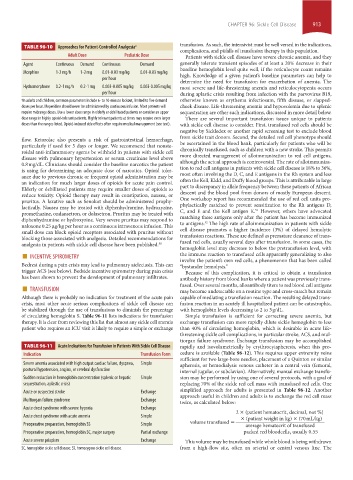
                      TABLE 96-10    Approaches for Patient-Controlled Analgesia a
                                                                          complications, and pitfalls of transfusion therapy in this population.
                                   Adult Dose          Pediatric Dose      Patients with sickle cell disease have severe chronic anemia, and they
                    Agent      Continuous  Demand  Continuous  Demand     generally tolerate transient episodes of at least a 20% decrease in their
                                                                          baseline hemoglobin level quite well, if the reticulocyte count remains
                    Morphine   1-2 mg/h  1-2 mg  0.01-0.03 mg/kg    0.01-0.03 mg/kg  high. Knowledge of a given patient’s baseline parameters can help to
                                               per hour
                                                                          determine the need for transfusion for exacerbation of anemia. The
                    Hydromorphone  0.2-1 mg/h  0.2-1 mg  0.003-0.005 mg/kg   0.003-0.005 mg/kg  most severe and life-threatening anemia and reticulocytopenia occurs
                                               per hour                   during aplastic crisis resulting from infection with the parvovirus B19,
                    a In adults and children, common parameters include 6- to 10-minute lockout, limited to five demand   otherwise known as erythema infectiosum, fifth disease, or slapped-
                    doses per hour. Meperidine should never be administered by continuous infusion. Most patients will   cheek disease. Life-threatening anemia and hypovolemia due to splenic
                    require midrange doses. Use a lower dose range in elderly or debilitated patients or consider an upper   sequestration are other such indications, discussed in more detail below.
                    dose range in highly opioid-tolerant patients. Highly tolerant patients at times may require even larger   There are several important transfusion issues unique to patients
                    doses than the ranges listed. Opioid-induced side effects often require medical management (see text).  with sickle cell disease to consider. First, transfused red cells should be
                                                                          negative by Sickledex or another rapid screening test to exclude blood
                    flow. Ketorolac also presents a risk of gastrointestinal hemorrhage,   from sickle trait donors. Second, the detailed red cell phenotype should
                    particularly if used for 5 days or longer. We recommend that nonste-  be ascertained in the blood bank, particularly for patients who will be
                    roidal anti-inflammatory agents be withheld in patients with sickle cell   chronically transfused, such as children with a new stroke. This permits
                    disease with pulmonary hypertension or serum creatinine level above   more  directed  management  of  alloimmunization  to  red  cell  antigens,
                    0.8 mg/dL. Clinicians should consider the baseline narcotics the patient   although the actual approach is controversial. The rate of alloimmuniza-
                    is using for determining an adequate dose of narcotics. Opioid toler-  tion to red cell antigens in patients with sickle cell disease is 18% to 36%,
                    ance due to previous chronic or frequent opioid administration may be   most often involving the D, C, and E antigens in the Rh system and less
                    an indication for much larger doses of opioids for acute pain control.   often the Kell, Kidd, and Duffy blood groups. This is attributable in large
                    Elderly or debilitated patients may require smaller doses of opioids to   part to discrepancy in allele frequency between these patients of African
                    reduce toxicity. Opioid therapy may result in constipation, nausea, or   descent and the blood pool from donors of mostly European descent.
                    pruritus. A laxative such as Senokot should be administered prophy-  One workshop report has recommended the use of red cell units pro-
                    lactically. Nausea may be treated with diphenhydramine, hydroxyzine,   phylactically matched to prevent sensitization to the Rh antigens D,
                                                                                                   51
                    promethazine, ondansetron, or dolasetron. Pruritus may be treated with   C,  and  E  and  the  Kell  antigen  K.   However,  others  have  advocated
                    diphenhydramine or hydroxyzine. Very severe pruritus may respond to   matching these antigens only after the patient has become immunized
                                                                                  52
                    naloxone 0.25 µg/kg per hour as a continuous intravenous infusion. This   to antigens.  The high rate of alloimmunization in patients with sickle
                    small dose can block opioid receptors associated with pruritus without   cell disease promotes a higher incidence (3%) of delayed hemolytic
                    blocking those associated with analgesia. Detailed recommendations for   transfusion reactions. These are defined as premature clearance of trans-
                    analgesia in patients with sickle cell disease have been published. 50  fused red cells, usually several days after transfusion. In some cases, the
                                                                          hemoglobin level may decrease to below the pretransfusion level, with
                        ■  INCENTIVE SPIROMETRY                           the immune reaction to transfused cells apparently generalizing to also
                    Bedrest during a pain crisis may lead to pulmonary atelectasis. This can   involve the patient’s own red cells, a phenomenon that has been called
                                                                          “bystander hemolysis.”
                    trigger ACS (see below). Bedside incentive spirometry during pain crisis   Because  of  this  complication,  it  is  critical  to  obtain  a  transfusion
                    has been shown to prevent the development of pulmonary infiltrates.  antibody history from blood banks where a patient was previously trans-
                        ■  TRANSFUSION                                    fused. Over several months, alloantibody titers to red blood cell antigens
                                                                          may become undetectable on a routine type and cross-match but remain
                    Although there is probably no indication for treatment of the acute pain   capable of mediating a transfusion reaction. The resulting delayed trans-
                    crisis, most other acute serious complications of sickle cell disease can   fusion reaction in an acutely ill hospitalized patient can be catastrophic,
                    be stabilized through the use of transfusions to diminish the percentage   with hemoglobin levels decreasing to 2 to 3 g/dL.
                    of circulating hemoglobin S. Table 96-11 lists indications for transfusion   Simple transfusion is sufficient for correcting severe anemia, but
                    therapy. It is clear from reviewing this list that almost any sickle cell anemia   exchange transfusion can more rapidly dilute sickle hemoglobin to less
                    patient who requires an ICU visit is likely to require a simple or exchange   than 40% of circulating hemoglobin, which is desirable in acute life-
                                                                          threatening sickle cell complications, in particular stroke, ACS, and mul-
                                                                          tiorgan failure syndrome. Exchange transfusion may be accomplished
                      TABLE 96-11    Acute Indications for Transfusion in Patients With Sickle Cell Disease  rapidly and isovolumetrically by erythrocytapheresis, when this pro-
                    Indication                              Transfusion Form  cedure is available (Table 96-12). This requires upper extremity veins
                                                                          sufficient for two large-bore needles, placement of a Quinton or similar
                    Severe anemia associated with high output cardiac failure, dyspnea,   Simple  apheresis, or hemodialysis venous catheter in a central vein (femoral,
                    postural hypotension, angina, or cerebral dysfunction  internal jugular, or subclavian). Alternatively, manual exchange transfu-
                    Sudden reduction in hemoglobin concentration (splenic or hepatic    Simple  sion may be performed by using one of several protocols, with a goal of
                    sequestration, aplastic crisis)                       replacing 70% of the sickle red cell mass with transfused red cells. One
                    Acute or suspected stroke               Exchange      simplified approach for adults is presented in  Table 96-12. Another
                                                                          approach useful in children and adults is to exchange the red cell mass
                    Multiorgan failure syndrome             Exchange      twice, as calculated below:
                    Acute chest syndrome with severe hypoxia  Exchange
                                                                                             2 × (patient hematocrit, decimal, not %)
                    Acute chest syndrome with acute anemia  Simple                            × (patient weight in kg) × (70 mL/kg)
                    Preoperative preparation, hemoglobin SS  Simple          volume transfused =  average hematocrit of transfused
                    Preoperative preparation, hemoglobin SC, major surgery  Partial exchange   packed red bloodcells, usually 0.55
                    Acute severe priapism                   Exchange       This volume may be transfused while whole blood is being withdrawn
                    SC, hemoglobin sickle cell disease; SS, homozygous sickle cell disease.  from a high-flow site, often an arterial or central venous line. The


            section07.indd   913                                                                                       1/21/2015   7:43:26 AM

