


Page 1301 - Hall et al (2015) Principles of Critical Care-McGraw-Hill
P. 1301
908     PART 7: Hematologic and Oncologic Disorders


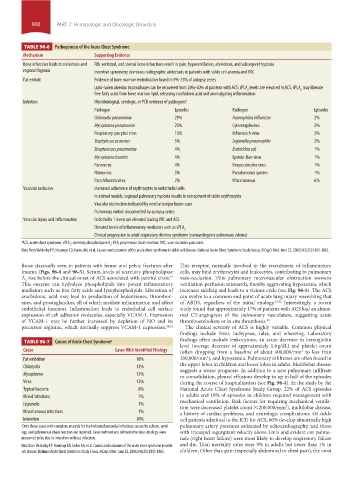
                   TABLE 96-6    Pathogenesis of the Acute Chest Syndrome
                  Mechanism               Supporting Evidence
                  Bone infarction leads to atelectasis and   Rib, vertebral, and sternal bone infarctions result in pain, hypoventilation, atelectasis, and subsequent hypoxia
                  regional hypoxia        Incentive spirometry decreases radiographic atelectasis in patients with sickle cell anemia and VOC
                  Fat emboli              Evidence of bone marrow embolization found in 9%-75% of autopsy series
                                          Lipid-laden alveolar macrophages can be recovered from 20%-60% of patients with ACS; sPLA  levels are elevated in ACS; sPLA  may liberate
                                                                                              2
                                                                                                                2
                                          free fatty acids from bone marrow lipid, releasing arachidonic acid and promulgating inflammation
                  Infection               Microbiological, serologic, or PCR evidence of pathogens a
                                          Pathogen                   Episodes            Pathogen                    Episodes
                                          Chlamydia pneumoniae       29%                 Haemophilus influenzae      2%
                                          Mycoplasma pneumoniae      20%                 Cytomegalovirus             2%
                                          Respiratory syncytial virus  10%               Influenza A virus           2%
                                          Staphylococcus aureus      5%                  Legionella pneumophila      2%
                                          Streptococcus pneumoniae   4%                  Escherichia coli            1%
                                          Mycoplasma hominis         4%                  Epstein-Barr virus          1%
                                          Parvovirus                 4%                  Herpes simplex virus        1%
                                          Rhinovirus                 3%                  Pseudomonas species         1%
                                          Parainfluenza virus        2%                  Miscellaneous               6%
                  Vascular occlusion      Increased adherence of erythrocytes to endothelial cells
                                          In animal models, regional pulmonary hypoxia results in entrapment of sickle erythrocytes
                                          Vascular obstruction indicated by ventilation/perfusion scan
                                          Pulmonary emboli documented by autopsy series
                  Vascular injury and inflammation  Endothelin 1 levels are elevated during VOC and ACS
                                          Elevated levels of inflammatory mediators such as sPLA
                                                                         2
                                          Clinical progression to adult respiratory distress syndrome (noncardiogenic pulmonary edema)
                 a ACS, acute chest syndrome; sPLA ; secretory phospholipase A ; PCR, polymerase chain reaction; VOC, vaso-occlusive pain crisis.
                                  2
                                               2
                 Data from Vichinsky EP, Neumayr LD, Earles AN, et al. Causes and outcomes of the acute chest syndrome in sickle cell disease. National Acute Chest Syndrome Study Group. N Engl J Med. June 22, 2000;342(25):1855-1865.
                 those classically seen in patients with femur and pelvic fractures after   This receptor, normally involved in the recruitment of inflammatory
                 trauma (Figs. 96-4 and 96-5). Serum levels of secretory phospholipase   cells, may bind erythrocytes and leukocytes, contributing to pulmonary
                 A  rise before the clinical onset of ACS associated with painful crisis.    vaso-occlusion. This pulmonary microvascular obstruction worsens
                                                                    19
                  2
                 This enzyme can hydrolyze phospholipids into potent inflammatory   ventilation- perfusion mismatch, thereby aggravating hypoxemia, which
                 mediators such as free fatty acids and lysophospholipids. Liberation of   increases sickling and leads to a vicious cycle (see Fig. 96-5). The ACS
                 arachidonic acid may lead to production of leukotrienes, thrombox-  can evolve to a common end point of acute lung injury resembling that
                 anes, and prostaglandins, all of which mediate inflammation and affect   of ARDS, regardless of the initial etiology. 16,22  Interestingly, a recent
                 endothelial function. Inflammation leads to endothelial cell surface   study found that approximately 17% of patients with ACS had an abnor-
                 expression of cell adhesion molecules, especially VCAM-1. Expression   mal CT-angiogram of  the pulmonary vasculature, suggesting acute
                 of VCAM-1 may be further increased by depletion of NO and its   thromboembolism or in situ thrombosis. 23
                 precursor arginine, which normally suppress VCAM-1 expression. 20,21    The clinical severity of ACS is highly variable. Common physical
                                                                       findings  include  fever,  tachypnea,  rales,  and  wheezing.  Laboratory
                                                                         findings  often  include  leukocytosis,  an  acute  decrease in  hemoglobin
                   TABLE 96-7    Causes of Acute Chest Syndrome a
                                                                       level (average decrease of approximately 1.6 g/dL) and platelet count
                  Cause                          Cases With Identified Etiology  (often dropping from a baseline of about 400,000/mm  to less than
                                                                                                                 3
                                                                                3
                  Fat embolism                          16%            200,000/mm ), and hypoxemia. Pulmonary infiltrates are often found in
                  Chlamydia                             13%            the upper lobes in children and lower lobes in adults. Multilobar disease
                                                                       suggests a worse prognosis. In addition to a new pulmonary infiltrate
                  Mycoplasma                            12%            or consolidation, pleural effusions develop in up to half of the episodes
                  Virus                                 12%            during the course of hospitalization (see Fig. 96-4). In the study by the
                  Typical bacteria                       8%            National Acute Chest Syndrome Study Group, 22% of ACS episodes
                  Mixed infections                       7%            in adults and 10% of episodes in children required management with
                  Legionella                             1%            mechanical ventilation. Risk factors for requiring mechanical ventila-
                                                                       tion were decreased platelet count (<200,000/mm ), multilobar disease,
                                                                                                           3
                  Miscellaneous infections               1%            a history of cardiac problems, and neurologic complications. Of sickle
                  Infarction                            30%            cell patients admitted to the ICU for ACS, 60% develop abnormally high
                 a Only those cases with complete analysis for the indicated potential infectious causes by culture, serol-  pulmonary artery pressures estimated by echocardiography, and those
                 ogy, and polymerase chain reaction are reported. Cases without any defined infectious etiology were   with tricuspid regurgitant velocity above 3 m/s and evident cor pulmo-
                 presumed to be due to infarction without infection.   nale (right heart failure) were most likely to develop respiratory failure
                 Data from Vichinsky EP, Neumayr LD, Earles AN, et al. Causes and outcomes of the acute chest syndrome in sickle   and die. Total mortality rates were 9% in adults but lower than 1% in
                 cell disease. National Acute Chest Syndrome Study Group. N Engl J Med. June 22, 2000;342(25):1855-1865.  children. Other than pain (especially abdominal or chest pain), the most


            section07.indd   908                                                                                       1/21/2015   7:43:22 AM

