


Page 1305 - Hall et al (2015) Principles of Critical Care-McGraw-Hill
P. 1305
912     PART 7: Hematologic and Oncologic Disorders

                                                                           ■
                 The volume of blood acutely sequestered from the circulation can cause   PERIOPERATIVE MANAGEMENT
                 severe anemia and life-threatening hypotension. Because most patients   Patients with sickle cell disease have a high risk of perioperative
                 with sickle cell anemia have splenic atrophy by age 10 years due to     complications, with 10% to 50% developing a VOC or ACS postop-
                 gradual microinfarction, splenic sequestration occurs only in those   eratively.  Careful  preoperative anesthesiology  consultation  should  be
                 patients with significant residual splenic parenchyma, namely young   undertaken. Many sickle cell centers have traditionally performed serial
                 children with sickle cell anemia and individuals at all ages with less   transfusion or exchange transfusion preoperatively with a goal of prevent-
                 severe sickling syndromes, such as hemoglobin SC disease and hemo-  ing postoperative complications by reducing the hemoglobin S fraction
                 globin S-β -thalassemia. Splenic sequestration when acute and severe   to less than 30%, with a final total hemoglobin level of at least 10 g/dL.
                         +
                 should be treated with rapid red cell transfusion, analogous to the treat-  A randomized study by Vichinsky et al showed that preoperative simple
                 ment of acute severe traumatic blood loss. Overtransfusion should be   transfusion with a goal of raising the total hemoglobin concentration to
                 avoided because, during resolution, sequestered red cells can be abruptly   10 g/dL, without a specific goal for hemoglobin S percentage, has similar
                 released, potentially causing hyperviscosity. When splenic sequestration   efficacy. However, this study included predominantly patients with less
                 syndrome occurs in adolescents or adults with hemoglobin SC disease,   invasive surgical procedures, such as tympanostomy tube placement
                 it may be associated with acute splenic infarction. This clinically impres-  or laparoscopic cholecystectomy. Some centers still prefer to perform
                 sive syndrome can present with very high-grade fever, extraordinary   exchange transfusion before major surgery in patients with sickle cell
                 splenic pain and tenderness, and enormous splenomegaly. Sonography   disease, although many transfuse less aggressively. A careful risk-benefit
                 or computed tomography may depict inhomogeneity representative of   evaluation must be applied to each case, especially in patients with a
                 hemorrhagic infarction, which should be differentiated from  possible   history of red blood cell alloimmunization.
                 splenic abscess. Patients with acute splenic infarction can be managed   Supportive care should include careful attention to avoiding dehydra-
                 medically with transfusions and supportive care. 45   tion,  overhydration,  deoxygenation,  vascular  stasis,  low  temperature,
                   Recurrence of splenic sequestration or infarction indicates a risk of   acidosis or infection. The operating room should be kept warm, and
                 multiple future recurrences, and some have recommended splenec-  warming devices should be used for the patient. Oxygenation status
                 tomy. If this is done, it should probably be done electively after medical   should be closely monitored intraoperatively and postoperatively, and
                 management and clinical resolution of the acute episode to minimize   incentive spirometry should be prescribed postoperatively. The literature
                 operative risk.                                       regarding perioperative management of patients with sickle cell disease
                     ■  PRIAPISM                                       has been reviewed in more detail by Marchant and Walker. 49

                 Priapism refers to pathologically prolonged erection of the penis, which   TREATMENTS
                                    46
                 is often extremely painful.  Although its pathophysiologic mechanism
                 remains to be elucidated, it seems likely that penile venous outflow     ■  OXYGEN AND FLUIDS
                 is obstructed by sickled erythrocytes, compounded by disordered
                 vasomotor function in penile blood vessels. Case reports of many   Because hypoxemia and dehydration can trigger sickling, it is important
                 therapeutic approaches have been proposed based on experience in   to prevent these from developing. Contrary to traditional teaching in
                 limited numbers of patients, but these have rarely proved to be of   many medical training programs, there is no indication of benefit from
                 benefit in larger clinical experiences. The most widely recommended   aggressive hydration in patients who are not dehydrated or from oxygen
                 acute treatment for severe episodes is exchange transfusion, although   therapy in the absence of hypoxemia. Excessive fluid resuscitation may
                 evidence of its efficacy is limited. Therapies of questionable value have   even compromise some older patients who have some degree of conges-
                 included adrenergic agonists, nitrates, and a surgical approach known   tive heart failure or renal insufficiency.
                 relatively large single-institution study involving percutaneous drain-  ■  ANALGESICS
                 as a  Winter  shunt.  Only one  therapy  has shown some  benefit in a
                 age and irrigation of the corpus cavernosum initiated within 3 hours   At times, acetaminophen can suffice for mild pain. More severe pain
                 of onset.  Although the grade of evidence remains only moderate, the   often requires addition of an oral opioid analgesic such as codeine,
                       47
                 urology community has recognized the importance of promoting early   hydromorphone, morphine, or oxycodone; morphine and oxycodone are
                 penile aspiration in cases of severe acute priapism. One very interesting,   available as short-acting or sustained-release preparations (Table 96-9).
                 counterintuitive approach has been reported. Sildenafil, normally used   Severe pain episodes are best treated with intravenous opioids, usually
                 clinically to treat erectile dysfunction, given in single 50-mg doses as   morphine or hydromorphone, with considerable added convenience to
                 needed, rapidly relieved several episodes of priapism in three patients   patient and clinician when administered via a patient-controlled analge-
                 with sickle cell disease.  Because of the possibility that this drug might   sia pump (Table 96-10). Patients with severe pain may also benefit from
                                  48
                 also be capable of inducing priapism, its use cannot be recommended   the parenteral nonsteroidal anti-inflammatory drug ketorolac, although
                 until further research is conducted.                  questions have been raised about potential impairment of renal blood


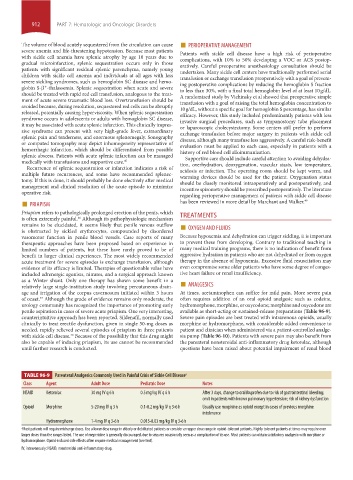
                   TABLE 96-9     Parenteral Analgesics Commonly Used in Painful Crisis of Sickle Cell Disease a
                  Class   Agent          Adult Dose       Pediatric Dose       Notes
                  NSAID   Ketorolac      30 mg IV q 6 h   0.5 mg/kg IV q 6 h   After 3 days, change to oral ibuprofen due to risk of gastrointestinal bleeding;
                                                                               omit in patients with known pulmonary hypertension; risk of kidney dysfunction
                  Opioid  Morphine       5-20 mg IV q 3 h  0.1-0.2 mg/kg IV q 3-6 h  Usually use morphine as opioid except in cases of previous morphine
                                                                               intolerance
                          Hydromorphone  1-4 mg IV q 3-6 h  0.015-0.03 mg/kg IV q 3-6 h
                 a Most patients will require midrange doses. Use a lower dose range in elderly or debilitated patients or consider an upper dose range in opioid-tolerant patients. Highly tolerant patients at times may require even
                 larger doses than the ranges listed. The use of meperidine is generally discouraged, due to seizures occasionally seen as a complication of its use. Most patients can obtain satisfactory analgesia with morphine or
                 hydromorphone. Opioid-induced side effects often require medical management (see text).
                 IV, intravenously; NSAID, nonsteroidal anti-inflammatory drug.


            section07.indd   912                                                                                       1/21/2015   7:43:26 AM

