


Page 1606 - Hall et al (2015) Principles of Critical Care-McGraw-Hill
P. 1606
CHAPTER 118: Head Injury  1125


                                     Response            Scale            RESPIRATORY MANAGEMENT
                            Eye opening                                   Hypoxemia and hypotension are the two most important factors associ-
                                                                          ated with adverse outcomes in patients after TBI, and the association
                            None                       1
                                                                          with  TBI is  stronger than  in trauma patients without  neurological
                            To pain                    2                  injury. 15,16  Patients who have severe brain injury are at increased risk for
                                                                                                          17
                            To voice                   3                  acute respiratory distress syndrome (ARDS).  Patients with severe head
                                                                          injury (GCS ≤8) may have an abnormal lung elasticity and resistance
                            Spontaneous                4                  as early as day 1 post injury.  A recent retrospective cohort study of the
                                                                                              18
                            Best verbal response                          Nationwide Inpatient Sample (NIS) database reported a 22% prevalence
                                                                          of ARDS/acute lung injury (ALI) after TBI in 2008 with an in-hospital
                            None                       1
                                                                          ARDS/ALI-related mortality of 28%. 19
                            Incomprehensible           2                   Hypoxemia may be caused by noncardiogenic pulmonary edema
                            Inappropriate              3                  from ARDS due to a systemic inflammatory response to trauma or fat
                                                                          emboli, neurogenic pulmonary edema, or less commonly, cardiogenic
                            Confused                   4                  pulmonary edema.  Other etiologies  of  hypoxemia include  airway
                            Oriented, normal conversation  5              obstruction,  lung contusion from direct chest trauma, flail chest,
                                                                          pneumothorax, retained secretions or aspiration, pneumonia, and
                            Best motor response
                                                                          hypercarbia. Hypercarbia may be caused by depressed respirations from
                            None                       1                  coma or brain stem dysfunction, chest trauma, airway obstruction, or
                                                                          high cervical spine injuries.
                            Extension to pain (decerebrate)  2
                                                                           Oxygenation should be monitored by pulse oximetry and checked by
                            Flexion to pain (decorticate)  3                                                <60 mm Hg or hemoglo-
                                                                          arterial blood gases. Hypoxemia defined as Pa O 2
                                                                                                           15
                            Withdrawal to pain         4                  bin-oxygen saturation <90% must be avoided.  After TBI, patients with
                                                                          any of the following: signs of respiratory distress, intracranial hyperten-
                            Localizes pain             5                  sion, impending herniation, encephalopathy or coma (GCS ≤9), requiring
                            Obeys commands             6                  high levels of inspired oxygen to maintain Pa O 2  above 60 mm Hg, absolute
                                                                          CO  retention, or CO  retention relative to respiratory minute volume
                                                                            2
                                                                                          2
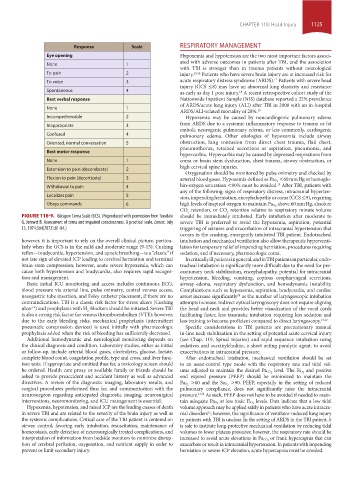
                    FIGURE 118-9.  Glasgow Coma Scale (GCS). (Reproduced with permission from Teasdale   should be immediately intubated. Early intubation after moderate to
                    G, Jennett B. Assessment of coma and impaired consciousness. A practical scale, Lancet. July   severe  TBI is preferred  to avoid the hypoxemia, aspiration, potential
                    13, 1974;304(7872):81-84.)                            triggering of seizures and exacerbation of intracranial hypertension that
                                                                          occurs in the crashing, emergently intubated TBI patient. Endotracheal
                    however, it is important to rely on the overall clinical picture, particu-  intubation and mechanical ventilation also allow therapeutic hyperventi-
                    larly when the GCS is in the mild and moderate range (9-15). Cushing   lation for temporary relief of impending herniation, procedures requiring
                    reflex—bradycardia, hypertension, and apneic breathing—is a “classic” if   sedation, and if necessary, pharmacologic coma.
                    not late sign of elevated ICP leading to cerebral herniation and terminal   In critically ill patients in general, and in TBI patients in particular, endo-
                    brain stem compression; however, acute severe hypoxemia, which can   tracheal intubation is significantly more difficult due to the need for pre-
                    cause both hypertension and bradycardia, also requires rapid recogni-  cautionary neck stabilization, encephalopathy, potential for intracranial
                    tion and management.                                  hypertension, bleeding, vomiting, copious oropharyngeal secretions,
                     Basic initial ICU monitoring and access includes continuous ECG,   airway edema, respiratory dysfunction, and hemodynamic instability.
                    blood pressure via arterial line, pulse oximetry, central venous access,   Complications such as hypoxemia, aspiration, bradycardia, and cardiac
                    nasogastric tube insertion, and Foley catheter placement, if there are no   arrest increase significantly  as the number of laryngoscopic intubation
                                                                                             20
                    contraindications. TBI is a classic risk factor for stress ulcers (Cushing   attempts increase. Indirect optical laryngoscopy does not require aligning
                    ulcer ) and prophylaxis with H -blockers should be initiated. Severe TBI   the head and neck and provides better visualization of the vocal cords
                       14
                                          2
                    is also a strong risk factor for venous thromboembolism (VTE); however,   facilitating faster, less traumatic intubation requiring less sedation and
                    due to the early bleeding risks, mechanical prophylaxis (intermittent   less training to become proficient compared to direct laryngoscopy. 21,22
                    pneumatic compression devices) is used initially with pharmacologic   Specific considerations in  TBI patients are precautionary manual
                    prophylaxis added when the risk of bleeding has sufficiently decreased.  in-line neck stabilization in the setting of potential acute cervical injury
                     Additional hemodynamic and neurological monitoring depends on   (see Chap. 119, Spinal Injuries) and rapid sequence intubation using
                    the clinical diagnosis and condition. Laboratory studies, either as initial   sedatives and succinylcholine, a short acting paralytic agent, to avoid
                    or follow-up, include arterial blood gases, electrolytes, glucose, lactate,   exacerbations in intracranial pressure.
                    complete blood count, coagulation profile, type and cross, and liver func-  After endotracheal intubation, mechanical ventilation should be set
                    tion tests. If appropriate and omitted thus far, a toxicology screen should   to an assist-control type mode with the respiratory rate and tidal vol-
                    be ordered. Health care proxy or available family or friends should be   ume adjusted to maintain the desired Pa CO 2  level. The Fi O 2  and positive
                    asked to provide preaccident and accident history as well as advanced   end expired pressure (PEEP) should be minimized to maintain the
                    directives. A review of the diagnostic imaging, laboratory results, and   Pa O 2   >60 and the Sa O 2   >90. PEEP, especially in the setting of reduced
                    surgical procedures performed thus far, and communication with the   pulmonary compliance, does not significantly raise the intracranial
                    neurosurgeon regarding anticipated diagnostic imaging, neurosurgical   pressure. 23,24  As such, PEEP does not have to be avoided if needed to main-
                    interventions, neuromonitoring, and ICU management is essential.  tain adequate Pa O 2  at less toxic Fi O 2  levels. Data indicate that a low tidal
                     Hypoxemia, hypotension, and raised ICP are the leading causes of death     volume approach may be applied safely in patients who have acute intracra-
                    in severe TBI and are related to the severity of the brain injury as well as   nial disorders ; however, the significance of ventilator-induced lung injury
                                                                                   25
                    the systemic complications. Critical care of the TBI patient is centered on   in patients with TBI is unclear. In the setting of ARDS in the TBI patient, it
                    airway control, favoring early intubation, resuscitation, maintenance of   is safe to institute lung-protective mechanical ventilation by reducing tidal
                    homeostasis, early detection of neurosurgically treated complications, and   volumes to lower plateau pressures; however, the respiratory rate should be
                    interpretation of information from bedside monitors to minimize disrup-  increased to avoid acute elevations in Pa CO 2  or frank hypercapnia that can
                    tion of cerebral perfusion, oxygenation, and nutrient supply in order to   exacerbate or result in intracranial hypertension. In patients with  impending
                    prevent or limit secondary injury.                    herniation or severe ICP elevation, acute hypercapnia must be avoided.


            section10.indd   1125                                                                                      1/20/2015   9:20:16 AM

