


Page 40 - Review of Medical Microbiology and Immunology ( PDFDrive )
P. 40
mebooksfree.com
mebooksfree.com
mebooksfree.com
mebooksfree.com
mebooksfree.com
mebooksfree.com
mebooksfree.com
mebooksfree.com
mebooksfree.com mebooksfree.com mebooksfree.com reduction of the normal flora for several days, followed by 29 mebooksfree.com
CHAPTER 6 Normal Flora
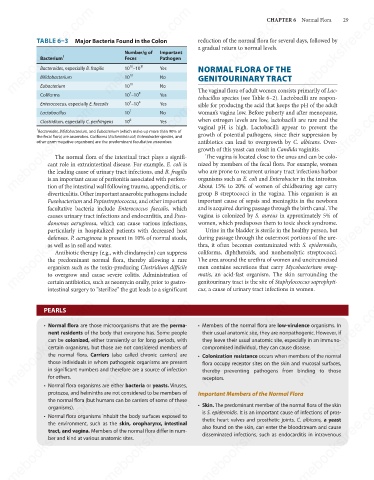
TABLE 6–3 Major Bacteria Found in the Colon
a gradual return to normal levels.
Number/g of
Important
1
Feces
Pathogen
Bacterium
NORMAL FLORA OF THE
10
11
Yes
Bacteroides, especially B. fragilis
10 –10
GENITOURINARY TRACT
10
Bifidobacterium
No
10
10
10
No
Eubacterium
The vaginal flora of adult women consists primarily of Lac-
8
7
10 –10
Yes
Coliforms
tobacillus species (see Table 6–2). Lactobacilli are respon-
7
8
10 –10
Enterococcus, especially E. faecalis
Yes
mebooksfree.com
mebooksfree.com
mebooksfree.com mebooksfree.com mebooksfree.com sible for producing the acid that keeps the pH of the adult mebooksfree.com
woman’s vagina low. Before puberty and after menopause,
7
Lactobacillus
No
10
when estrogen levels are low, lactobacilli are rare and the
6
Yes
10
Clostridium, especially C. perfringens
vaginal pH is high. Lactobacilli appear to prevent the
1
Bacteroides, Bifidobacterium, and Eubacterium (which make up more than 90% of
growth of potential pathogens, since their suppression by
the fecal flora) are anaerobes. Coliforms (Escherichia coli, Enterobacter species, and
antibiotics can lead to overgrowth by C. albicans. Over-
other gram-negative organisms) are the predominant facultative anaerobes.
growth of this yeast can result in Candida vaginitis.
The vagina is located close to the anus and can be colo-
The normal flora of the intestinal tract plays a signifi-
nized by members of the fecal flora. For example, women
cant role in extraintestinal disease. For example, E. coli is
who are prone to recurrent urinary tract infections harbor
the leading cause of urinary tract infections, and B. fragilis
organisms such as E. coli and Enterobacter in the introitus.
is an important cause of peritonitis associated with perfora-
About 15% to 20% of women of childbearing age carry
tion of the intestinal wall following trauma, appendicitis, or
diverticulitis. Other important anaerobic pathogens include
group B streptococci in the vagina. This organism is an
Fusobacterium and Peptostreptococcus, and other important
mebooksfree.com
cus, a cause of urinary tract infections in women. mebooksfree.com
mebooksfree.com mebooksfree.com mebooksfree.com important cause of sepsis and meningitis in the newborn mebooksfree.com
and is acquired during passage through the birth canal. The
facultative bacteria include Enterococcus faecalis, which
vagina is colonized by S. aureus in approximately 5% of
causes urinary tract infections and endocarditis, and Pseu-
women, which predisposes them to toxic shock syndrome.
domonas aeruginosa, which can cause various infections,
Urine in the bladder is sterile in the healthy person, but
particularly in hospitalized patients with decreased host
during passage through the outermost portions of the ure-
defenses. P. aeruginosa is present in 10% of normal stools,
as well as in soil and water.
thra, it often becomes contaminated with S. epidermidis,
coliforms, diphtheroids, and nonhemolytic streptococci.
Antibiotic therapy (e.g., with clindamycin) can suppress
The area around the urethra of women and uncircumcised
the predominant normal flora, thereby allowing a rare
men contains secretions that carry Mycobacterium smeg-
organism such as the toxin-producing Clostridium difficile
to overgrow and cause severe colitis. Administration of
matis, an acid-fast organism. The skin surrounding the
certain antibiotics, such as neomycin orally, prior to gastro-
genitourinary tract is the site of Staphylococcus saprophyti-
intestinal surgery to “sterilize” the gut leads to a significant
mebooksfree.com
mebooksfree.com
mebooksfree.com mebooksfree.com mebooksfree.com • Members of the normal flora are low-virulence organisms. In mebooksfree.com
PEARLS
• Normal flora are those microorganisms that are the perma-
their usual anatomic site, they are nonpathogenic. However, if
nent residents of the body that everyone has. Some people
they leave their usual anatomic site, especially in an immuno-
can be colonized, either transiently or for long periods, with
compromised individual, they can cause disease.
certain organisms, but those are not considered members of
the normal flora. Carriers (also called chronic carriers) are
• Colonization resistance occurs when members of the normal
those individuals in whom pathogenic organisms are present
flora occupy receptor sites on the skin and mucosal surfaces,
in significant numbers and therefore are a source of infection
thereby preventing pathogens from binding to those
for others.
receptors.
• Normal flora organisms are either bacteria or yeasts. Viruses,
protozoa, and helminths are not considered to be members of Important Members of the Normal Flora
mebooksfree.com mebooksfree.com mebooksfree.com thetic heart valves and prosthetic joints. C. albicans, a yeast mebooksfree.com
mebooksfree.com
mebooksfree.com
the normal flora (but humans can be carriers of some of these
• Skin. The predominant member of the normal flora of the skin
organisms).
is S. epidermidis. It is an important cause of infections of pros-
• Normal flora organisms inhabit the body surfaces exposed to
the environment, such as the skin, oropharynx, intestinal
also found on the skin, can enter the bloodstream and cause
tract, and vagina. Members of the normal flora differ in num-
disseminated infections, such as endocarditis in intravenous
ber and kind at various anatomic sites.
mebooksfree.com mebooksfree.com mebooksfree.com mebooksfree.com mebooksfree.com mebooksfree.com

