


Page 145 - Textbook of Pathology, 6th Edition
P. 145
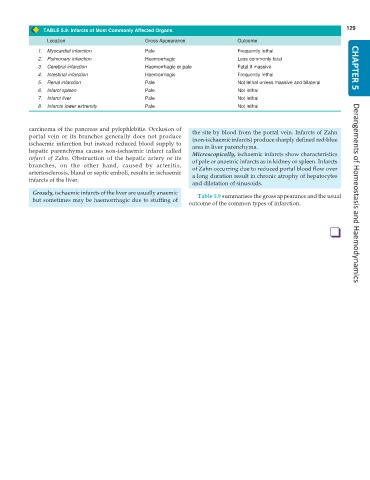
TABLE 5.9: Infarcts of Most Commonly Affected Organs. 129
Location Gross Appearance Outcome
1. Myocardial infarction Pale Frequently lethal
2. Pulmonary infarction Haemorrhagic Less commonly fatal
3. Cerebral infarction Haemorrhagic or pale Fatal if massive CHAPTER 5
4. Intestinal infarction Haemorrhagic Frequently lethal
5. Renal infarction Pale Not lethal unless massive and bilateral
6. Infarct spleen Pale Not lethal
7. Infarct liver Pale Not lethal
8. Infarcts lower extremity Pale Not lethal
carcinoma of the pancreas and pylephlebitis. Occlusion of the site by blood from the portal vein. Infarcts of Zahn
portal vein or its branches generally does not produce (non-ischaemic infarcts) produce sharply defined red-blue
ischaemic infarction but instead reduced blood supply to area in liver parenchyma.
hepatic parenchyma causes non-ischaemic infarct called Microscopically, ischaemic infarcts show characteristics
infarct of Zahn. Obstruction of the hepatic artery or its of pale or anaemic infarcts as in kidney or spleen. Infarcts
branches, on the other hand, caused by arteritis, of Zahn occurring due to reduced portal blood flow over
arteriosclerosis, bland or septic emboli, results in ischaemic a long duration result in chronic atrophy of hepatocytes
infarcts of the liver.
and dilatation of sinusoids.
Grossly, ischaemic infarcts of the liver are usually anaemic Table 5.9 summarises the gross appearance and the usual Derangements of Homeostasis and Haemodynamics
but sometimes may be haemorrhagic due to stuffing of
outcome of the common types of infarction.
❑

