


Page 279 - Textbook of Pathology, 6th Edition
P. 279
263


                                                                                                                      CHAPTER 10


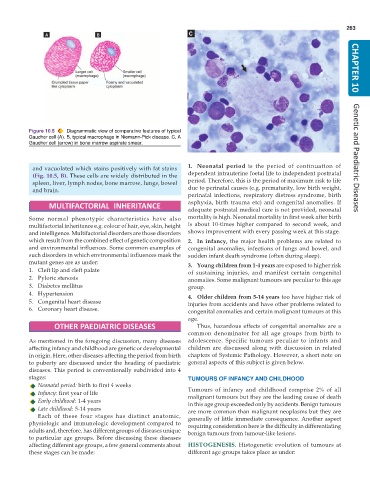
           Figure 10.5  Diagrammatic view of comparative features of typical
           Gaucher cell (A). B, typical macrophage in Niemann-Pick disease. C, A
           Gaucher cell (arrow) in bone marrow aspirate smear.


            and vacuolated which stains positively with fat stains  1. Neonatal period is the period of continuation of  Genetic and Paediatric Diseases
            (Fig. 10.5, B). These cells are widely distributed in the  dependent intrauterine foetal life to independent postnatal
            spleen, liver, lymph nodes, bone marrow, lungs, bowel  period. Therefore, this is the period of maximum risk to life
            and brain.                                         due to perinatal causes (e.g. prematurity, low birth weight,
                                                               perinatal infections, respiratory distress syndrome, birth
                                                               asphyxia, birth trauma etc) and congenital anomalies. If
                 MULTIFACTORIAL  INHERITANCE
                                                               adequate postnatal medical care is not provided, neonatal
           Some normal phenotypic characteristics have also    mortality is high. Neonatal mortality in first week after birth
           multifactorial inheritance e.g. colour of hair, eye, skin, height  is about 10-times higher compared to second week, and
           and intelligence. Multifactorial disorders are those disorders  shows improvement with every passing week at this stage.
           which result from the combined effect of genetic composition  2. In infancy, the major health problems are related to
           and environmental influences. Some common examples of  congenital anomalies, infections of lungs and bowel, and
           such disorders in which environmental influences mask the  sudden infant death syndrome (often during sleep).
           mutant genes are as under:                          3. Young children from 1-4 years are exposed to higher risk
           1. Cleft lip and cleft palate                       of sustaining injuries, and manifest certain congenital
           2. Pyloric stenosis                                 anomalies. Some malignant tumours are peculiar to this age
           3. Diabetes mellitus                                group.
           4. Hypertension                                     4. Older children from 5-14 years too have higher risk of
           5. Congenital heart disease                         injuries from accidents and have other problems related to
           6. Coronary heart disease.                          congenital anomalies and certain malignant tumours at this
                                                               age.
                   OTHER PAEDIATRIC DISEASES                      Thus, hazardous effects of congenital anomalies are a
                                                               common denominator for all age groups from birth to
           As mentioned in the foregoing discussion, many diseases  adolescence. Specific tumours peculiar to infants and
           affecting infancy and childhood are genetic or developmental  children are discussed along with discussion in related
           in origin. Here, other diseases affecting the period from birth  chapters of Systemic Pathology. However, a short note on
           to puberty are discussed under the heading of paediatric  general aspects of this subject is given below.
           diseases. This period is conventionally subdivided into 4
           stages:                                             TUMOURS OF INFANCY AND CHILDHOOD
              Neonatal period: birth to first 4 weeks
              Infancy: first year of life                      Tumours of infancy and childhood comprise 2% of all
                                                               malignant tumours but they are the leading cause of death
              Early childhood: 1-4 years                       in this age group exceeded only by accidents. Benign tumours
              Late childhood: 5-14 years                       are more common than malignant neoplasms but they are
              Each of these four stages has distinct anatomic,  generally of little immediate consequence. Another aspect
           physiologic and immunologic development compared to  requiring consideration here is the difficulty in differentiating
           adults and, therefore, has different groups of diseases unique  benign tumours from tumour-like lesions.
           to particular age groups. Before discussing these diseases
           affecting different age groups, a few general comments about  HISTOGENESIS.  Histogenetic evolution of tumours at
           these stages can be made:                           different age groups takes place as under:

