


Page 303 - Textbook of Pathology, 6th Edition
P. 303
287
TABLE 12.1: Comparison of Bone Marrow Aspiration and Trephine Biopsy.
Feature Aspiration Trephine
1. Site Sternum, posterior iliac crest; tibial head in infants Posterior iliac crest
2. Instrument Salah BM aspiration needle Jamshidi trephine needle
3. Stains Romanowsky, Perls’ reaction for iron on smears Haematoxylin and eosin, reticulin on tissue sections
4. Time Within 1-2 hours Within 1-7 days
5. Morphology Better cellular morphology of aspiration smears Better marrow architectural pattern but cell morphology
but marrow architecture is indistinct is not as distinct since tissue sections are examined
and not smears
6. Indications Anaemias, suspected leukaemias, neutropenia Additional indications are:
thrombocytopenia, polycythaemia, myeloma, myelosclerosis, aplastic anaemia and in
lymphomas, carcinomatosis, lipid storage cases with ‘dry tap’ on aspiration.
diseases, granulomatous conditions, parasites,
fungi, and unexplained enlargements of liver,
spleen or lymph nodes. CHAPTER 12
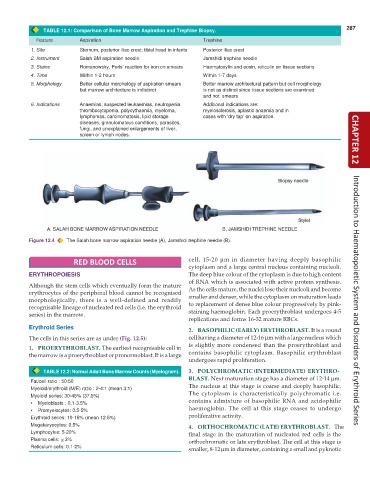
Figure 12.4 The Salah bone marrow aspiration needle (A), Jamshidi trephine needle (B).
RED BLOOD CELLS cell, 15-20 μm in diameter having deeply basophilic
cytoplasm and a large central nucleus containing nucleoli.
ERYTHROPOIESIS The deep blue colour of the cytoplasm is due to high content
of RNA which is associated with active protein synthesis.
Although the stem cells which eventually form the mature As the cells mature, the nuclei lose their nucleoli and become
erythrocytes of the peripheral blood cannot be recognised
morphologically, there is a well-defined and readily smaller and denser, while the cytoplasm on maturation leads Introduction to Haematopoietic System and Disorders of Erythroid Series
recognisable lineage of nucleated red cells (i.e. the erythroid to replacement of dense blue colour progressively by pink-
series) in the marrow. staining haemoglobin. Each proerythroblast undergoes 4-5
replications and forms 16-32 mature RBCs.
Erythroid Series
2. BASOPHILIC (EARLY) ERYTHROBLAST. It is a round
The cells in this series are as under (Fig. 12.5): cell having a diameter of 12-16 μm with a large nucleus which
is slightly more condensed than the proerythroblast and
1. PROERYTHROBLAST. The earliest recognisable cell in
the marrow is a proerythroblast or pronormoblast. It is a large contains basophilic cytoplasm. Basophilic erythroblast
undergoes rapid proliferation.
TABLE 12.2: Normal Adult Bone Marrow Counts (Myelogram). 3. POLYCHROMATIC(INTERMEDIATE) ERYTHRO-
BLAST. Next maturation stage has a diameter of 12-14 μm.
Fat/cell ratio : 50:50
Myeloid/erythroid (M/E) ratio : 2-4:1 (mean 3:1) The nucleus at this stage is coarse and deeply basophilic.
Myeloid series: 30-45% (37.5%) The cytoplasm is characteristically polychromatic i.e.
• Myeloblasts : 0.1-3.5% contains admixture of basophilic RNA and acidophilic
• Promyelocytes: 0.5-5% haemoglobin. The cell at this stage ceases to undergo
Erythroid series: 10-15% (mean 12.5%) proliferative activity.
Megakaryocytes: 0.5% 4. ORTHOCHROMATIC (LATE) ERYTHROBLAST. The
Lymphocytes: 5-20% final stage in the maturation of nucleated red cells is the
Plasma cells: < 3% orthochromatic or late erythroblast. The cell at this stage is
Reticulum cells: 0.1-2% smaller, 8-12 μm in diameter, containing a small and pyknotic

