


Page 407 - Textbook of Pathology, 6th Edition
P. 407
hyperplastic arteriolosclerosis and necrotising arteriolitis. All  391
                                                               the three types are common in hypertension but may occur
                                                               due to other causes as well.


                                                               Hyaline Arteriolosclerosis
                                                               Hyaline sclerosis is a common arteriolar lesion that may be
                                                               seen physiologically due to aging, or may occur pathologically
                                                               in benign nephrosclerosis in hypertensives and as a part of
                                                               microangiopathy in diabetics; the subject is discussed again
                                                               in Chapter 22.

                                                                 MORPHOLOGIC CHANGES. The visceral arterioles are
                                                                 particularly involved. The vascular walls are thickened
                                                                 and the lumina narrowed or even obliterated.
                                                                 Microscopically, the thickened vessel wall shows
                                                                 structureless, eosinophilic, hyaline material in the intima
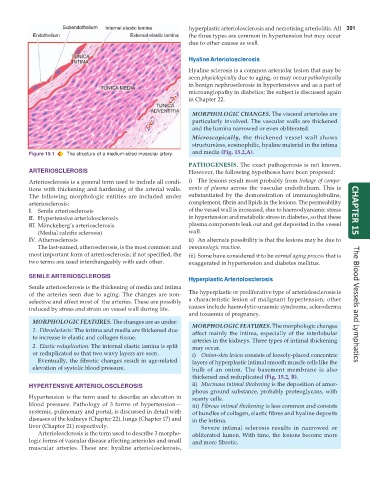
           Figure 15.1  The structure of a medium-sized muscular artery.  and media (Fig. 15.2,A).
                                                               PATHOGENESIS. The exact pathogenesis is not known.
           ARTERIOSCLEROSIS                                    However, the following hypotheses have been proposed:
           Arteriosclerosis is a general term used to include all condi-  i) The lesions result most probably from leakage of compo-
           tions with thickening and hardening of the arterial walls.  nents of plasma across the vascular endothelium. This is
           The following morphologic entities are included under  substantiated by the demonstration of immunoglobulins,
           arteriosclerosis:                                   complement, fibrin and lipids in the lesions. The permeability
           I. Senile arteriosclerosis                          of the vessel wall is increased, due to haemodyanamic stress  CHAPTER 15
           II. Hypertensive arteriolosclerosis                 in hypertension and metabolic stress in diabetes, so that these
           III. Mönckeberg’s arteriosclerosis                  plasma components leak out and get deposited in the vessel
              (Medial calcific sclerosis)                      wall.
           IV. Atherosclerosis                                 ii) An alternate possibility is that the lesions may be due to
              The last-named, atherosclerosis, is the most common and  immunologic reaction.
           most important form of arteriosclerosis; if not specified, the  iii) Some have considered it to be normal aging process that is
           two terms are used interchangeably with each other.  exaggerated in hypertension and diabetes mellitus.

           SENILE ARTERIOSCLEROSIS
                                                               Hyperplastic Arteriolosclerosis
           Senile arteriosclerosis is the thickening of media and intima
           of the arteries seen due to aging. The changes are non-  The hyperplastic or proliferative type of arteriolosclerosis is
           selective and affect most of  the arteries. These are possibly  a characteristic lesion of malignant hypertension; other  The Blood Vessels and Lymphatics
           induced by stress and strain on vessel wall during life.  causes include haemolytic-uraemic syndrome, scleroderma
                                                               and toxaemia of pregnancy.
            MORPHOLOGIC FEATURES. The changes are as under:      MORPHOLOGIC FEATURES. The morphologic changes
            1.  Fibroelastosis: The intima and media are thickened due  affect mainly the intima, especially of the interlobular
            to increase in elastic and collagen tissue.          arteries in the kidneys. Three types of intimal thickening
            2.  Elastic reduplication: The internal elastic lamina is split  may occur.
            or reduplicated so that two wavy layers are seen.    i) Onion-skin lesion consists of loosely-placed concentric
              Eventually, the fibrotic changes result in age-related  layers of hyperplastic intimal smooth muscle cells like the
            elevation of systolic blood pressure.                bulb of an onion. The basement membrane is also
                                                                 thickened and reduplicated (Fig. 15.2, B).
           HYPERTENSIVE ARTERIOLOSCLEROSIS                       ii) Mucinous intimal thickening is the deposition of amor-
                                                                 phous ground substance, probably proteoglycans, with
           Hypertension is the term used to describe an elevation in  scanty cells.
           blood pressure. Pathology of 3 forms of hypertension—  iii) Fibrous intimal thickening is less common and consists
           systemic, pulmonary and portal, is discussed in detail with  of bundles of collagen, elastic fibres and hyaline deposits
           diseases of the kidneys (Chapter 22), lungs (Chapter 17) and  in the intima.
           liver (Chapter 21) respectively.                         Severe intimal sclerosis results in narrowed or
              Arteriolosclerosis is the term used to describe 3 morpho-  obliterated lumen. With time, the lesions become more
           logic forms of vascular disease affecting arterioles and small  and more fibrotic.
           muscular arteries. These are: hyaline arteriolosclerosis,

