


Page 513 - Textbook of Pathology, 6th Edition
P. 513
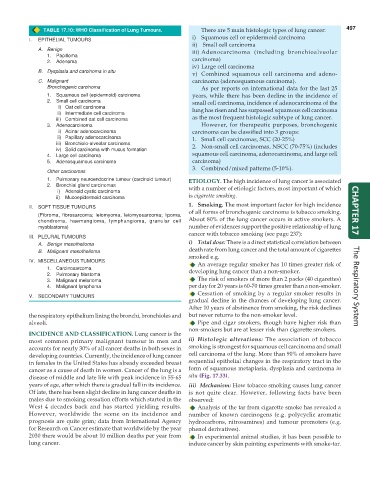
TABLE 17.10: WHO Classification of Lung Tumours. There are 5 main histologic types of lung cancer: 497
i) Squamous cell or epidermoid carcinoma
I. EPITHELIAL TUMOURS
ii) Small cell carcinoma
A. Benign iii) Adenocarcinoma (including bronchioalveolar
1. Papilloma carcinoma)
2. Adenoma
iv) Large cell carcinoma
B. Dysplasia and carcinoma in situ
v) Combined squamous cell carcinoma and adeno-
C. Malignant carcinoma (adenosquamous carcinoma).
Bronchogenic carcinoma As per reports on international data for the last 25
1. Squamous cell (epidermoid) carcinoma years, while there has been decline in the incidence of
2. Small cell carcinoma small cell carcinoma, incidence of adenocarcinoma of the
i) Oat cell carcinoma lung has risen and has surpassed squamous cell carcinoma
ii) Intermediate cell carcinoma
iii) Combined oat cell carcinoma as the most frequent histologic subtype of lung cancer.
3. Adenocarcinoma However, for therapeutic purposes, bronchogenic
i) Acinar adenocarcinoma carcinoma can be classified into 3 groups:
ii) Papillary adenocarcinoma 1. Small cell carcinomas, SCC (20-25%)
iii) Bronchiolo-alveolar carcinoma 2. Non-small cell carcinomas, NSCC (70-75%) (includes
iv) Solid carcinoma with mucus formation
4. Large cell carcinoma squamous cell carcinoma, adenocarcinoma, and large cell
5. Adenosquamous carcinoma carcinoma)
3. Combined/mixed patterns (5-10%).
Other carcinomas
1. Pulmonary neuroendocrine tumour (carcinoid tumour) ETIOLOGY. The high incidence of lung cancer is associated
2. Bronchial gland carcinomas with a number of etiologic factors, most important of which
i) Adenoid cystic carcinoma
ii) Mucoepidermoid carcinoma is cigarette smoking.
1. Smoking. The most important factor for high incidence
II. SOFT TISSUE TUMOURS
of all forms of bronchogenic carcinoma is tobacco smoking. CHAPTER 17
(Fibroma, fibrosarcoma; leiomyoma, leiomyosarcoma; lipoma,
chondroma, haemangioma, lymphangioma, granular cell About 80% of the lung cancer occurs in active smokers. A
myoblastoma) number of evidences support the positive relationship of lung
cancer with tobacco smoking (see page 237):
III. PLEURAL TUMOURS
A. Benign mesothelioma i) Total dose: There is a direct statistical correlation between
B. Malignant mesothelioma death rate from lung cancer and the total amount of cigarettes
smoked e.g.
IV. MISCELLANEOUS TUMOURS An average regular smoker has 10 times greater risk of
1. Carcinosarcoma developing lung cancer than a non-smoker.
2. Pulmonary blastoma
3. Malignant melanoma The risk of smokers of more than 2 packs (40 cigarettes)
4. Malignant lymphoma per day for 20 years is 60-70 times greater than a non-smoker. The Respiratory System
Cessation of smoking by a regular smoker results in
V. SECONDARY TUMOURS
gradual decline in the chances of developing lung cancer.
After 10 years of abstinence from smoking, the risk declines
the respiratory epithelium lining the bronchi, bronchioles and but never returns to the non-smoker level.
alveoli. Pipe and cigar smokers, though have higher risk than
non-smokers but are at lesser risk than cigarette smokers.
INCIDENCE AND CLASSIFICATION. Lung cancer is the
most common primary malignant tumour in men and ii) Histologic alterations: The association of tobacco
accounts for nearly 30% of all cancer deaths in both sexes in smoking is strongest for squamous cell carcinoma and small
developing countries. Currently, the incidence of lung cancer cell carcinoma of the lung. More than 90% of smokers have
in females in the United States has already exceeded breast sequential epithelial changes in the respiratory tract in the
cancer as a cause of death in women. Cancer of the lung is a form of squamous metaplasia, dysplasia and carcinoma in
disease of middle and late life with peak incidence in 55-65 situ (Fig. 17.33).
years of age, after which there is gradual fall in its incidence. iii) Mechanism: How tobacco smoking causes lung cancer
Of late, there has been slight decline in lung cancer deaths in is not quite clear. However, following facts have been
males due to smoking cessation efforts which started in the observed:
West 4 decades back and has started yielding results. Analysis of the tar from cigarette smoke has revealed a
However, worldwide the scene on its incidence and number of known carcinogens (e.g. polycyclic aromatic
prognosis are quite grim; data from International Agency hydrocarbons, nitrosamines) and tumour promoters (e.g.
for Research on Cancer estimate that worldwide by the year phenol derivatives).
2030 there would be about 10 million deaths per year from In experimental animal studies, it has been possible to
lung cancer. induce cancer by skin painting experiments with smoke-tar.

