


Page 518 - Textbook of Pathology, 6th Edition
P. 518
502
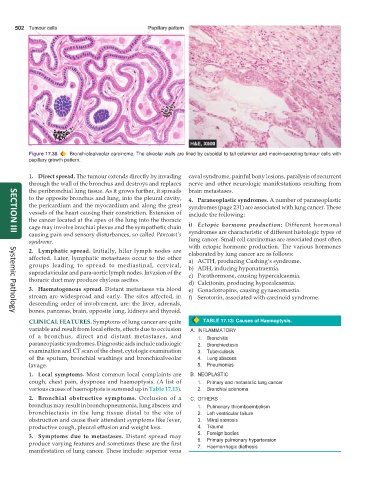
Figure 17.38 Bronchioloalveolar carcinoma. The alveolar walls are lined by cuboidal to tall columnar and mucin-secreting tumour cells with
papillary growth pattern.
1. Direct spread. The tumour extends directly by invading caval syndrome, painful bony lesions, paralysis of recurrent
through the wall of the bronchus and destroys and replaces nerve and other neurologic manifestations resulting from
the peribronchial lung tissue. As it grows further, it spreads brain metastases.
to the opposite bronchus and lung, into the pleural cavity, 4. Paraneoplastic syndromes. A number of paraneoplastic
the pericardium and the myocardium and along the great syndromes (page 231) are associated with lung cancer. These
vessels of the heart causing their constriction. Extension of include the following:
the cancer located at the apex of the lung into the thoracic
cage may involve brachial plexus and the sympathetic chain i) Ectopic hormone production: Different hormonal
causing pain and sensory disturbances, so called Pancoast’s syndromes are characteristic of different histologic types of
SECTION III
lung cancer. Small cell carcinomas are associated most often
syndrome.
with ectopic hormone production. The various hormones
2. Lymphatic spread. Initially, hilar lymph nodes are elaborated by lung cancer are as follows:
affected. Later, lymphatic metastases occur to the other a) ACTH, producing Cushing’s syndrome.
groups leading to spread to mediastinal, cervical, b) ADH, inducing hyponatraemia.
supraclavicular and para-aortic lymph nodes. Invasion of the c) Parathormone, causing hypercalcaemia.
thoracic duct may produce chylous ascites.
d) Calcitonin, producing hypocalcaemia.
3. Haematogenous spread. Distant metastases via blood e) Gonadotropins, causing gynaecomastia.
stream are widespread and early. The sites affected, in f) Serotonin, associated with carcinoid syndrome.
descending order of involvement, are: the liver, adrenals,
bones, pancreas, brain, opposite lung, kidneys and thyroid.
Systemic Pathology
CLINICAL FEATURES. Symptoms of lung cancer are quite TABLE 17.13: Causes of Haemoptysis.
variable and result from local effects, effects due to occlusion A. INFLAMMATORY
of a bronchus, direct and distant metastases, and 1. Bronchitis
paraneoplastic syndromes. Diagnostic aids include radiologic 2. Bronchiectasis
examination and CT scan of the chest, cytologic examination 3. Tuberculosis
of the sputum, bronchial washings and bronchioalveolar 4. Lung abscess
lavage. 5. Pneumonias
1. Local symptoms. Most common local complaints are B. NEOPLASTIC
cough, chest pain, dyspnoea and haemoptysis. (A list of 1. Primary and metastatic lung cancer
various causes of haemoptysis is summed up in Table 17.13). 2. Bronchial adenoma
2. Bronchial obstructive symptoms. Occlusion of a C. OTHERS
bronchus may result in bronchopneumonia, lung abscess and 1. Pulmonary thromboembolism
bronchiectasis in the lung tissue distal to the site of 2. Left ventricular failure
obstruction and cause their attendant symptoms like fever, 3. Mitral stenosis
productive cough, pleural effusion and weight loss. 4. Trauma
3. Symptoms due to metastases. Distant spread may 5. Foreign bodies
produce varying features and sometimes these are the first 6. Primary pulmonary hypertension
7.
Haemorrhagic diathesis
manifestation of lung cancer. These include: superior vena

