


Page 806 - Textbook of Pathology, 6th Edition
P. 806
790                                                      stage, mycosis fungoides may disseminate to the lymph
                                                               nodes and other organs. Clinically, mycosis fungoides may
                                                               manifest in 3 stages:
                                                               i) Premycotic stage in which the lesions are erythematous,
                                                               red-brown, scaly and pruritic, resembling eczema or
                                                               psoriasis.
                                                               ii) Infiltrative stage has slightly elevated, bluish-red, firm
                                                               plaques.
                                                               iii) Fungoid (Tumour) stage is characterised by red-brown
                                                               nodules of tumour which often undergo ulceration.
                                                                  The etiology of mycosis fungoides or CTCL has been
                                                               found to be the same as for adult T cell lymphoma-leukaemia
                                                               syndrome which is human T cell-leukaemia virus-I (HTLV-
                                                               I) as discussed on page 227.
                                                                  Sézary syndrome is a variant of CTCL, often due to
                                                               dissemination of underlying CTCL to the blood and infil-
                                                               tration into the skin causing generalised erythroderma,
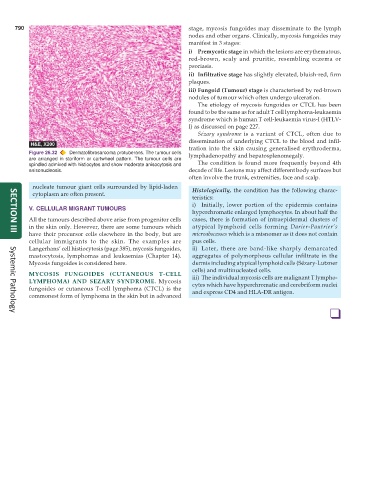
           Figure 26.32  Dermatofibrosarcoma protuberans. The tumour cells  lymphadenopathy and hepatosplenomegaly.
           are arranged in storiform or cartwheel pattern. The tumour cells are
           spindled admixed with histiocytes and show moderate anisocytosis and  The condition is found more frequently beyond 4th
           anisonucleosis.                                     decade of life. Lesions may affect different body surfaces but
                                                               often involve the trunk, extremities, face and scalp.
            nucleate tumour giant cells surrounded by lipid-laden  Histologically, the condition has the following charac-
            cytoplasm are often present.
                                                                 teristics:
                                                                 i) Initially, lower portion of the epidermis contains
           V. CELLULAR MIGRANT TUMOURS
                                                                 hyperchromatic enlarged lymphocytes. In about half the
           All the tumours described above arise from progenitor cells  cases, there is formation of intraepidermal clusters of
           in the skin only. However, there are some tumours which  atypical lymphoid cells forming  Darier-Pautrier’s
           have their precursor cells elsewhere in the body, but are  microabscesses which is a misnomer as it does not contain
     SECTION III
           cellular immigrants to the skin. The examples are     pus cells.
           Langerhans’ cell histiocytosis (page 385), mycosis fungoides,  ii) Later, there are band-like sharply demarcated
           mastocytosis, lymphomas and leukaemias (Chapter 14).  aggregates of polymorphous cellular infiltrate in the
           Mycosis fungoides is considered here.                 dermis including atypical lymphoid cells (Sézary-Lutzner
                                                                 cells) and multinucleated cells.
           MYCOSIS FUNGOIDES (CUTANEOUS T-CELL                   iii) The individual mycosis cells are malignant T lympho-
           LYMPHOMA) AND SEZARY SYNDROME.  Mycosis               cytes which have hyperchromatic and cerebriform nuclei
           fungoides or cutaneous T-cell lymphoma (CTCL) is the  and express CD4 and HLA-DR antigen.
           commonest form of lymphoma in the skin but in advanced

                                                                                                              ❑
     Systemic Pathology

