


Page 885 - Textbook of Pathology, 6th Edition
P. 885
869


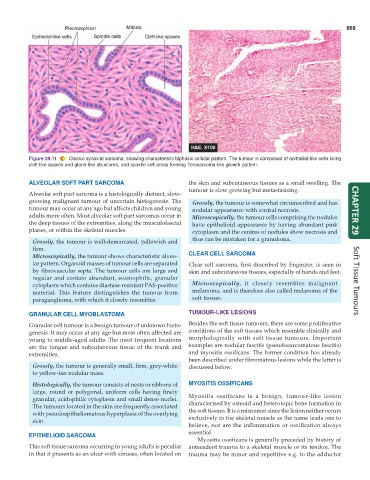
           Figure 29.11  Classic synovial sarcoma, showing characteristic biphasic cellular pattern. The tumour is composed of epithelial-like cells lining
           cleft-like spaces and gland-like structures, and spindle cell areas forming fibrosarcoma-like growth pattern.


           ALVEOLAR SOFT PART SARCOMA                          the skin and subcutaneous tissues as a small swelling. The
                                                               tumour is slow growing but metastasising.
           Alveolar soft part sarcoma is a histologically distinct, slow-
           growing malignant tumour of uncertain histogenesis. The  Grossly, the tumour is somewhat circumscribed and has
           tumour may occur at any age but affects children and young  nodular appearance with central necrosis.      CHAPTER 29
           adults more often. Most alveolar soft part sarcomas occur in  Microscopically, the tumour cells comprising the nodules
           the deep tissues of the extremities, along the musculofascial  have epithelioid appearance by having abundant pink
           planes, or within the skeletal muscles.               cytoplasm and the centres of nodules show necrosis and
            Grossly, the tumour is well-demarcated, yellowish and  thus can be mistaken for a granuloma.
            firm.
            Microscopically, the tumour shows characteristic alveo-  CLEAR CELL SARCOMA
            lar pattern. Organoid masses of tumour cells are separated  Clear cell sarcoma, first described by Enginzer, is seen in
            by fibrovascular septa. The tumour cells are large and  skin and subcutaneous tissues, especially of hands and feet.
            regular and contain abundant, eosinophilic, granular                                                      Soft Tissue Tumours
            cytoplasm which contains diastase-resistant PAS-positive  Microscopically,  it closely resembles malignant
            material. This feature distinguishes the tumour from  melanoma, and is therefore also called melanoma of the
            paraganglioma, with which it closely resembles.      soft tissues.

           GRANULAR CELL MYOBLASTOMA                           TUMOUR-LIKE LESIONS
           Granular cell tumour is a benign tumour of unknown histo-  Besides the soft tissue tumours, there are some proliferative
           genesis. It may occur at any age but most often affected are  conditions of the soft tissues which resemble clinically and
           young to middle-aged adults. The most frequent locations  morphologically with soft tissue tumours. Important
           are the tongue and subcutaneous tissue of the trunk and  examples are nodular fascitis (pseudosarcomatous fascitis)
           extremities.                                        and myositis ossificans. The former condition has already
                                                               been described under fibromatous lesions while the latter is
            Grossly, the tumour is generally small, firm, grey-white  discussed below.
            to yellow-tan nodular mass.

            Histologically, the tumour consists of nests or ribbons of  MYOSITIS OSSIFICANS
            large, round or polygonal, uniform cells having finely
            granular, acidophilic cytoplasm and small dense nuclei.  Myositis ossificans is a benign, tumour-like lesion
            The tumours located in the skin are frequently associated  characterised by osteoid and heterotopic bone formation in
            with pseudoepitheliomatous hyperplasia of the overlying  the soft tissues. It is a misnomer since the lesion neither occurs
            skin.                                              exclusively in the skeletal muscle as the name leads one to
                                                               believe, nor are the inflammation or ossification always
                                                               essential.
           EPITHELIOID SARCOMA
                                                                  Myositis ossificans is generally preceded by history of
           This soft tissue sarcoma occurring in young adults is peculiar  antecedent trauma to a skeletal muscle or its tendon. The
           in that it presents as an ulcer with sinuses, often located on  trauma may be minor and repetitive e.g. to the adductor

