


Page 911 - Textbook of Pathology, 6th Edition
P. 911
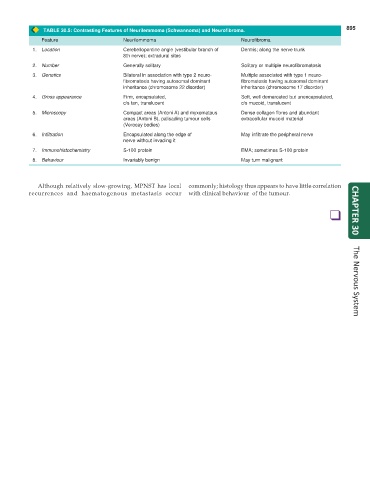
TABLE 30.5: Contrasting Features of Neurilemmoma (Schwannoma) and Neurofibroma. 895
Feature Neurilemmoma Neurofibroma
1. Location Cerebellopontine angle (vestibular branch of Dermis; along the nerve trunk
8th nerve); extradural sites
2. Number Generally solitary Solitary or multiple neurofibromatosis
3. Genetics Bilateral in association with type 2 neuro- Multiple associated with type 1 neuro-
fibromatosis having autosomal dominant fibromatosis having autosomal dominant
inheritance (chromosome 22 disorder) inheritance (chromosome 17 disorder)
4. Gross appearance Firm, encapsulated, Soft, well demarcated but unencapsulated,
c/s tan, translucent c/s mucoid, translucent
5. Microscopy Compact areas (Antoni A) and myxomatous Dense collagen fibres and abundant
areas (Antoni B), palisading tumour cells extracellular mucoid material
(Verocay bodies)
6. Infiltration Encapsulated along the edge of May infiltrate the peripheral nerve
nerve without invading it
7. Immunohistochemistry S-100 protein EMA; sometimes S-100 protein
8. Behaviour Invariably benign May turn malignant
Although relatively slow-growing, MPNST has local commonly; histology thus appears to have little correlation
recurrences and haematogenous metastasis occur with clinical behaviour of the tumour.
❑ CHAPTER 30
The Nervous System

